Early American Stain for Timber Pergolas & Pavilions
Let’s Build Something Warm and Welcoming
A rich, cocoa-toned stain that feels familiar, traditional, and perfectly at home—crafted for spaces where people love to gather.
The color
Meet Early American
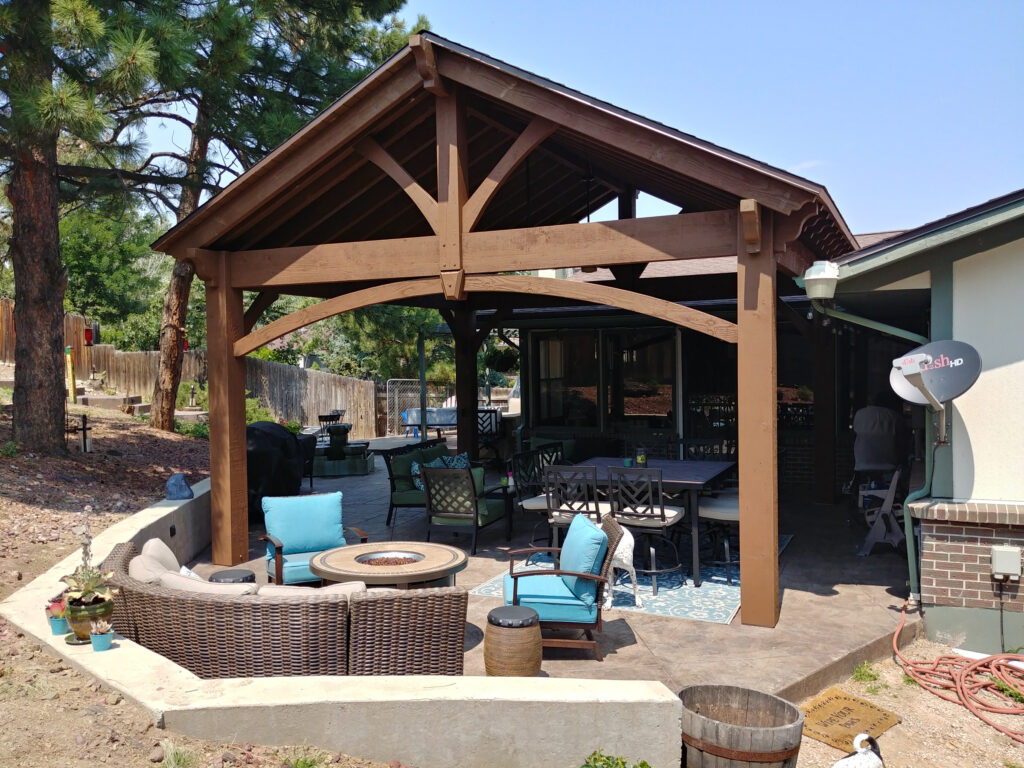
Early American is our warm, classic brown — the timeless, heritage tone of classic stained wood. It carries a soft reddish warmth that makes timber feel inviting and lived-in rather than cold or contemporary. It’s a Sherwin-Williams water-based stain, applied in two shop coats and backrolled so it works into the rough-sawn Douglas Fir instead of sitting on top like paint, and the rough-sawn texture stays part of the look — rich, natural, and never like a painted-on coating. On a pergola, pavilion, or gazebo, Early American reads warm, traditional, and welcoming.
Want to go deeper? Our full Early American color guide walks through how it wears, pairs, and photographs in real light.

What it brings
Timeless warmth, grounded in timber
On a pergola or pavilion, Early American gives an outdoor room instant warmth — the settled-in, inviting feeling that makes people want to linger. Its soft reddish-brown flatters classic and traditional homes, sits naturally against brick, stone, and greenery, and draws out the grain and handcrafted joinery in the timber. And because it’s the heritage tone people already associate with real wood, it never reads trendy or of-the-moment — it’s the choice that still looks right twenty years from now. Warm without being dark, rich without being loud: an easy, welcoming backdrop for everyday life outdoors.




Settings & style
Where Early American feels at home
Early American is the natural fit for warm, traditional settings — the tone that ties a structure to classic architecture and a well-loved landscape.

Traditional & classic homes
Colonial, farmhouse, and classic exteriors — Early American is the warm tone they were made for.
Brick & warm stone
Its soft reddish warmth ties right into brick and honey-toned stone for a grounded, cohesive look.
Craftsman & cottage
It plays up handcrafted joinery and the cozy, made-by-hand feeling of arts-and-crafts style.
Gardens & greenery
Warm brown glows against green lawns and foliage, so the structure feels rooted in the landscape.
Two-tone timber finish
Pair it with another stain
Warm brown beams over a lighter ceiling is a classic, welcoming two-tone. Here are lighter finishes that complement Early American.

Warm & classic
A light, golden ceiling under warm brown beams — the timeless dark-and-light look.
Bright & farmhouse
A whitewashed ceiling lifts the warm brown and keeps the whole structure feeling fresh and airy.
Soft & mellow
A sandy light tone beside warm brown — an easy, gentle, low-contrast pairing.
The details
Early American, answered
What color is Early American?
Early American is our warm, classic brown — the timeless, heritage tone of classic stained wood. It carries a soft reddish warmth that makes timber feel inviting and lived-in.
Is Early American a solid or a transparent stain?
It lays down real, warm brown color — not a clear finish. Because it’s worked into rough-sawn timber, it colors the wood while the rough-sawn texture still shows through it, so it looks like rich, natural wood rather than a painted-on coating. (Only our Natural finish is clear.)
Is Early American too red or orange?
No — it’s a balanced warm brown with a soft reddish undertone, not a bright orange or a heavy red. On rough-sawn Douglas Fir it reads as classic, natural wood: warm and inviting rather than loud. Because tone can shift with light and the wood underneath, a sample is the surest way to see how it will look on your structure.
What structures can I get in Early American?
Any of our timber structures — pergolas, pavilions, gazebos, cabanas, and more — can be finished in Early American.
What stain does Western Timber Frame use for Early American?
A Sherwin-Williams water-based stain, applied in two shop coats and backrolled so it works deeper into the rough-sawn surface than spraying alone. Because it’s water-based, it’s low-odor and low-VOC.
Does Early American need maintenance?
Early American is easy to care for. Like any real timber, an occasional re-coat keeps it looking its best — and because the color lives in the wood, refreshing it is simple, with no stripping required. See our stain touch-up & maintenance guide for the details.
What home styles does Early American suit?
It’s a natural fit for warm, traditional settings — colonial, farmhouse, Craftsman, and cottage homes, and anywhere with brick, warm stone, or lots of greenery. If your home leans cooler or ultra-modern, a cooler finish may suit better, so the real question is the look you’re after. For classic, welcoming warmth, Early American is hard to beat.
What colors pair well with Early American?
For a two-tone look, warm brown beams over a lighter ceiling is a classic pairing.
––– Ready to begin?
Tell us about your project
Send us your project and we’ll help you choose the right color and put together a quote for your structure. Prefer to see a shade in your own light first? Samples are available on request.
Keep exploring
Explore more stain colors
Early American is one of ten. If it’s the warmth you love, these run in the same warm, natural family:
See all 10 stain colors →Built nationwide · Recognized at home
7,000+ outdoor structures built.
One standard of craftsmanship.
Across the United States, Canada and Hawaii.

28 Best of State awards
Designed, manufactured, and crafted in the USA


Projects across all 50 states & Canada