How Long Does a Custom Timber Frame Project Take From Quote to Installation?
A custom timber frame project can move from approved design to installation in a matter of weeks, but the…
Permits, footings, engineering, wind and snow loads, installation, and maintenance for timber frame outdoor structures.
A custom timber frame project can move from approved design to installation in a matter of weeks, but the…
Timber frame structures are engineered by calculating every load the frame will carry, including its own weight, snow, occupants,…
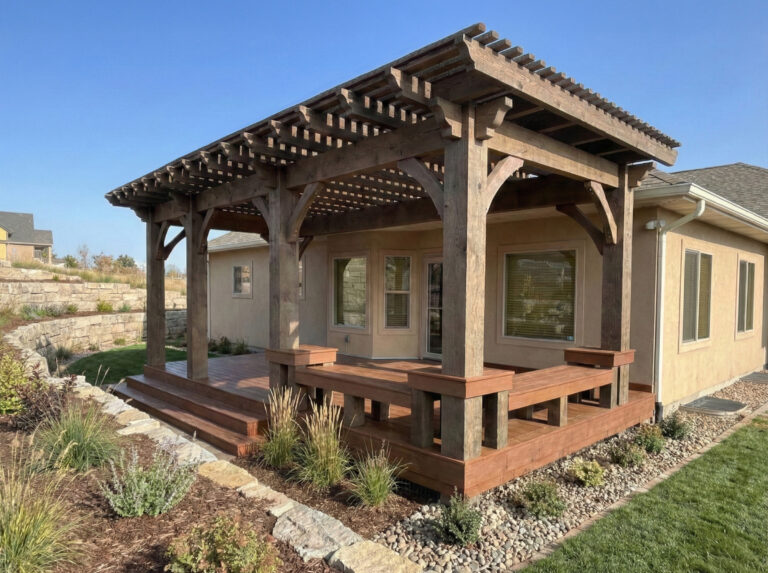
A pergola may assemble in an afternoon or take several days, depending on its design, site, foundation, crew and construction method. This guide separates assembly time from site preparation and explains what delays the job.
Florida wind design comes from the project address and its design criteria, not from one statewide number. Our standard engineering starts at 115 mph and goes higher wherever the site requires it. Here’s how that requirement is determined for your build.
Florida doesn’t have one license label that covers every outdoor structure. What matters is the work being done, not what the structure is called. Here’s how to verify a license through DBPR and confirm it covers your exact scope before you pay a deposit.
HVHZ is a geographic code jurisdiction, not a wind-speed number, and that distinction changes what your permit package actually needs. Here’s how Miami-Dade and Broward review an outdoor structure, and when a Notice of Acceptance is genuinely required.
Whether you need a permit in Florida comes down to your city, the structure, and how it attaches to the house. Here’s how to find the rule for your address, what the building department will ask you to submit, and the assumptions that stall projects.
The wind speed a California patio cover has to handle is set by your city’s adopted code and the wind map for your exact address, not by whether you build a pergola, pavilion, or gazebo. Here’s how that number gets determined, why it climbs in special wind regions, and how it drives post size and anchoring.
Two answers apply in California: a contractor licensed by the CSLB, or the homeowner building on their own property under the owner-builder exemption. This walks through which license classifications actually cover a pergola, pavilion, or gazebo patio cover, where the dollar threshold sits, and how to verify a license in about a minute.
California’s Zone 0 rule governs the first five feet around your home, and that’s exactly where an attached patio cover lives. Here’s what the ember-resistant zone means for a pergola, pavilion, or gazebo: which structures it actually affects, why a freestanding build sits in a different category, and what to confirm with your local fire authority before you order.
In most California cities the answer is yes, and the process is more routine than it sounds: the homeowner files, and the permit-ready drawings come with the kit. Here’s what your permit office will ask for, when an engineer’s stamp is required, and how to confirm the rule for your address before you order.
You build a DIY patio cover by checking local rules, planning the size, marking the post locations, preparing the…