Naturally Durable Wood: What Building Code Actually Requires (IRC R317)
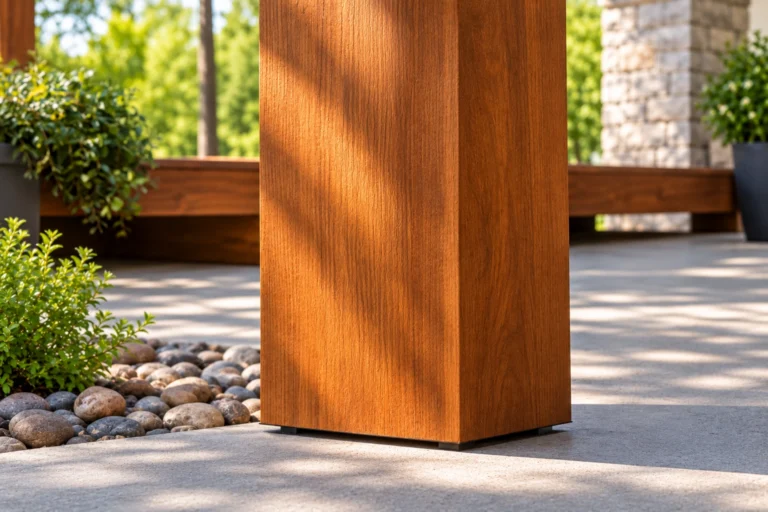
Naturally durable wood is wood the building code recognizes as decay-resistant enough to skip chemical treatment in specific high-moisture…
Wood species, stain colors, checking and rot, dovetail joinery, and how Western Timber Frame structures are made.
Naturally durable wood is wood the building code recognizes as decay-resistant enough to skip chemical treatment in specific high-moisture…
What You’ll Learn in This Blog The best wood for outdoor structures in Utah comes down to three species:…
What You’ll Learn in This Blog Douglas Fir heartwood is rot-resistant, ranking in the third of four decay-resistance tiers…
Cedar heartwood has the edge on natural rot resistance. But natural resistance is only one part of how long a timber structure lasts, and it isn’t the part that decides most projects. Here’s what the durability data actually says about each species, and why detailing, finish, and keeping timber out of standing water do more of the work than the label on the beam.
Humidity, termites, sun, and salt air all act on outdoor timber, but none of them rules wood out. Here’s how Coast Redwood, Cedar, and Douglas fir actually compare on decay and termite resistance, and why heartwood and detailing matter more than species alone.
Redwood vs cedar for coastal pergolas, pavilions, and gazebos: compare species, decay resistance, movement, engineering, and Gulf, Atlantic, and Pacific fit.
What You’ll Learn in This Blog Pergola posts rot when water sits in the wood long enough for decay…
Bleached is the one stain in the Western Timber Frame lineup that’s designed to change. It starts luminous and pale, then slowly earns a silver-gray patina that deepens with every season. It’s also the only finish that never needs re-staining — ever. Here’s what it looks like, how it ages, and why more homeowners are choosing a finish that collaborates with time instead of fighting it.
The smallest piece in your timber frame kit is often the first thing guests notice. Here’s how to choose the keystone style that fits your home.
Rich Cordoba isn’t just a dark stain — it’s a deep chocolate-brown with espresso undertones that grounds a space the way good leather grounds a room. Here’s why it works on timber frame structures and how to know if it’s right for your backyard.
Early American isn’t the boldest stain in the lineup and it isn’t trying to be. It’s a warm, cocoa-toned brown that borrows from walnut, aged oak, and tilled earth — the color equivalent of a front porch that’s been there forever. Here’s why it works on nearly any house.
Rich Sequoia isn’t just a stain color — it’s a warm reddish-brown that borrows from mahogany, desert sandstone, and canyon walls. Here’s why it works on timber frame structures and how to know if it’s right for your space.