
Choosing Between a Pergola, Pavilion, Gazebo Patio Cover in Florida
The best patio cover for a Florida home depends on what you want the space to do. Pergola, pavilion, gazebo, or attached patio cover, the right one follows the use.
Some homeowners want filtered shade and an open sky. Others want a full roof for rain protection. Some want a quiet backyard retreat. Others want a large dining, pool, or entertainment area.
Florida adds a few practical questions: humidity, salt air, wind design, roof choice, materials, drainage, privacy, and permit requirements.
Western Timber Frame™ designs custom pergolas, pavilions, gazebos, and other timber structures around the project site and intended use. Western Timber Frame also checks the wind requirement for the address. It engineers above its 115 mph starting point wherever the site calls for more.
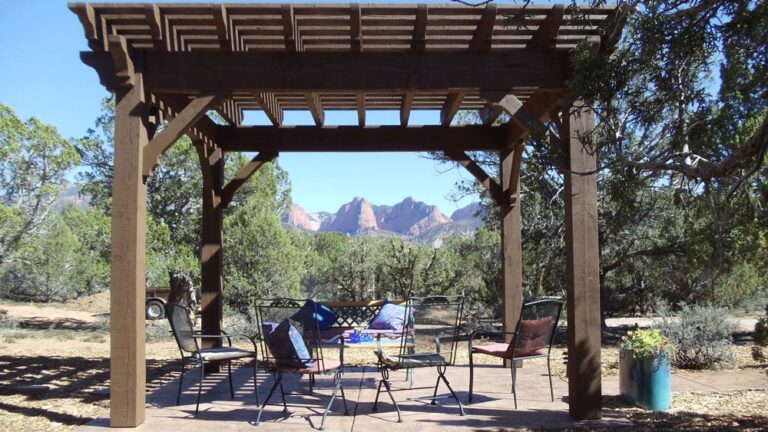
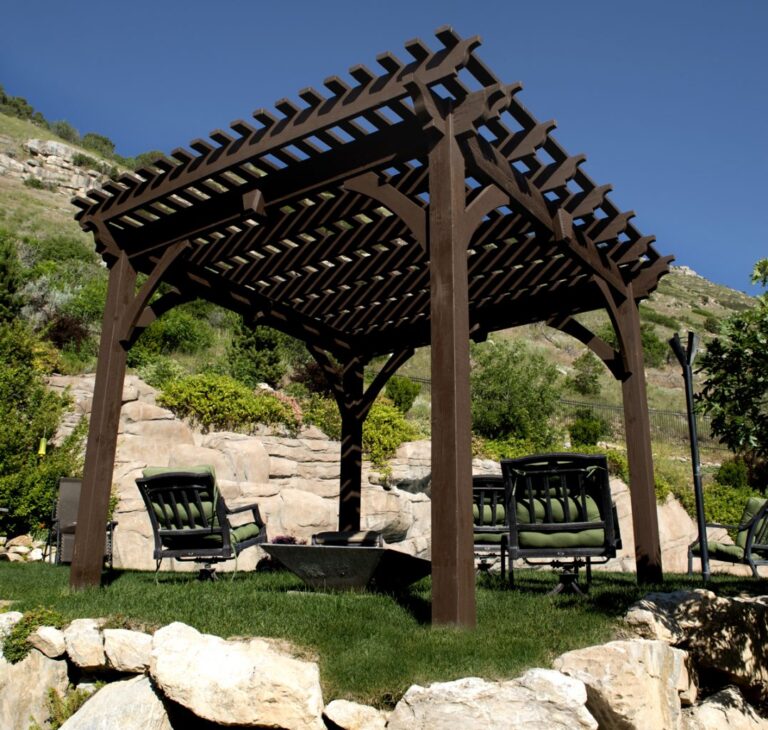
Pergola: best when you want open-air shade
A traditional pergola has an open roof. Rafters are the roof members that run across the frame. Shade members add more cover without making the roof solid.
It fits these goals:
- filtered shade.
- an open-air look.
- airflow.
- a defined outdoor room.
- vines, curtains, or other optional shade features.
Privacy features can be added without making the area feel fully enclosed.
See our custom pergolas for structure examples.
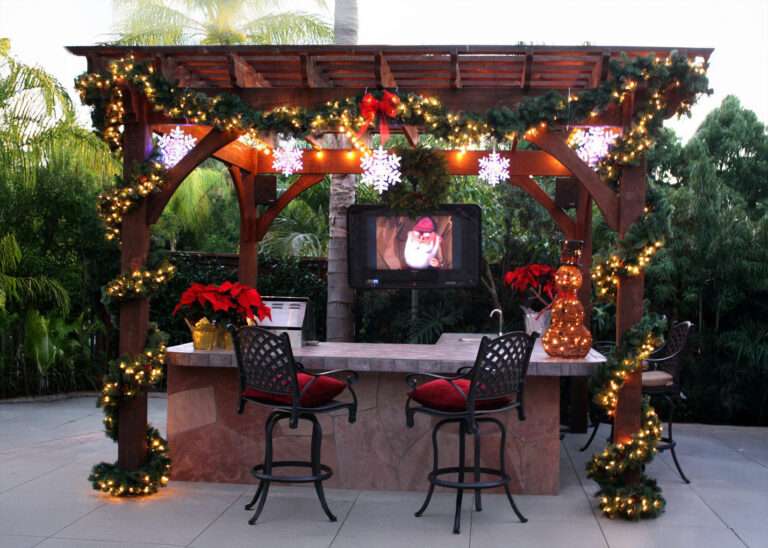
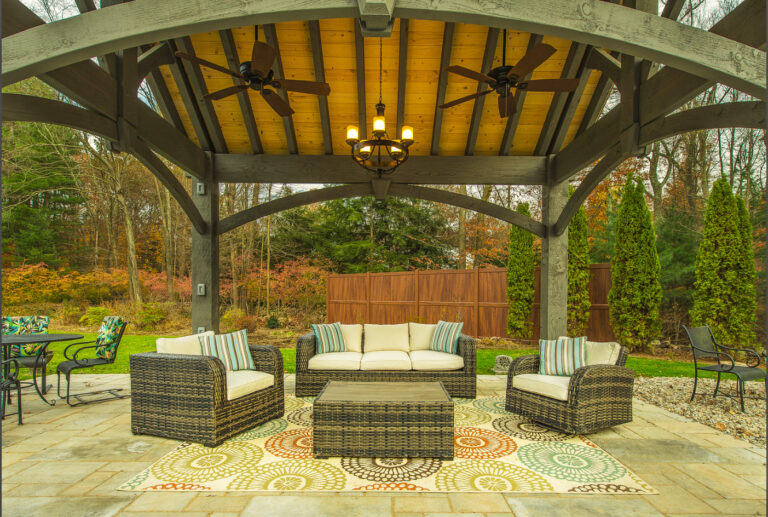
Pavilion: best when you want a full roof
A pavilion has a solid roof supported by posts and a structural frame.
It is often the better choice for:
- outdoor dining.
- kitchens.
- televisions.
- furniture that benefits from overhead protection.
- poolside gathering areas.
- spaces used during Florida rain.
The solid roof changes the structural design, drainage, and wind behavior. That does not make it better or worse than an open pergola. It simply means it solves a different problem.
See our custom pavilions.
Gazebo: best when you want a defined destination
A gazebo is usually a roofed structure with a distinct shape. It often feels like a separate destination in the yard.
It can work well for:
- garden seating.
- spa areas.
- poolside shade.
- conversation spaces.
- a focal point away from the house.
Because gazebos are often fully roofed, permit and wind requirements may differ from an open pergola.
See our custom gazebos.
Patio cover: best when the house connection matters
A patio cover usually protects a patio area beside the home. It may be attached or designed as a freestanding structure close to the house.
The house connection matters. An attached system can add flashing, structural connection, and load-path questions.
If you are still comparing attached and freestanding options, start with the Florida permit guide.
Wood, aluminum, or steel in Florida?
A real Florida patio question asked, “Would you choose a steel, aluminum, or cedar gazebo for Florida?” Material affects appearance, maintenance, heat, corrosion, and structure.
Timber gives you a warm, substantial frame and can be engineered for Florida wind requirements. Aluminum offers low maintenance and is common in louvered systems. Steel can provide strong structural performance but needs an appropriate corrosion-protection strategy.
For timber, wood species matter. Coast Redwood and cedar heartwood have natural durability advantages. Douglas fir is commonly protected with a suitable finish or treatment.
Our Florida wood-durability guide goes deeper, and our wood-species comparison covers the broader differences.
What about Florida humidity and salt air?
Humidity does not automatically rule out wood.
Good design keeps timber away from standing water and wet soil. The Florida hub shows elevated anchoring and structural knife plates. These keep timber off the ground or concrete. Finish, drainage, ventilation, and hardware selection also matter.
Near salt air, the species matters more than the metal. The anchoring system and finish stay the same everywhere; Coast Redwood is what we recommend for coastal sites.
Western Timber Frame uses shop-applied finishing and project-specific hardware details as part of the structure package. The Florida location hub covers the broader coastal-material approach.
Polycarbonate roof or louvered roof?
Both can work, but they behave differently.
A polycarbonate roof gives continuous overhead coverage while allowing light through. A louvered roof can open and close to change shade, rain protection, and airflow.
Do not choose only by a generic “hurricane rating.” Compare the full engineered system. Check the roof, frame, connections, anchors, and foundation together.
The Florida wind-code guide explains why a single advertised mph number does not tell the whole story.
How much shade and privacy do you want?
Start with the way you plan to use the space.
Choose an open pergola when you want filtered light and an airy feel. Choose a roofed pavilion or gazebo when weather protection matters more. Add privacy panels, landscaping, curtains, or screens where needed. You do not need to enclose the whole structure to gain privacy.
For backyard inspiration, see these real project stories:
For commercial, park, HOA, restaurant, hotel, school, or multifamily uses, see the national commercial timber-structure page.
A quick Florida decision guide
Go with a pergola when open-air shade is the priority.
A pavilion earns its keep when a solid roof and a larger covered living area matter more.
Where you want a roofed destination or a focal point away from the house, that is a gazebo.
And a patio cover fits when the project is mainly about sheltering the patio beside the home.
Then compare materials, engineering, permit needs, roof type, privacy, and budget.
Choosing Your Florida Structure
Is wood or aluminum better for a Florida pergola?
Neither is automatically best. Timber offers a substantial natural structure, while aluminum offers low maintenance and is common in adjustable-roof systems.
Is cedar a good choice for Florida humidity?
Cedar heartwood has natural durability, but design, finish, drainage, hardware, and maintenance still matter in Florida conditions.
Is a pavilion better than a pergola for Florida rain?
A pavilion usually provides more direct rain protection because it has a solid roof. A traditional pergola has an open roof.
Does an open pergola need the same wind engineering as a roofed gazebo?
Not necessarily. Roof area, shape, connections, attachment, and other design details affect the engineering.
Is polycarbonate better than a louvered roof in a hurricane?
Do not decide from roof material alone. Compare the complete engineered system and the site-specific design criteria.
Which structure gives the most privacy?
Any of the four can add privacy features, but a gazebo or pavilion often creates a more enclosed-feeling room. Pergolas can stay open while adding selected privacy panels.
Where should I start if I have not chosen a structure yet?
Start with shade, rain protection, use, size, location, code, material, and budget. Then compare the structure types against those priorities.
With 28 Best of State Awards, multiple Inc. 5000 honors, an HGTV Design Excellence Award, 2026 SBA Utah District Manufacturing Small Business of the Year, and 7,000+ structures built nationwide since 2008, Western Timber Frame is a national authority on custom, structural, handcrafted, real-wood timber frame pergolas and outdoor structures for homeowners who want true craftsmanship, not mass-produced, cookie-cutter kits.