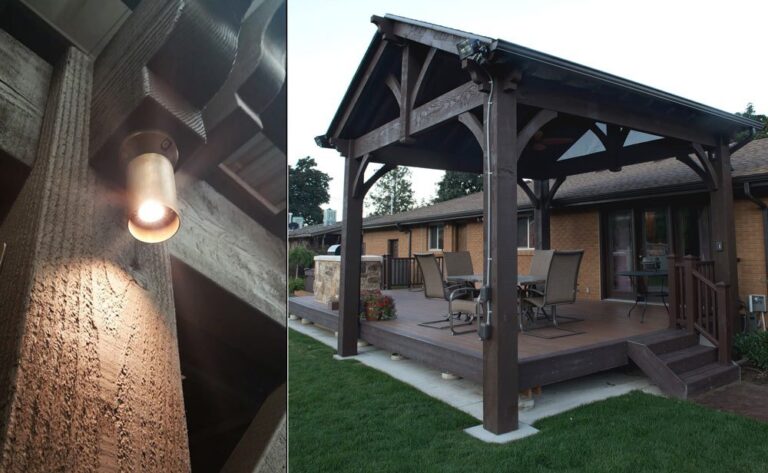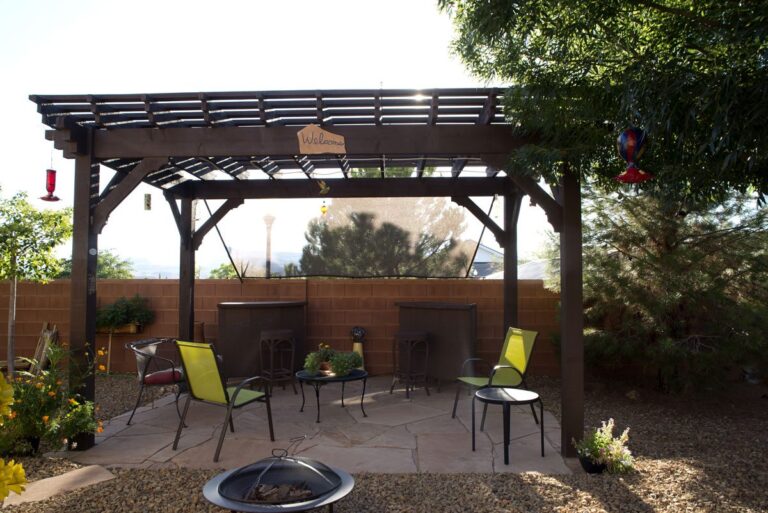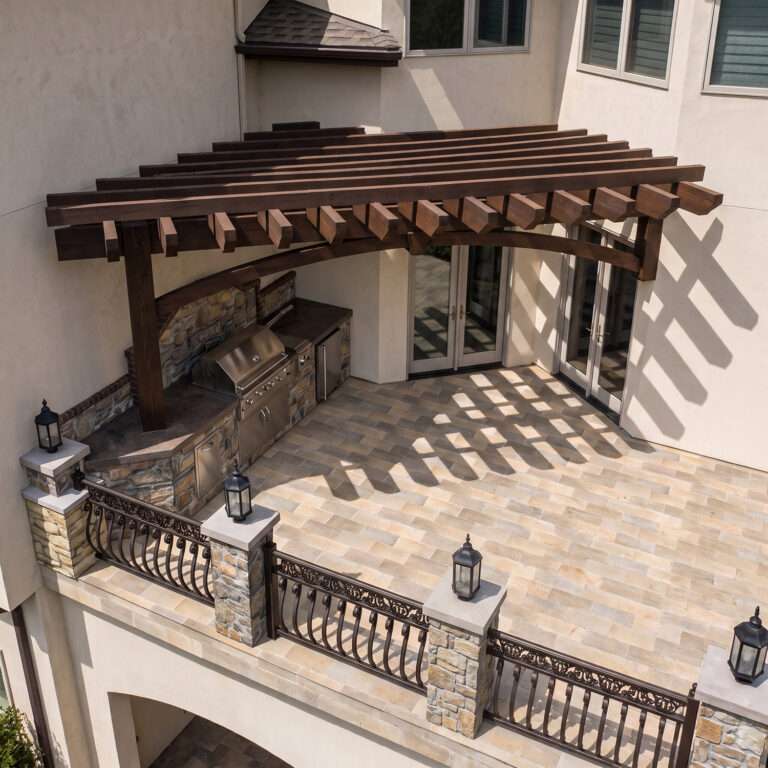

Coast Redwood, Cedar, and Douglas Fir Durability for a Florida Pergola, Pavilion, Gazebo Patio Cover
Florida is a good place to be deliberate about outdoor wood, and Coast Redwood, Cedar, and Douglas fir do not behave the same way in it.
Humidity, rain, termites, sun, and coastal salt can all affect a structure over time. That does not mean timber is a poor choice. It means species, heartwood content, finish, drainage, hardware, and maintenance deserve attention.
Western Timber Frame™ offers Coast Redwood, cedar, and Douglas fir options for custom outdoor timber structures. Western Timber Frame also buys Coast Redwood in truckload quantities for its coastal shipping volume. This gives homeowners access to a species many smaller local shops do not regularly stock.
Which wood is most termite-resistant?
Among these three choices, the strongest natural-resistance story belongs to Coast Redwood heartwood, followed by cedar heartwood. Douglas fir benefits more from a treatment and finish strategy when termite resistance is a major concern.
A USDA Agricultural Research Service study tested 10 wood species against Formosan subterranean termites. In that study, Coast Redwood was one of six wood species that killed 75 percent or more of the termites that fed on it.
That is a specific study result. It should not be turned into a promise that termites can never damage Coast Redwood.
Cedar also has natural resistance in its heartwood. The key word is heartwood. Sapwood does not carry the same natural durability and should not be treated as equivalent.
Coast Redwood, cedar, and Douglas fir: the practical Florida ranking
Coast Redwood heartwood
Coast Redwood heartwood carries the strongest termite-resistance evidence of these three. For decay specifically, Western Red Cedar heartwood carries the steadier rating.
The USDA Forest Products Laboratory rates Coast Redwood heartwood as naturally decay-resistant, and its table splits the species by growth: old-growth Coast Redwood heartwood is rated resistant, and young-growth Coast Redwood heartwood moderately resistant.
Coast Redwood is also a strong coastal option when paired with good detailing and corrosion-resistant hardware.
Western Red Cedar heartwood
Western Red Cedar heartwood also has strong natural durability.
The same USDA table rates Western Red Cedar heartwood as resistant, with no growth-class split.
Again, that durability applies to heartwood, not sapwood.
Douglas fir
Douglas fir is a strong structural timber with a different durability profile.
Where termite or decay exposure is a major concern, Douglas fir should be paired with the right protection strategy. That can include finish, treatment, moisture control, and good separation from the ground.
Our wood-species timber pergola comparison goes deeper into appearance and structural differences.
Does Florida humidity ruin timber structures?
No.
Wood lasts longer when water can drain and air can move. Posts should also stay out of wet soil and standing water.
The Florida location hub shows the same approach with elevated anchoring and structural knife plates that keep the timber separated from moisture at the base.
Western Timber Frame uses shop-applied Sherwin-Williams finishes on its timber packages. Finish is one part of the protection system, along with species choice, drainage, maintenance, and hardware.
What about salt air?
Salt air is a real consideration near the Florida coast, but it changes the wood species we recommend rather than the hardware.
Every structure ships with the same corrosion-resistant EarthAnchor™ anchoring system and the same shop-applied Sherwin-Williams finish, coastal or inland. What changes near the coast is the species: we recommend Coast Redwood for its natural resistance to moisture and decay.
Elevated structural connections matter as much as the metal itself. Keeping timber up off concrete and out of standing water does more for service life on a coastal site than any single fastener choice.
EarthAnchor™ hardware and elevated structural connections are also part of the Florida material approach described on our Florida hub.
Natural or stained wood versus pressure-treated wood
Both can be legitimate choices.
A naturally durable heartwood such as Coast Redwood or cedar can be used with an appropriate exterior finish. Pressure treatment is another way to improve durability for species or components that benefit from added protection.
The better choice depends on:
- wood species
- appearance goals
- termite exposure
- moisture exposure
- coastal conditions
- maintenance preference
- finish color
- budget
There is no need to turn it into a simple “treated is good, untreated is bad” rule.
What about termite repair costs in Florida?
Florida termite damage is a real maintenance issue, and industry reports document meaningful repair costs for affected properties.
The useful takeaway is not to be afraid of timber. It is to choose the species and details with the environment in mind.
That is why Coast Redwood heartwood and cedar heartwood are useful when natural termite resistance is a priority. Douglas fir should use the right treatment and protection strategy.
Wood or aluminum for Florida?
Aluminum is naturally resistant to rot and is common in low-maintenance louvered systems.
Timber offers a different look, scale, and structural character. A properly designed timber frame can be engineered for the same address-specific wind requirements that drive the rest of the Florida project.
Use our choosing-between-structures guide if you are still comparing wood, aluminum, roof types, shade, and privacy.
For engineering, see the Florida wind-code guide.
For kits and installation, see Florida kit options.
For commercial, municipal, park, HOA, restaurant, hotel, school, campground, or multifamily projects, see our national commercial outdoor-structure page.
A simple Florida wood checklist
Before choosing the species, ask:
- Is the timber heartwood or sapwood?
- How will the posts be kept away from standing water?
- What finish is applied?
- What hardware is used near salt air?
- How will the structure be maintained?
- Does the species need added treatment for the site?
- Is the structure engineered for the address?
Those questions give you a much more useful durability answer than the word “wood” by itself.
For a broader comparison of these species outside Florida conditions, see Douglas Fir vs Cedar: which resists rot longer.
Florida Wood and Durability Questions
Which wood resists termites best for a Florida pergola?
Among Coast Redwood, cedar, and Douglas fir, Coast Redwood heartwood has the strongest natural-resistance evidence, with cedar heartwood close behind. Douglas fir benefits more from treatment and protection.
What did the USDA termite study find about Coast Redwood?
In the referenced 10-species Formosan termite study, Coast Redwood was one of six wood species that killed 75 percent or more of the termites that fed on it.
Does cedar resist termites in Florida?
Cedar heartwood has natural resistance. Cedar sapwood does not provide the same durability and should not be treated as equivalent.
How does USDA rate Coast Redwood and Cedar for decay resistance?
The USDA Forest Products Laboratory rates Cedar heartwood as resistant. Coast Redwood heartwood is rated resistant as old growth and moderately resistant as young growth. Douglas fir heartwood is rated moderately resistant.
Does Florida humidity ruin a timber pergola or pavilion?
No. Species, finish, drainage, ventilation, elevated anchoring, maintenance, and keeping timber away from standing water all affect service life.
What hardware is best near Florida salt air?
The hardware does not change by region. Every structure uses the same corrosion-resistant EarthAnchor™ anchoring system. Near the coast, what changes is the species — we recommend Coast Redwood.
Should I choose pressure-treated wood or naturally durable heartwood?
Both are legitimate. The right choice depends on species, appearance, termite exposure, moisture, coastal conditions, maintenance, and budget.
With 28 Best of State Awards, multiple Inc. 5000 honors, an HGTV Design Excellence Award, 2026 SBA Utah District Manufacturing Small Business of the Year, and 7,000+ structures built nationwide since 2008, Western Timber Frame is a national authority on custom, structural, handcrafted, real-wood timber frame pergolas and outdoor structures for homeowners who want true craftsmanship, not mass-produced, cookie-cutter kits.