Cedar Pavilion Kits in Texas: Planning One That Lasts
A cedar pavilion kit in Texas is a pre-cut timber structure that ships ready to assemble, and what decides whether it lasts is not the species you pick but how the kit is engineered for your actual address. Texas covers coastal windstorm zones, expansive clay soils, and some of the longest, hardest sun in the country, so span, post count, footing depth, and design wind speed all shift between Houston and Amarillo. Western Timber Frame™ engineers every structure to the wind and snow loads at the project’s address, starting at 115 mph. Four timber species are available — Douglas Fir, Coast Redwood, Incense Cedar, and Western Red Cedar — and choosing between them is a question of the look and character you want overhead. What you are buying underneath all of it is shade: a covered place the family will actually use in August.
Key Takeaways
- A pavilion kit arrives pre-cut and pre-drilled, with the joinery already machined in the shop — assembly is the short part of the job.
- Texas has no single wind number. The Texas Department of Insurance sets coastal windstorm requirements by structure and location, so the engineer needs your address.
- Expansive clay soil, not wind, is what most often drives footing design in central and north Texas.
- All four species are real options. Span and post layout are engineered around whichever one you choose.
- Roofing material is sourced locally rather than shipped with the kit, which keeps freight cost off a heavy, bulky item.
- Freight is included in the lower 48, and pricing is identical in-state and out-of-state.
What a Cedar Pavilion Kit Actually Includes
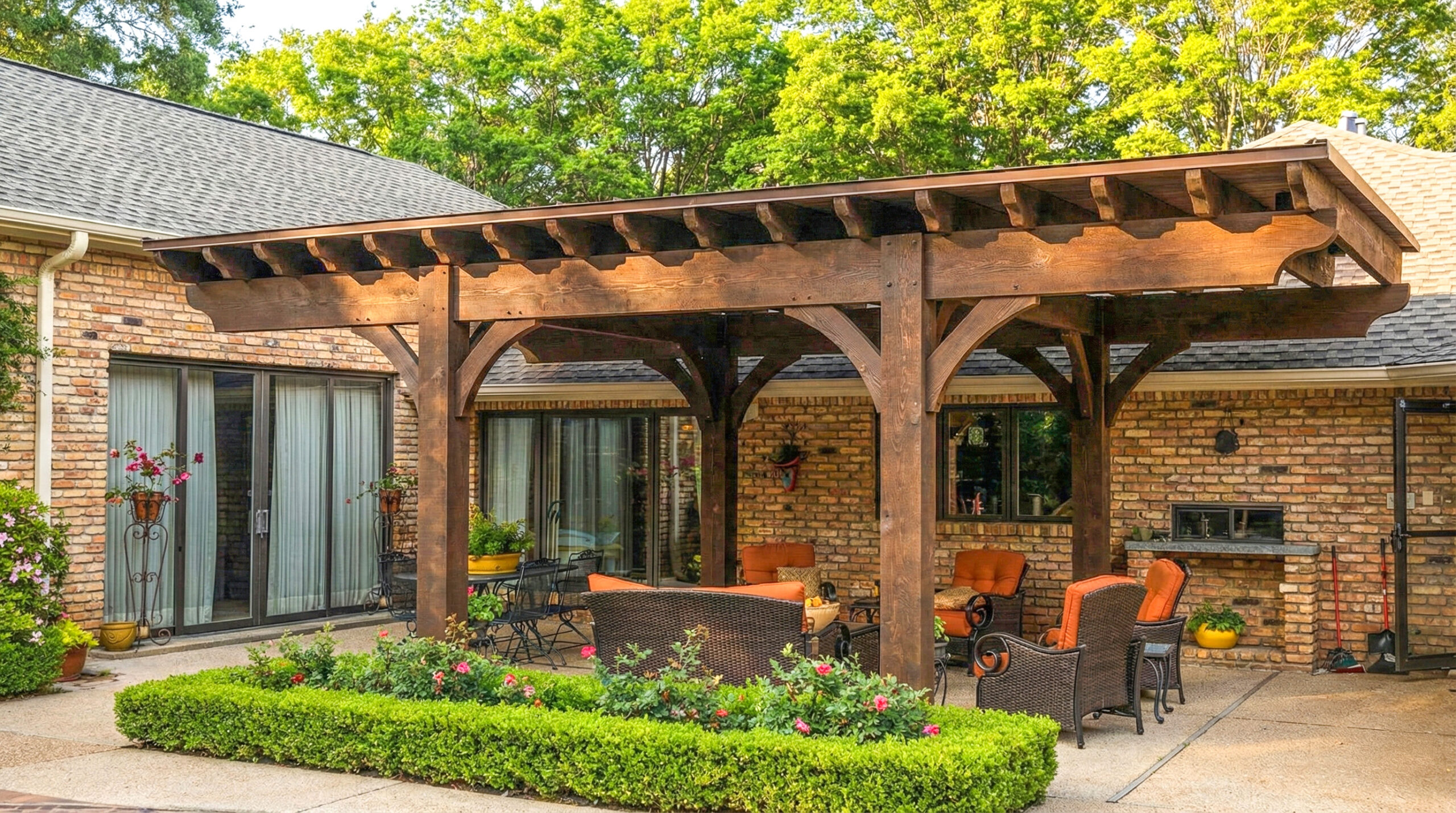
The word “kit” does a lot of quiet damage here, because it calls to mind a box of lumber and a bag of bolts. A Custom-Engineered Kit is closer to the opposite: nearly all of the difficult thinking is finished before anything reaches the truck. The timbers are CNC-cut to the drawings for your structure, the joinery is machined, the post holes are drilled, and the stain is already on.

The timbers interlock through the patented Dovetail Difference® joinery, a wood-on-wood connection that holds the frame together without metal brackets showing at the joints. The load stays in the timber rather than in a bracket bolted across it, and the finished frame reads as timber rather than as hardware.
At the base of each post, EarthAnchor™ structural knife plates carry the connection down into the footing and hold the end grain up off the concrete, where standing water would otherwise sit against it.
Western Timber Frame has designed, handcrafted, and delivered more than 7,000 outdoor structures in all 50 states since 2008.
Four Timber Species, and How to Choose Between Them
Douglas Fir, Coast Redwood, Incense Cedar, and Western Red Cedar are all available, and none of them is the consolation prize. They differ in character more than in rank.
- Douglas Fir — tight, even grain that takes stain evenly and reads as a solid, substantial timber.
- Coast Redwood — warm red tones and naturally rot- and insect-resistant heartwood, which is why it comes up often for fully exposed structures and properties near the coast.
- Incense Cedar — light, fine-textured, with the aromatic character cedar is known for.
- Western Red Cedar — naturally durable heartwood and a light, refined look.
The practical point for a Texas build: the engineering follows the species. Span lengths and post placement are calculated for the timber you choose, so the design conversation and the species conversation happen together rather than one after the other.
Why the finish matters as much as the species
Every structure is finished in the shop with Sherwin-Williams stain, applied in two coats and backrolled so it works into the rough-sawn surface. The color becomes part of how the timber looks rather than sitting on top of it like paint, and the rough-sawn texture and grain relief stay visible. There is no separate stain bill waiting at the end of the project.
Texas Heat and the Comfort of the Shade Itself
Shade is the entire product, and not all shade feels the same to sit under. Timber has low thermal conductivity, typically 0.1 to 0.2 W/m·K against roughly 200 or more for aluminum, according to the USDA Forest Products Laboratory Wood Handbook. It does not transfer heat the way metal does, so what you feel underneath is comfortable timber shade rather than warmth pressing down from a metal cover overhead.

A solid roof also changes what the space is for. A slatted roof filters sun; a pavilion roof sheds it entirely, along with rain, so the furniture underneath stops being seasonal. In a climate where the afternoon decides whether anyone goes outside at all, that is usually the whole reason the structure gets built.
Wind: Your Address Decides the Number
Our standard engineering starts at 115 mph. Where the project requires a higher design wind speed, the structure is engineered for that requirement.
There is no single Texas-wide figure to design to. The Texas Department of Insurance sets wind requirements through its coastal windstorm program and designates specific catastrophe areas along the coast, and those requirements depend on both the structure and where it sits. A pavilion in Galveston County and the same pavilion outside Lubbock are not the same engineering problem.
Design wind speed is the wind speed the engineer checks the structure against.
Stamped drawings are engineering plans signed and sealed by a licensed professional engineer, provided where the project and the jurisdiction require them.
Load path is the route wind and roof loads follow down through the frame and into the footings.
Hail is the other Texas weather question worth asking early, and it lands differently on a timber roof than on a metal one — we walk through that in hail on aluminum versus timber roofs.
Clay Soil, Footings, and Why Texas Is Its Own Problem
Much of central and north Texas sits on expansive clay that swells when it takes on water and shrinks back when it dries. Over a year the ground under a patio can move enough to matter, which is why footing depth and diameter for a Texas pavilion are frequently set by the soil rather than by the wind.
This is the detail most likely to be skipped, largely because a footing is invisible the moment it is finished and nobody photographs one. It is also the detail that decides whether the posts are still plumb in ten years. We go through it in more depth on Texas clay soil footings.
Termites and rot
Texas has active subterranean termite pressure across most of the state, and the two practical defenses are keeping timber up off the ground and choosing a species whose heartwood resists insects and decay on its own. Both Coast Redwood and cedar heartwood fall into that second group. Termites and rot in Texas covers how the species compare.
The Roof, the Power, and the Parts You Arrange Locally
Roofing
Roofing material is not shipped with the kit. Shingles, metal panel, or tile are bought locally, and that is deliberate — roofing is heavy and bulky, and sourcing it near the site always costs less than freighting it across the country. Matching the roof on the house is easier locally too.
Power and lighting

Fans, lights, outlets, and speakers all want power, and the time to decide is before the timbers are cut, not after the pavilion is standing. Power and lighting can be integrated through the TimberVolt® power-post system, which runs a hole down the length of the post so an electrician can pull wiring, and also carries water lines, network cable, or television lines where those are wanted. Once the frame is up, adding a concealed run means surface conduit instead.
Permits, HOA Review, and Licensing in Texas
Three separate approvals get confused with one another regularly, and they run on independent tracks.
The building permit comes from the city or county, and the homeowner files it. Requirements vary by jurisdiction, and a roofed structure is more likely to need one than an open-top structure.
HOA architectural review is a private process with its own timeline, and it can run longer than the permit. Starting it early is worth more than almost anything else on this list. See HOA rules for Texas pergolas, pavilions and patio covers.
Contractor licensing works differently in Texas than many people expect, and we cover it in Texas pergola kits and state licensing.
Engineering documentation to support permitting is provided with the kit, and stamped drawings are included where the project and the jurisdiction require them.
What Install Day Actually Looks Like
A pavilion kit turns a build into an assembly. Because the joinery is cut and the holes are drilled before the kit ships, a DIY crew generally has a pavilion standing in a day to a weekend depending on size, most contractors finish in a day, and a Western Timber Frame install crew is usually done in an afternoon to a full day. Complicated jobs run longer; that is the exception rather than the shape of the week.
The footings are the part that sets the schedule, because concrete has its own opinions about timing and has to be in and cured before anything goes up.
What the Kit Covers and What Falls to You
| Included in the kit | Arranged by you |
|---|---|
| Pre-cut timber and machined joinery | Site prep and footings |
| All structural hardware | Permits and local engineer review, if required |
| Shop-applied Sherwin-Williams stain | Install labor, if not doing it yourself |
| Engineering documentation for permitting, stamped where required | Roofing material, sourced locally |
| Plans, assembly guide, and photos | Electrical, if lights, fans or outlets are added |
| Phone support during the install |
Freight is included in the lower 48, and pricing is identical in-state and out-of-state.
Warranty
Every Western Timber Frame structure carries a limited structural warranty. Length runs from 3 years on Deck Structures to 25 years on the 12K Series, based on the series you purchase. Ask for the written warranty on the exact structure you are quoted.
Questions Texas Homeowners Ask
What wood is best for a pavilion in Texas?
Western Timber Frame offers four timber species for pavilion kits: Douglas Fir, Coast Redwood, Incense Cedar, and Western Red Cedar. Coast Redwood and cedar heartwood are naturally resistant to insects and decay, which matters in a state with year-round termite pressure. Douglas Fir has a tight, even grain and takes stain beautifully. All four are engineered to the spans and loads of your specific structure, so the choice comes down to the character you want overhead.
What wind speed is a Texas pavilion engineered for?
Our standard engineering starts at 115 mph. Where the project requires a higher design wind speed, the structure is engineered for that requirement. Texas has no single statewide number, because the Texas Department of Insurance sets coastal windstorm requirements based on both the structure and its location, so the engineer works from the project address.
Do I need a permit for a pavilion in Texas?
It depends on the city or county, and on whether the structure is roofed. Roofed structures such as pavilions are more likely to require a permit than open-top structures. The homeowner files the permit application, and engineering documentation to support permitting comes with the kit, including stamped drawings where the jurisdiction requires them.
Does the kit come with the roofing material?
No. Shingles, metal panel, or tile are sourced locally, which costs less than shipping heavy roofing material across the country and makes it easier to match the roof already on the house. Everything structural arrives with the kit, already cut, drilled and stained.
How long does a pavilion kit take to put up?
A DIY crew generally needs a day to a weekend depending on the size of the structure, most contractors finish in a day, and a Western Timber Frame install crew is usually done in an afternoon to a full day. The joinery is cut and the holes drilled before the kit ships, so the work on site is assembly. Footings have to be poured and cured beforehand.
Will the timber check as it dries?
Some surface checking is normal in heavy timber and is a characteristic of real wood rather than a defect. It appears as the outer wood releases moisture, and it does not affect how the frame carries load.
A pavilion is a fairly simple promise once the engineering is settled: shade and shelter from sun, rain, and Texas heat, in a spot where the yard was previously unusable half the year. Get the address-specific parts right — the wind number, the footings, the species, the power — and the rest is assembly. For service details across the state, see our timber frame builder serving Texas page.
Western Timber Frame™ — Payson, Utah | Since 2008 | 7,000+ structures in all 50 states
2026 SBA Manufacturing Award | HGTV Design Excellence Award | 28 Best of State Awards


