
Naturally Durable Wood: What Building Code Actually Requires (IRC R317)
Naturally durable wood is wood the building code recognizes as decay-resistant enough to skip chemical treatment in specific high-moisture locations, and IRC Section R317.1 names only a handful of species that qualify.
If you’re trying to figure out whether your Douglas Fir posts need pressure treatment or your cedar is already code-compliant, the code itself is short on this point, but not vague: it names naturally durable heartwood and preservative-treated wood as the two accepted paths, and it’s specific about where that protection is even required in the first place.
Most of the confusion here isn’t about the code text.
It’s about matching a species to what “naturally durable” actually means, and knowing whether a given post, beam, or ledger sits in one of the locations the code cares about at all.
This article walks through what counts, where it applies, and how the species used in outdoor timber structures — Douglas Fir, cedar, and redwood — stack up against that standard.
Key takeaways:
- Only a short list of species, including cedar, redwood, and black locust, qualify as naturally durable under the code. Douglas Fir does not, and needs treatment or a protective finish for ground-adjacent or moisture-prone use.
- R317.1 requires decay protection only in specific locations — near-grade framing, concrete or masonry contact, and similar moisture-exposed conditions — not the entire structure.
- Naturally durable wood and pressure-treated wood are both code-accepted. The choice between them comes down to appearance, cost, and use, not compliance.
What Counts As Naturally Durable Wood Under The Building Code?
According to the American Wood Council, only a short list of species are recognized as naturally durable: redwood heartwood, cedar heartwood, and black locust are the names that show up consistently across code guidance.
These species carry decay resistance in their heartwood, the dense, no-longer-living core of the tree, without any chemical treatment.
Section R317.1 of the International Residential Code puts it plainly:
“Protection of wood and wood-based products from decay shall be provided in the following locations by the use of naturally durable wood or wood that is preservative-treated in accordance with AWPA U1…” — 2021 IRC, Section R317.1
That single sentence does two jobs at once.
It treats naturally durable wood and preservative-treated wood as equally acceptable under the code, and it points to the treatment standard the code defers to, AWPA U1, rather than defining treatment quality itself.
One distinction the code holds to strictly: it’s heartwood specifically, not the species as a whole.
Sapwood, the lighter, still-active outer rings of the same tree, doesn’t carry the same natural resistance, even on a naturally durable species.
A board cut mostly from sapwood doesn’t meet the naturally durable standard just because it came from a cedar tree.
Why The Code Splits Heartwood From Sapwood
Rot isn’t an inevitable outcome of wood sitting outside. It’s a fungal process with a specific trigger, and that trigger is why the code cares about heartwood at all.
Decay fungi need sustained moisture to establish themselves. The USDA Forest Products Laboratory’s Wood Handbook puts the fiber saturation point at an average of about 30% moisture content, the threshold wood has to cross and stay above before decay fungi can actively break it down.
Wood that dries out between rain events, or never reaches that saturation point at all, resists decay regardless of species.
Heartwood in naturally durable species adds a second layer of defense on top of that moisture threshold.
As a tree forms heartwood, it deposits extractives, natural chemical compounds, into those cells. In cedar, those extractives include thujaplicins, compounds with fungicidal properties that actively resist decay organisms. Redwood carries a similar defense through its own extractives.
Sapwood, still active and extractive-poor, doesn’t have this chemical backup, which is why the code treats heartwood and sapwood from the same tree as functionally different materials.
Our breakdown of dry rot and wet rot covers this moisture threshold in more detail, including how it plays out in framing lumber specifically.
Where IRC R317.1 Actually Requires Decay-Resistant Wood
R317.1 doesn’t require decay protection everywhere wood touches the outdoors.
It targets specific locations where ground contact or persistent moisture make decay likely: wood framing closer than 18 inches to exposed ground for joists, 12 inches for girders, and 8 inches for columns; framing that rests directly on concrete or masonry within 8 inches of exposed ground; and similar conditions involving sustained ground or moisture contact.
Outside those specific triggers, the code doesn’t require naturally durable or treated wood, though builders often choose it anyway for long-term performance.
R317 Or R304? The 2024 IRC Renumbering, Explained
If code references from different sources don’t match, that’s usually not an error; it’s an edition difference.
The decay-protection requirements that sat at R317 in the 2021 IRC moved to R304 in the 2024 edition as part of a broader chapter reorganization, along with some wording updates.
Always confirm which IRC edition a jurisdiction has adopted, and read the current section text directly, before citing a section number to a building official.
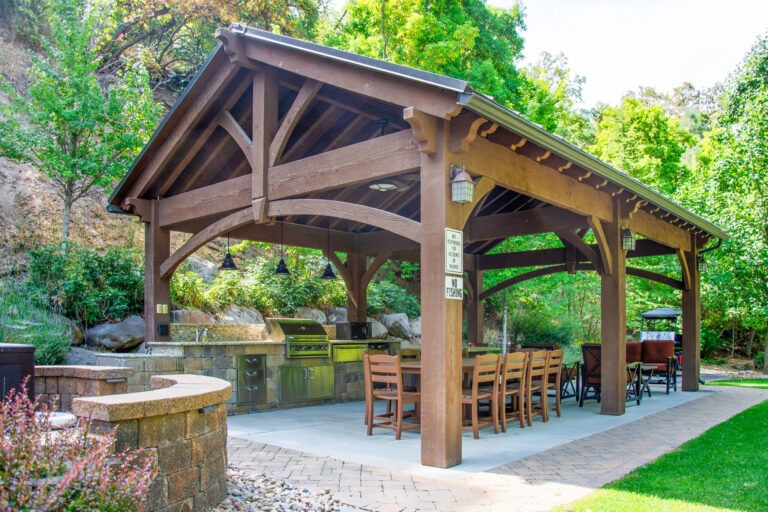
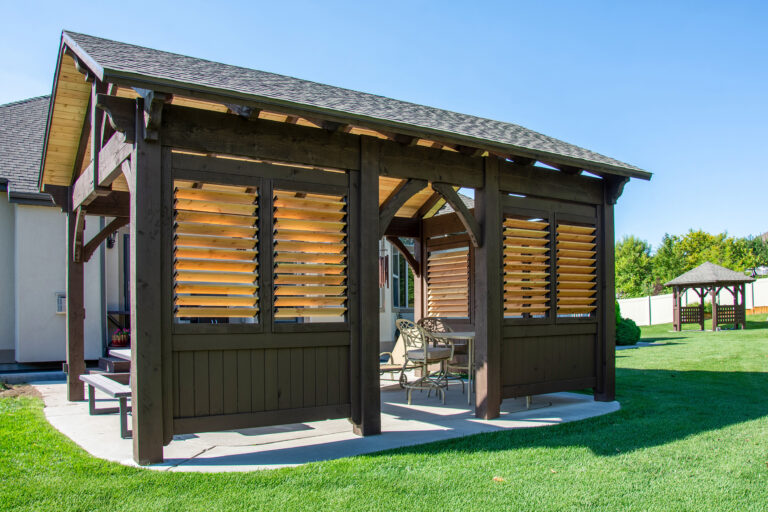
How This Applies To Pergolas, Pavilions, And Other Outdoor Structures
For a freestanding pergola or pavilion, the sections that matter most govern posts and columns near or in contact with the ground.
A post set directly into soil, or a base plate sitting within 8 inches of exposed ground on a concrete footing, falls inside the code’s decay-protection trigger.
For genuine ground contact, that generally means preservative-treated wood rated for the exposure or a design that removes the wood from that zone entirely — naturally durable heartwood on its own is typically rated for aboveground service, not direct ground contact.
Elevating the post base above grade on a corrosion-resistant bracket is one common way to keep the wood itself out of the ground-contact zone the code is concerned with, independent of species.
This detail also intersects with permitting — plan reviewers checking a pergola or pavilion often look at the post-to-footing connection specifically, since it’s one of the more common places decay-protection requirements get missed.
And because a pavilion’s solid roof sheds more water directly onto its posts than an open pergola does, the decay-protection detail at the base matters even more on a fully-roofed structure.

Naturally Durable Wood Vs. Pressure-Treated Wood: The Real Tradeoffs
Since the code already treats both paths as compliant, the real decision comes down to appearance, cost, ground-contact rating, and how the piece will be used, not which one satisfies an inspector.
|
Specs |
Naturally Durable Wood |
Pressure-Treated Wood |
|---|---|---|
|
Decay resistance |
From natural heartwood extractives |
From chemical preservative retention |
|
Appearance |
Natural grain and color, no chemical tint |
Often a visible greenish or brown tint |
|
Ground contact |
Only a small number of species/grades are rated for direct ground contact; most naturally durable heartwood is rated for aboveground use only |
Rated by AWPA Use Category, with distinct categories for lighter above-ground exposure up through direct ground and fresh-water contact |
|
Typical cost |
Species-dependent; naturally durable species often cost more than commodity softwoods |
Generally less expensive than the costlier naturally durable species |
|
Common use |
Exposed structural members, visible framing, siding |
Sill plates, ledgers, ground-contact posts |
Treated wood is rated by use category under AWPA U1, which matches the treatment level to the exposure condition.
A board rated for above-ground use isn’t automatically rated for direct ground contact, and using the wrong category is a common gap on outdoor projects.
Reducing decay risk regardless of species: decay protection isn’t only about the wood itself. Keeping wood off grade, allowing airflow underneath structural members, and directing roof and site drainage away from posts and footings all reduce the moisture exposure decay fungi need in the first place — the same fiber-saturation threshold covered above.
Does Your Climate Change What Counts As Naturally Durable?
The naturally durable wood requirement is location-based, not climate-zone-based.
The same species list applies whether a project sits in a humid coastal state or an arid inland one.
What changes by climate is the practical decay rate, not the code requirement itself. Wood in a consistently dry climate crosses the fiber-saturation threshold less often, so decay progresses more slowly even in an identical framing detail.
That’s a real difference in risk, but it doesn’t change which species qualify as naturally durable or where R317.1 applies.

Douglas Fir Vs. Cedar Vs. Redwood: What Are Outdoor Structures Actually Built From?
Most heavy-timber outdoor structures aren’t built from the species the code lists as naturally durable. They’re built from Douglas Fir, and that gap is worth understanding directly.
The USDA Forest Products Laboratory’s Wood Handbook groups heartwood decay resistance into four tiers:
- Very resistant
- Resistant
- Moderately resistant
- Slightly or nonresistant.
Douglas Fir heartwood falls in the moderately resistant tier — strong and widely used in heavy timber construction, but a step below the species the code and industry treat as naturally durable.
It needs a protective finish or treatment for long-term exterior performance, particularly in any location Section R317.1 flags.
Cedar and redwood heartwood both reach the resistant tier, with one wrinkle worth knowing: the Wood Handbook rates old-growth redwood heartwood as resistant, but young-growth redwood, the cut that dominates today’s lumber market given old-growth harvesting restrictions, drops to moderately resistant, the same tier as Douglas Fir.
Western Red Cedar heartwood holds the resistant rating regardless of growth age, largely due to the thujaplicins covered earlier.
The Wood Handbook draws one more distinction that matters for outdoor structures: resistant-tier heartwood is described as suitable for aboveground service, not for direct ground contact.
Only the very-resistant tier (species like black locust, none of which are common in heavy timber construction) is considered reliable in the ground without treatment.
In practice, that means cedar or old-growth redwood heartwood reduces decay risk in a location R317.1 flags, but it doesn’t always clear the code’s toughest, ground-contact locations on its own the way treated wood does.
None of this makes Douglas Fir a poor choice. It’s one of the strongest commercially available softwoods and the most common species in heavy timber pergola construction.
It means a Douglas Fir post in a location R317.1 flags needs a finish, treatment, or a detail that keeps it out of that zone, and that cedar or old-growth redwood narrows, but doesn’t always eliminate, the same need. Cedar and redwood typically cost more for that reduced risk.

The Takeaway
Naturally durable wood isn’t a marketing phrase.
It’s a specific, code-recognized category with a short species list behind it, and IRC R317.1 only requires it, or its treated-wood equivalent, in the locations where ground contact and moisture actually create decay risk.
Knowing that list, and knowing which parts of a structure the code actually flags, turns a vague material question into a straightforward one: does this piece sit in a location R317.1 cares about, and if so, is it naturally durable heartwood suited to that exposure, wood treated to the right AWPA use category, or detailed to stay out of that zone entirely?
Any of those three answers satisfies the code. The species used for the rest of the structure, where appearance, budget, and long-term performance matter more than a code trigger, is a separate decision, and one worth making with the same level of specificity.
Naturally Durable Wood: Questions Homeowners And Builders Ask
With 28 Best of State Awards, multiple Inc. 5000 honors, an HGTV Design Excellence Award, 2026 SBA Utah District Manufacturing Small Business of the Year, and 7,000+ structures built nationwide since 2008, Western Timber Frame is a national authority on custom, structural, handcrafted, real-wood timber frame pergolas and outdoor structures for homeowners who want true craftsmanship, not mass-produced, cookie-cutter kits.