Matching Timber Pavilion and Pergola in Farr West, Utah
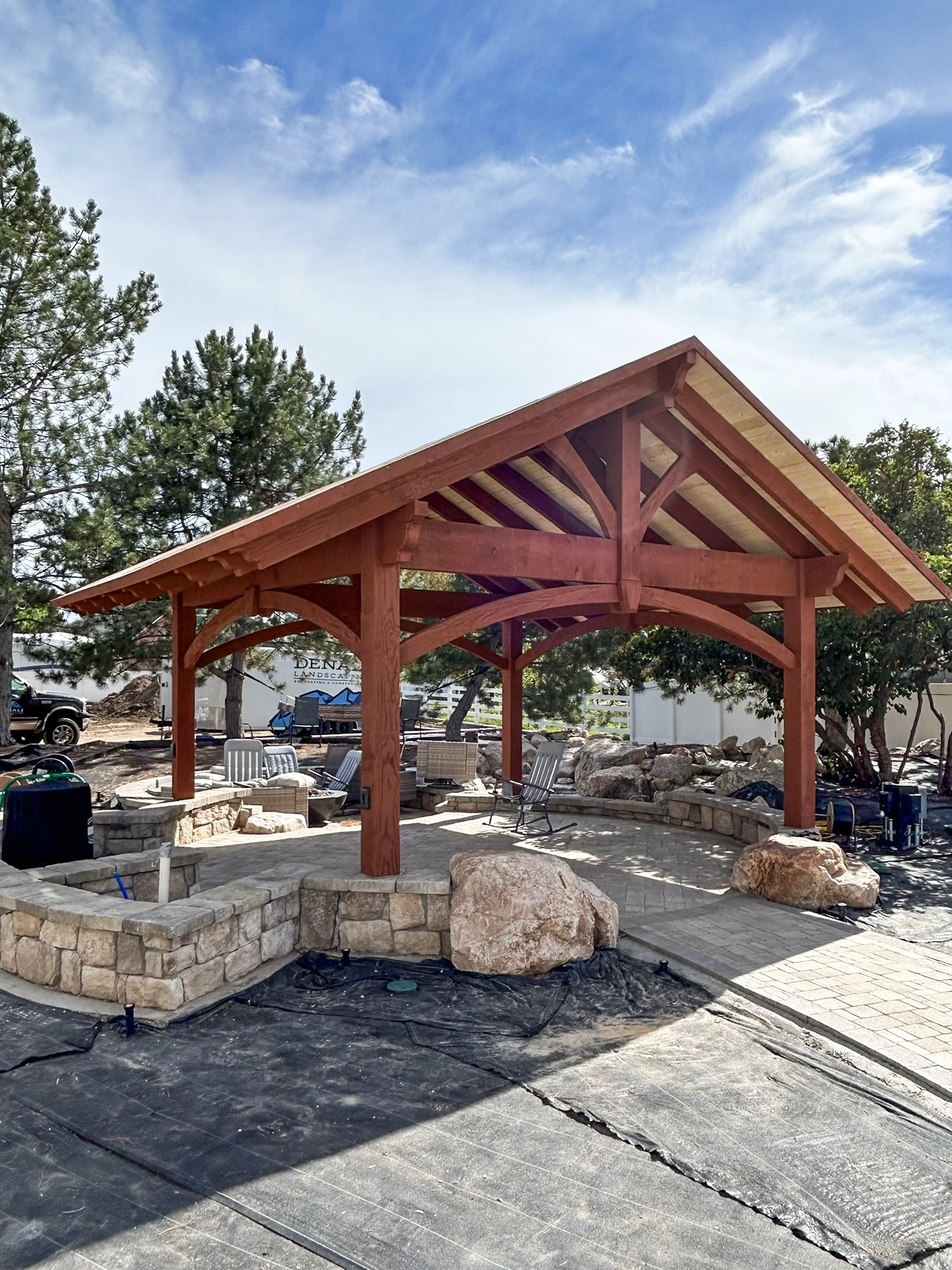
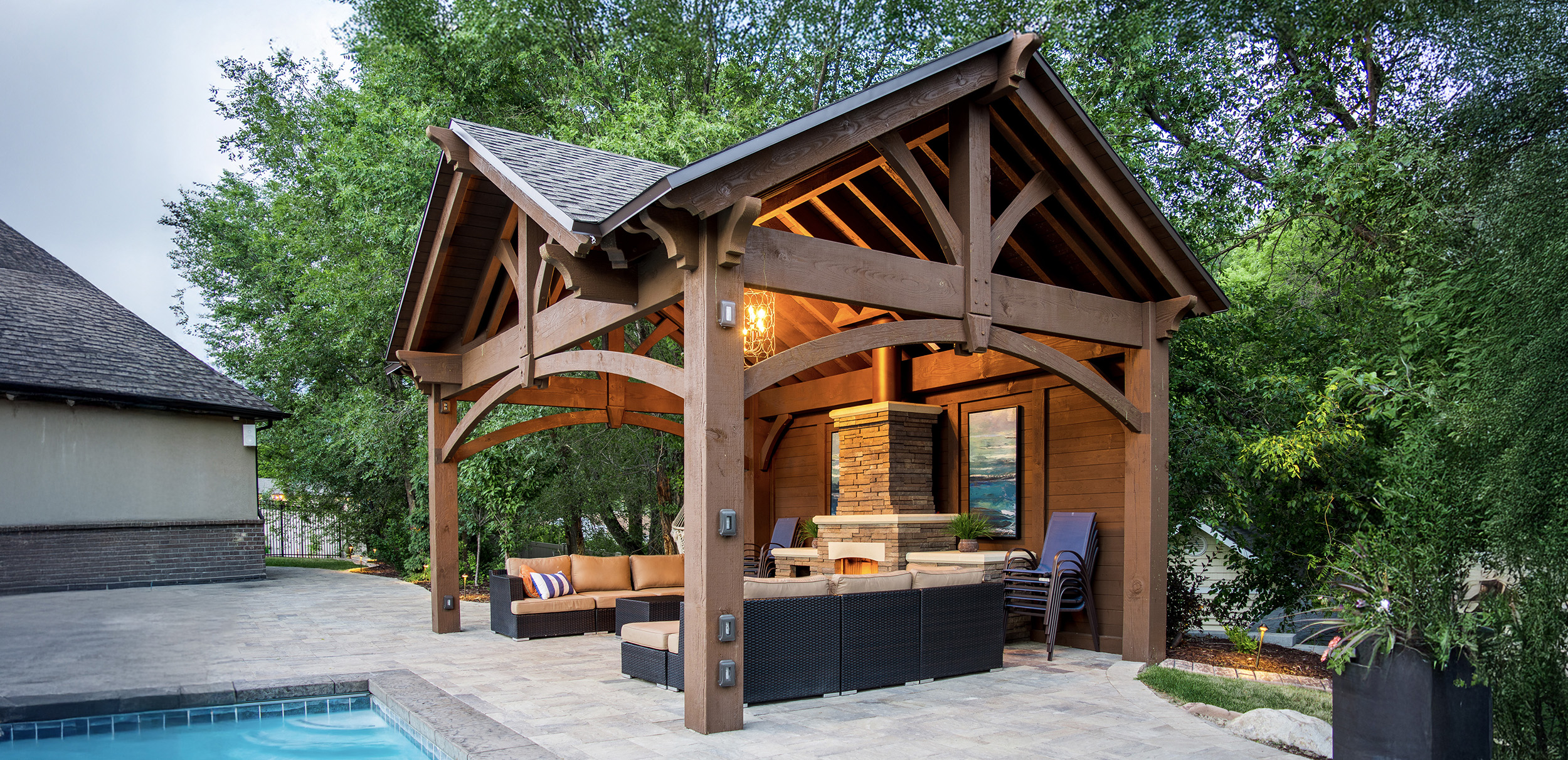
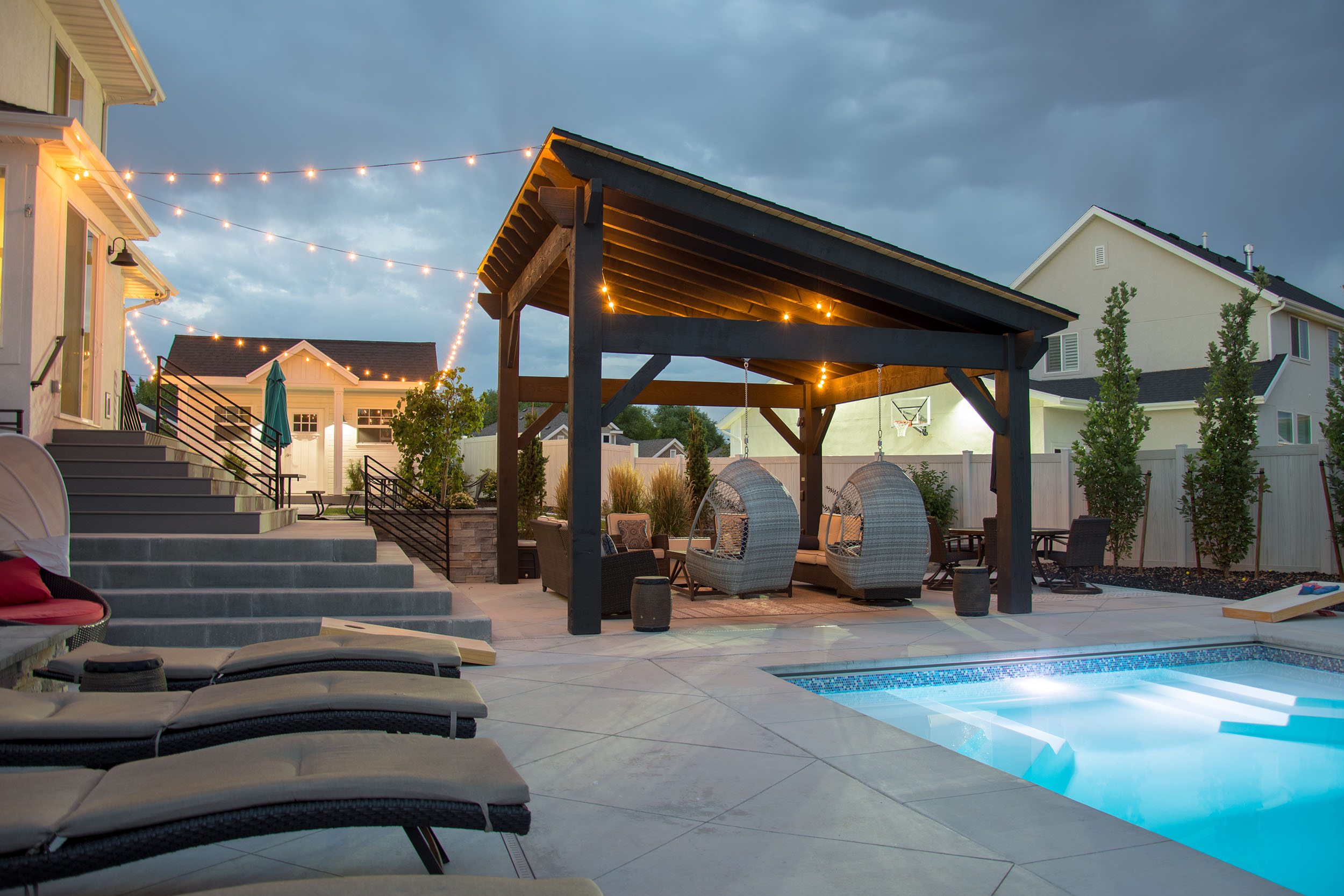
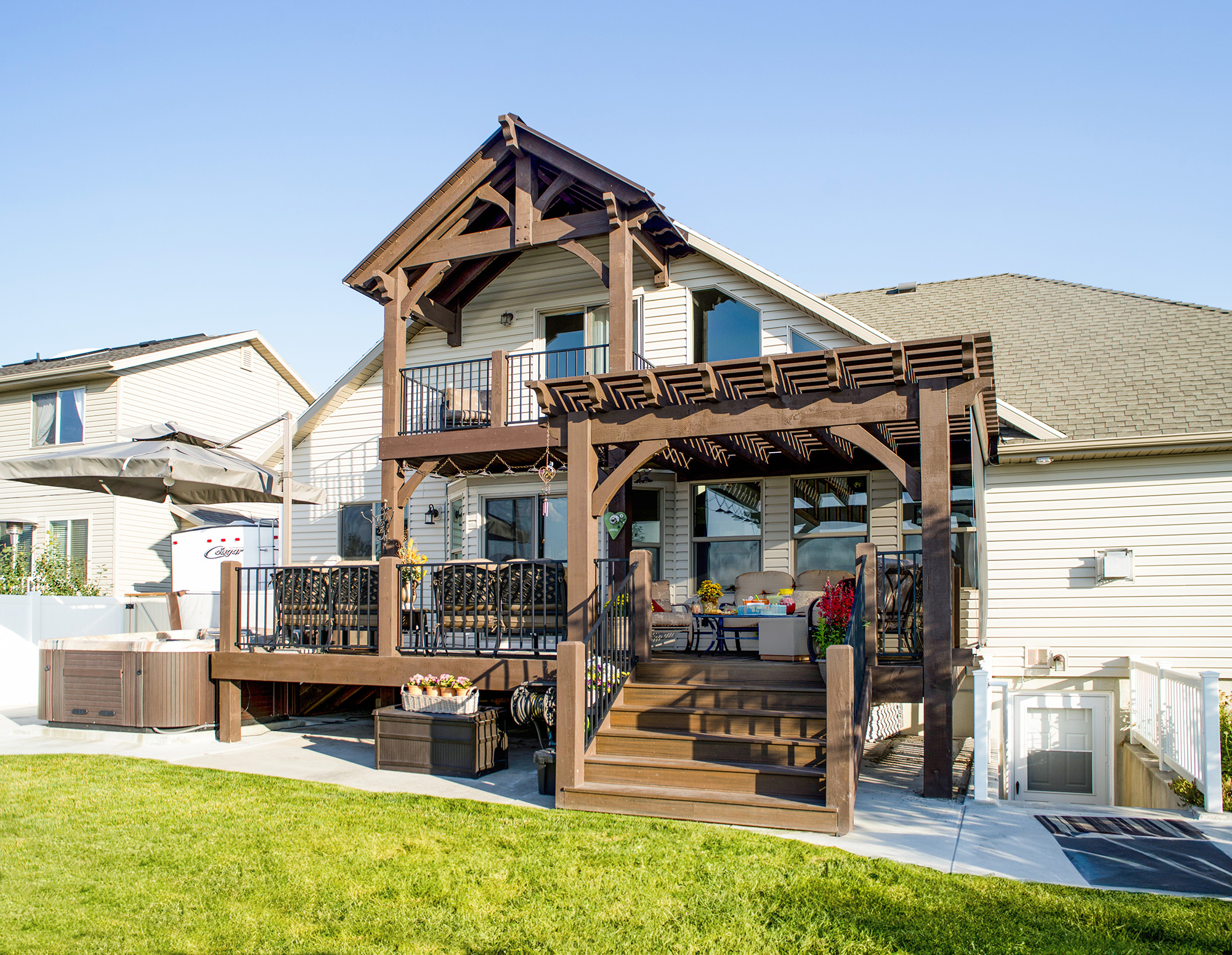
This backyard in Farr West, Utah, features two custom Western Timber Frame™ structures designed to complement each other: an 18×22 timber pavilion and a 16×5 pergola, both finished in Rich Sequoia stain.
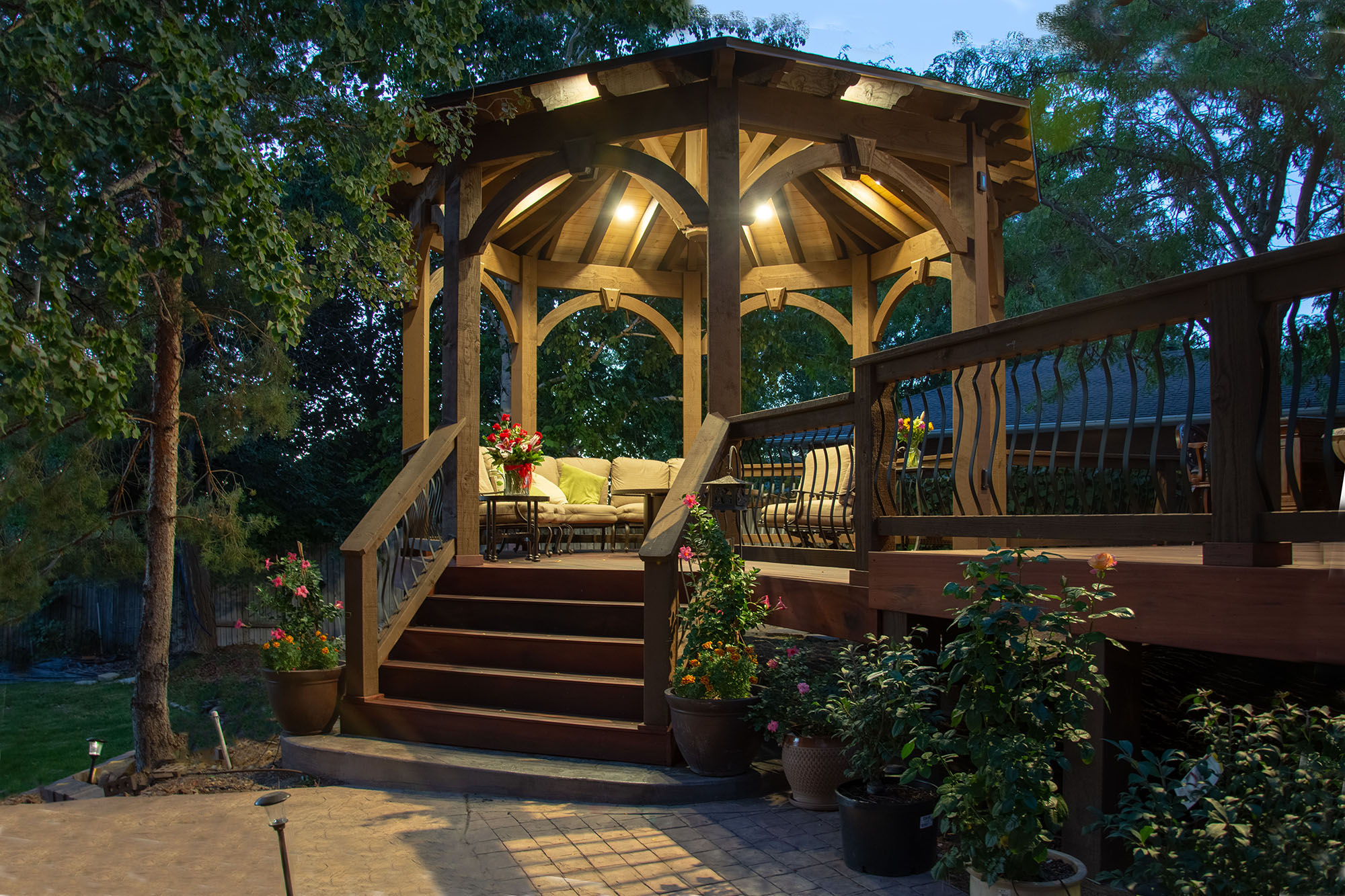
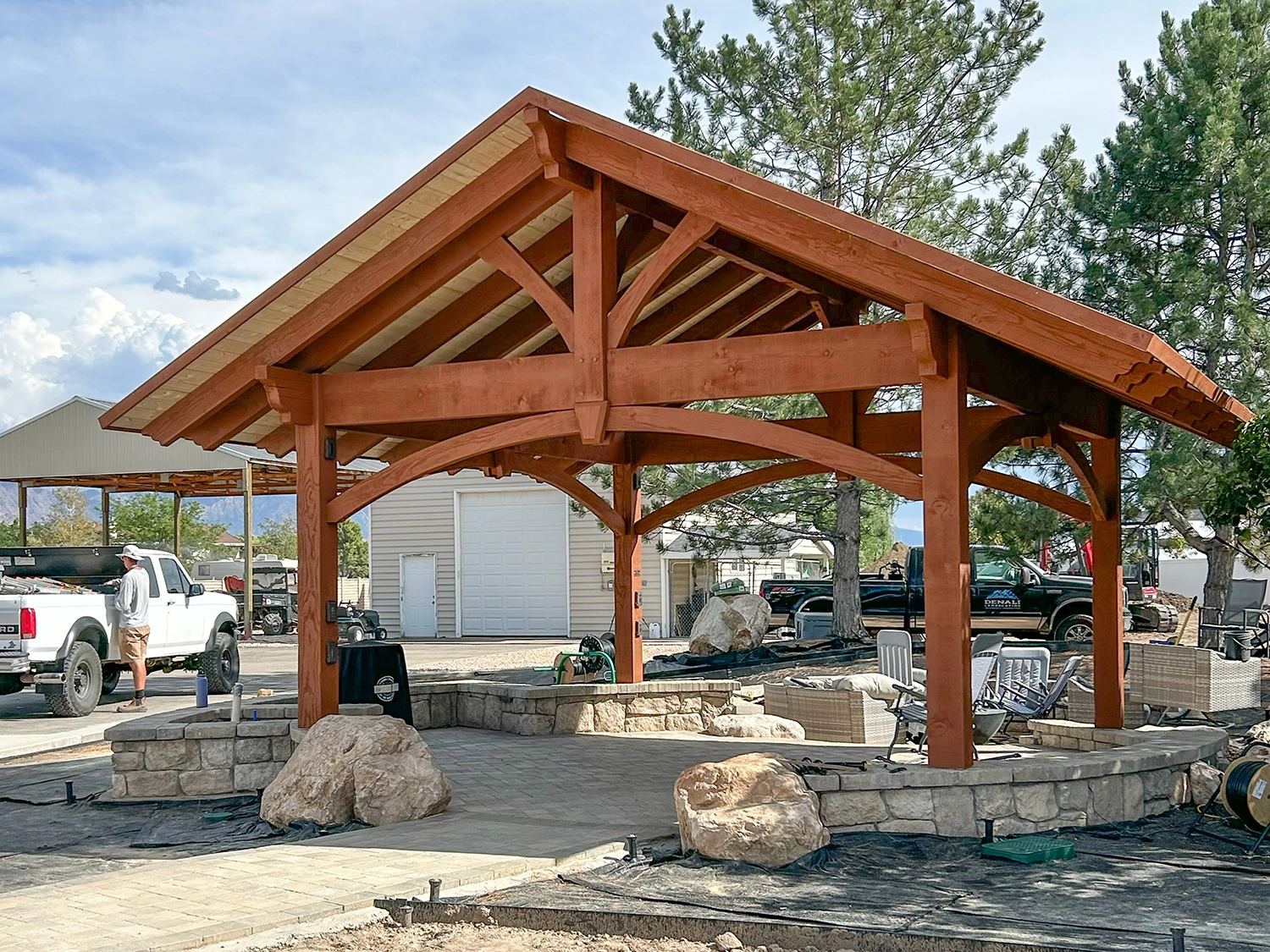
The gable-roof pavilion stands over a paver patio ringed by stone seat walls and natural boulders, where it will shelter the main gathering area. Exposed timber framing, king-post trusses, and sweeping curved knee braces give it its character.
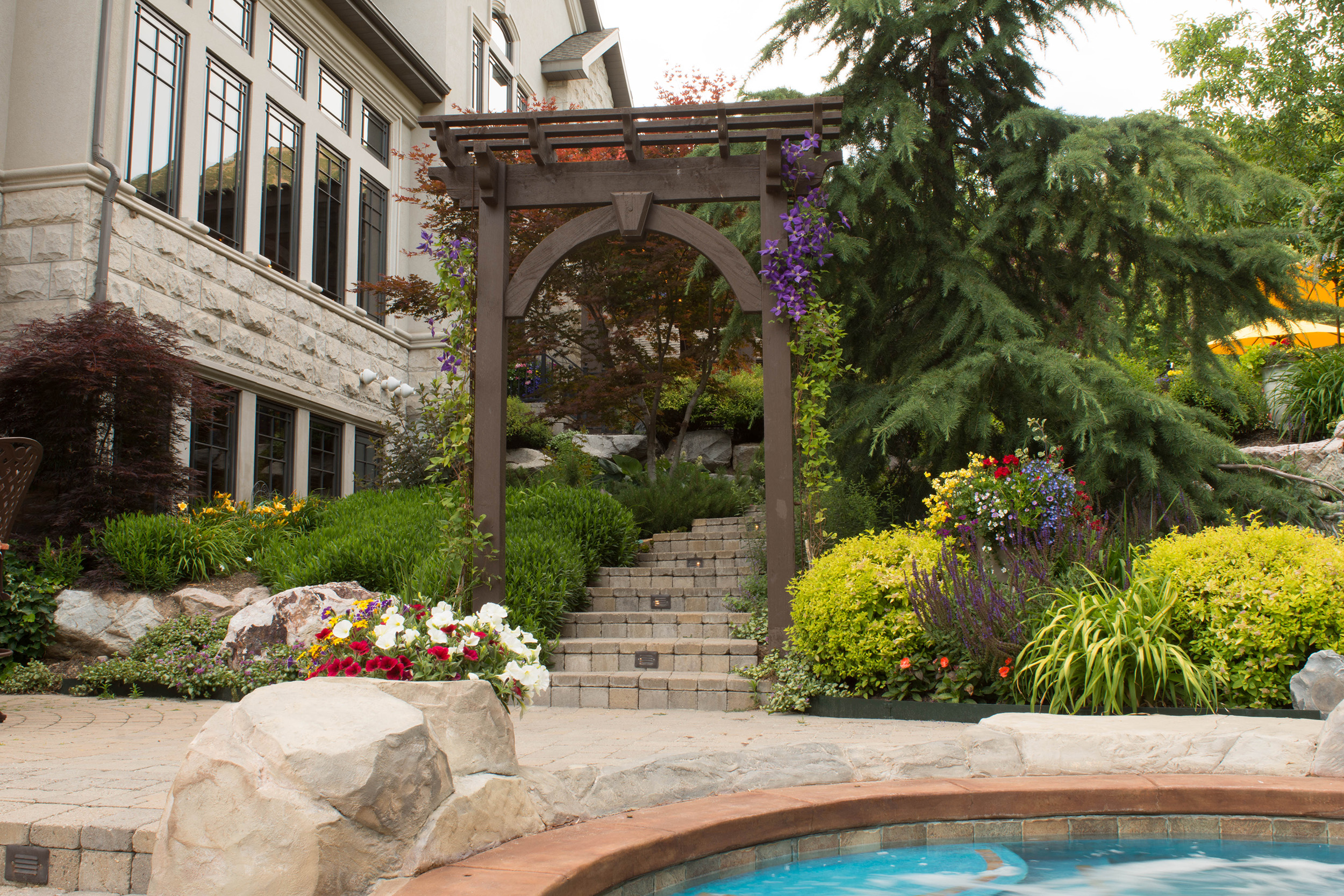
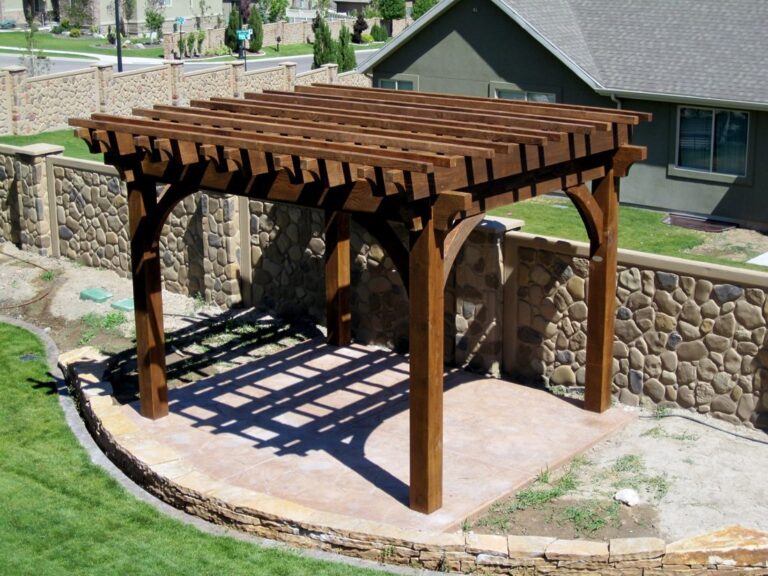
Elsewhere in the yard, a narrow timber pergola with an arched beam, lattice side panels, and built-in benches carries the same warm wood tone into the landscape.
The two structures serve separate purposes, but their matching finish and shared timber details make them read as one coordinated design.
Project Details
| Feature | Project Details |
|---|---|
| Location | Farr West, Utah |
| Structures | 18×22 timber pavilion and 16×5 timber pergola |
| Finish | Rich Sequoia stain on both structures |
| Pavilion roof | Gable roof with king-post trusses, a light wood ceiling, and shaped rafter tails |
| Pavilion framing | Timber posts and beams with curved knee braces and keystones |
| Pergola | Arched beam with keystone, exposed rafters, lattice side panels, and built-in benches |
| Setting | Paver patio with stone block seat walls and boulders |
| Manufacturer | Western Timber Frame |
Why Pair a Timber Pavilion With a Pergola?
A pavilion and a pergola do two separate jobs, so pairing them gives a yard more than one kind of outdoor space.
Once its roofing is on, the pavilion’s solid roof gives full cover from sun and rain. That makes it the place for seating, meals, and gatherings that run long.
The pergola has an open overhead framework. It does not shelter a seating area the way the pavilion does; instead, it adds height, pattern, and a focal point elsewhere in the yard.
Finishing both in Rich Sequoia ties them together, so the yard reads as one plan rather than two separate purchases.
See more custom timber pavilions and custom timber pergolas, or compare them in pergola vs. pavilion vs. arbor.
What Does the 18×22 Pavilion Cover?
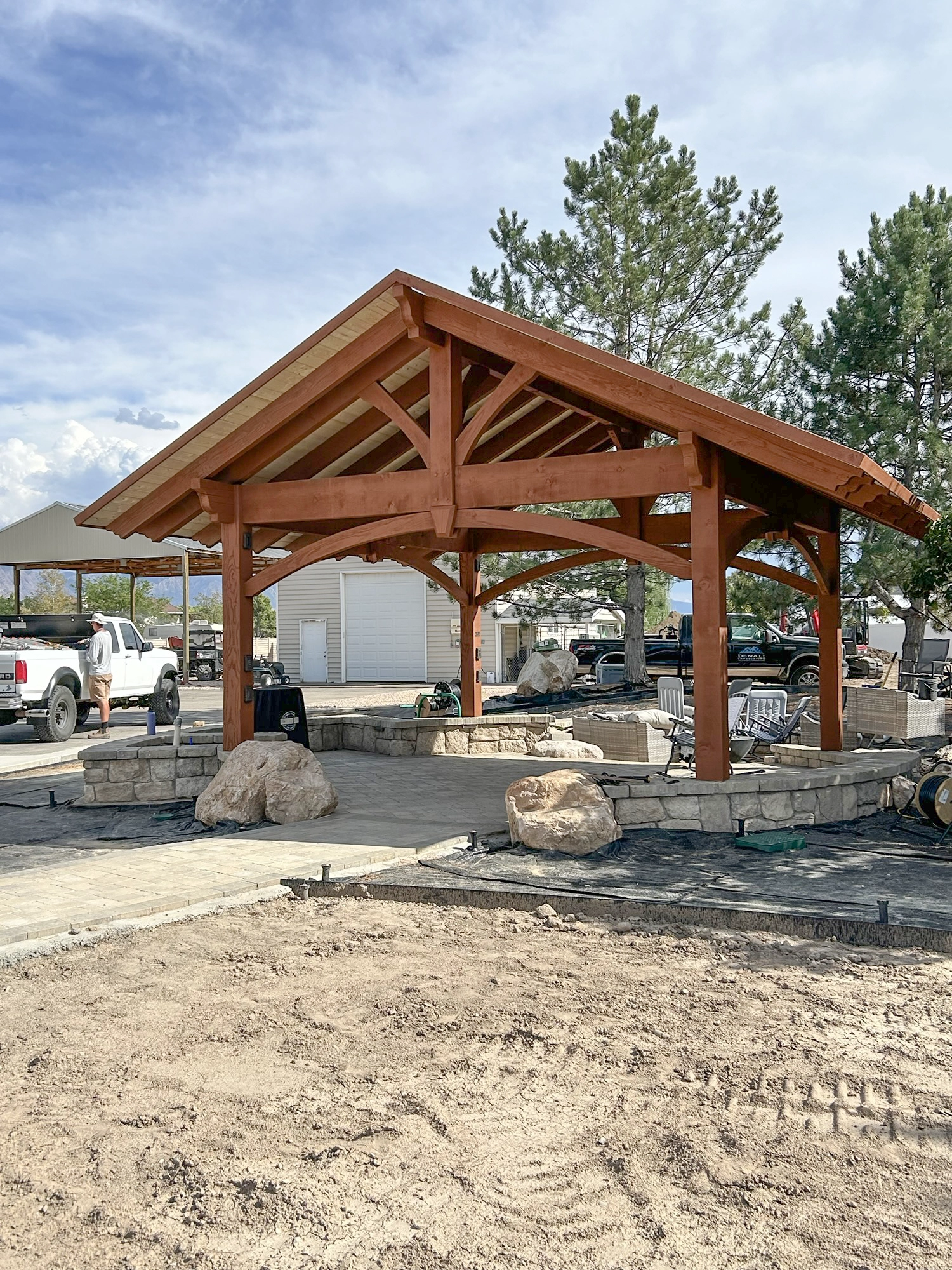
The pavilion covers the heart of a new paver patio, with room for lounge chairs and a gathering area beneath its roof.
In Western Timber Frame sizing, 18×22 is the roof size, measured from overhang to overhang. The post-to-post footprint underneath is smaller, and that is the number that decides what fits inside.
Inside the gable, king-post trusses span the width of the roof. Each has a center post rising to the ridge, and the open framing keeps the ceiling high and airy.
Above the trusses, a light wood ceiling contrasts with the Rich Sequoia frame, so the darker timbers stand out against it. Shaped rafter tails line the edge of the roof.
These photos show the pavilion and pergola freshly installed, before the roofing and the final landscaping were added. The roof decking is in place, and the roofing material is sourced locally and added on site, which is typical for Western Timber Frame pavilions.
Curved knee braces join the posts to the beams on every side, meeting at a keystone in the middle of each span. They stiffen the frame at the joints and give each opening an arched top.
Low stone block seat walls curve around part of the patio, and large boulders sit at the edges, so the pavilion feels anchored in the landscape.
What Is a 16×5 Timber Pergola Used For?
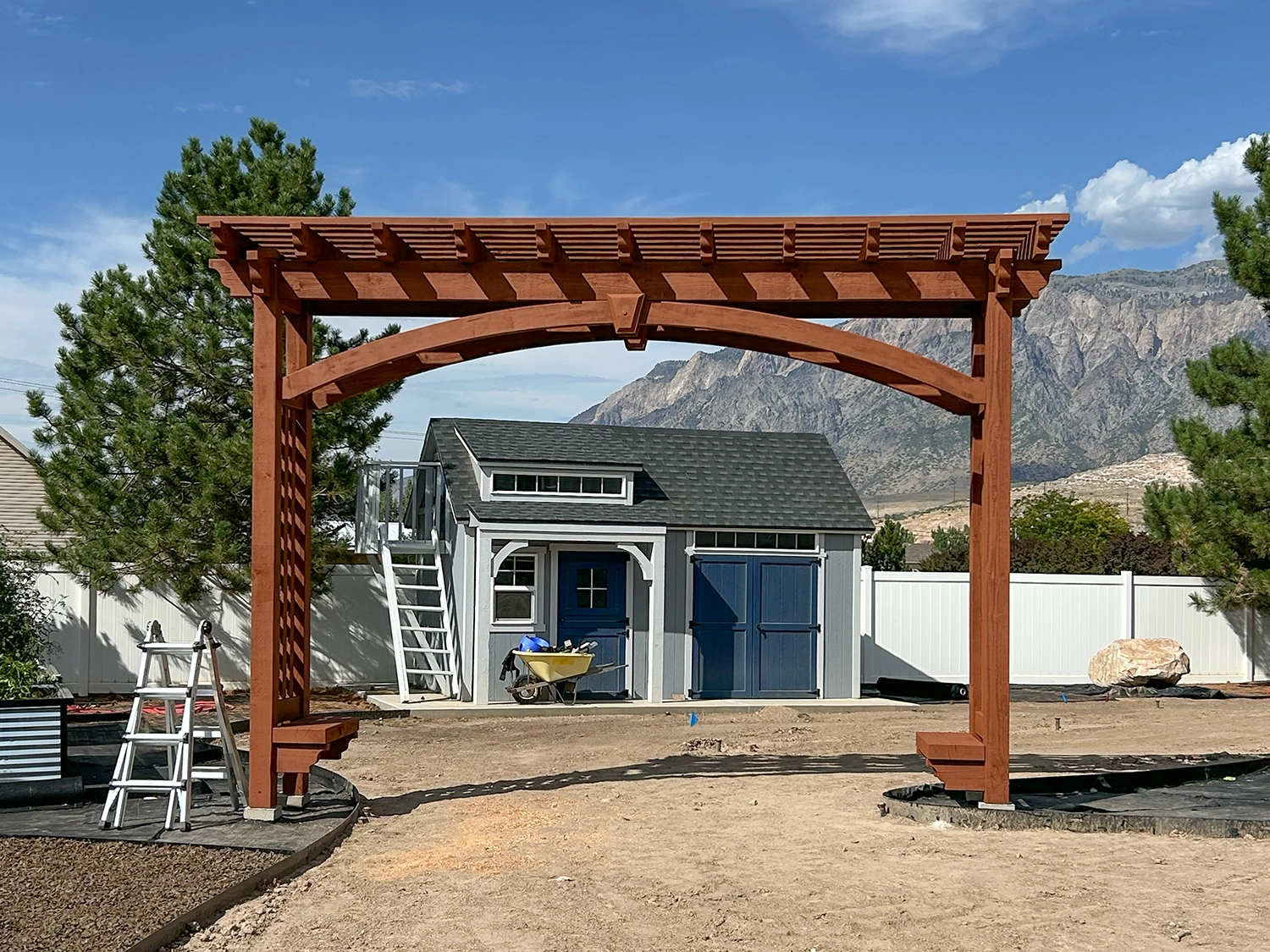
The 16×5 timber pergola adds architectural interest without needing a large footprint.
Its narrow proportions suit defining a walkway, framing a garden entrance, or creating a transition between two areas of a landscape. Its rafters also cast partial, moving shade, depending on how it is oriented.
The arched beam spans the opening between the posts, with a keystone at the center, and exposed rafters run across the top.
Lattice panels fill the sides between the paired posts. They add detail on every side and can support climbing plants as the landscaping grows in.
A small bench is built in at the base of each side, so the pergola also offers a place to sit and take in the view of the mountains.
Finished in the same Rich Sequoia as the pavilion, the pergola connects the two structures visually, even though they stand in separate areas of the property.
Why Choose Rich Sequoia Stain for a Pavilion and Pergola?
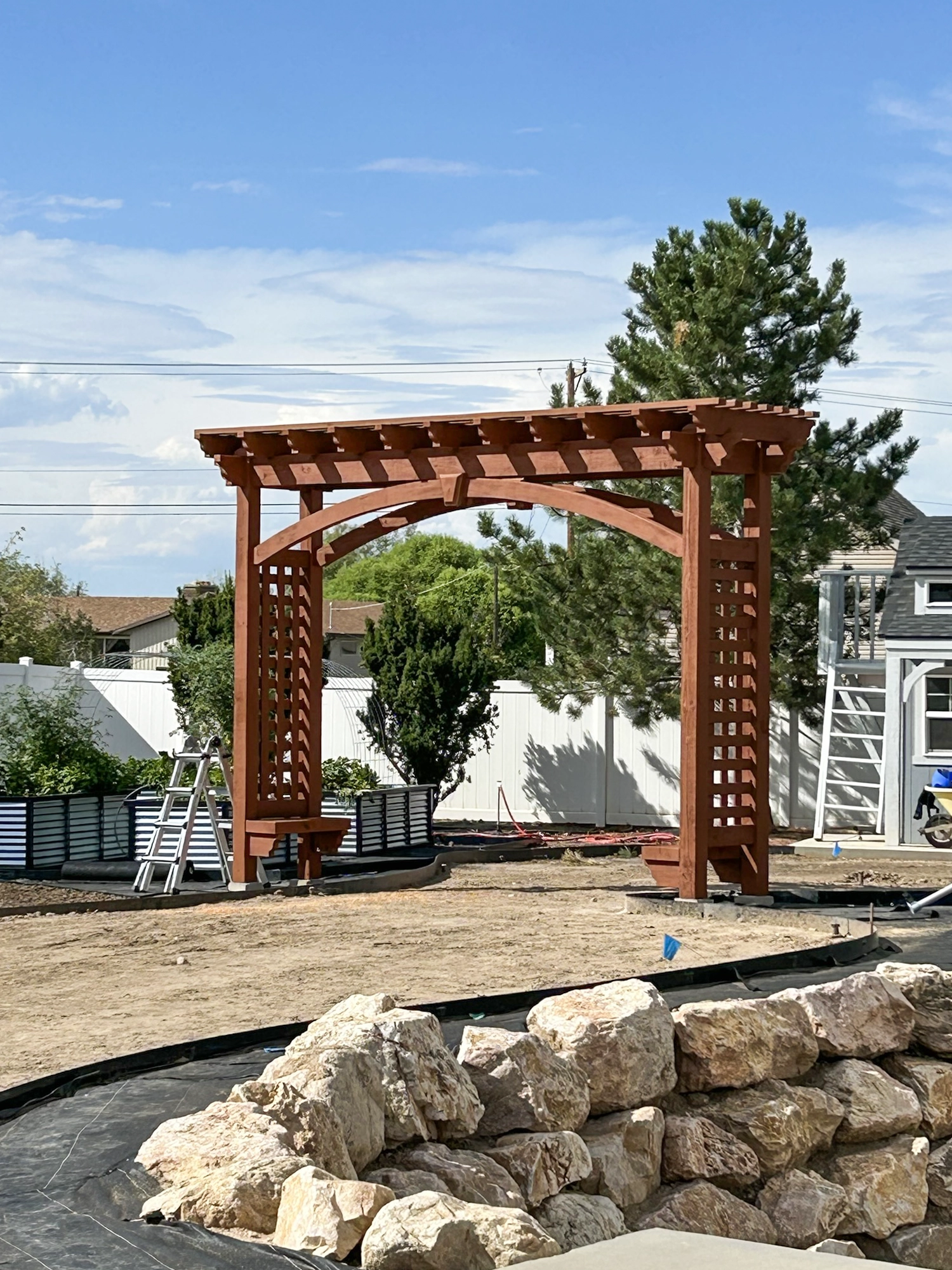
Rich Sequoia is a warm red-brown stain. It gives the timber a rich color that reads close to solid, while the rough-sawn texture of the wood stays visible.
Against a blue sky and the green of the surrounding pines, the red-brown tone stands out without looking out of place.
Using the same color on both structures matters most when they sit apart in the yard. The shared finish connects them visually even when they are not side by side.
Every structure is finished with Sherwin-Williams stain applied in the shop. Like any real timber outdoors, an occasional re-coat keeps the color looking its best.
How Are Timber Pavilions Engineered for Utah Weather?
Western Timber Frame starts its standard engineering at 115 mph wind. Where a project requires a higher design wind speed, the structure is engineered for that requirement.
In Northern Utah, structural requirements can also include snow loads, roof design, and anchoring, and they vary by city and site.
Because each structure is made to order, its dimensions and structural details are planned around the installation location and the building codes that apply there.
Western Timber Frame has completed more than 7,000 timber structures since 2008, all made in its shop in Payson, Utah.
Questions About Timber Pavilions and Pergolas
What is the difference between a pavilion and a pergola?
A pavilion has a solid roof that gives full cover from sun and rain. A pergola has an open overhead framework of beams and rafters that filters sunlight instead of blocking it.
Can a pavilion and pergola be designed together for the same backyard?
Yes. A timber pavilion and pergola can be designed as complementary structures, even when they serve separate purposes or stand in separate areas. Matching stain, timber profiles, and details give them a consistent look. This Farr West, Utah, project pairs an 18×22 gable-roof pavilion with a 16×5 arched pergola, both in Rich Sequoia.
What does an 18×22 pavilion size mean?
For Western Timber Frame structures, the size in the name is the roof size, measured from overhang to overhang. The post-to-post footprint underneath is always smaller than the roof size.
Can a pavilion and a pergola be stained to match?
Yes. When a pavilion and a pergola are ordered for the same yard, both can be finished in the same stain color so the two structures read as one design.
What color is Rich Sequoia stain?
Rich Sequoia is a warm red-brown stain. It gives timber a rich color that reads close to solid while the rough-sawn texture of the wood stays visible.
What is a narrow pergola used for?
A narrow pergola can frame a path, mark an entrance to a garden area, or create a transition between two parts of a yard. Its rafters give partial shade, and lattice side panels can support climbing plants.
Does a backyard pavilion need a building permit in Utah?
It depends on the pavilion’s size, height, and placement, and on the city’s building rules. Check with the local building department before ordering, since requirements vary from city to city.
Plan a Timber Pavilion and Pergola for Your Yard
A project like this starts with where people will gather, where the yard needs a focal point, and which stain color suits the home.
Request a free design consultation or call Western Timber Frame at 877-870-8755.
Western Timber Frame™ — Payson, Utah | Since 2008 | 7,000+ structures in all 50 states
2026 SBA Manufacturing Award | HGTV Design Excellence Award | 28 Best of State Awards