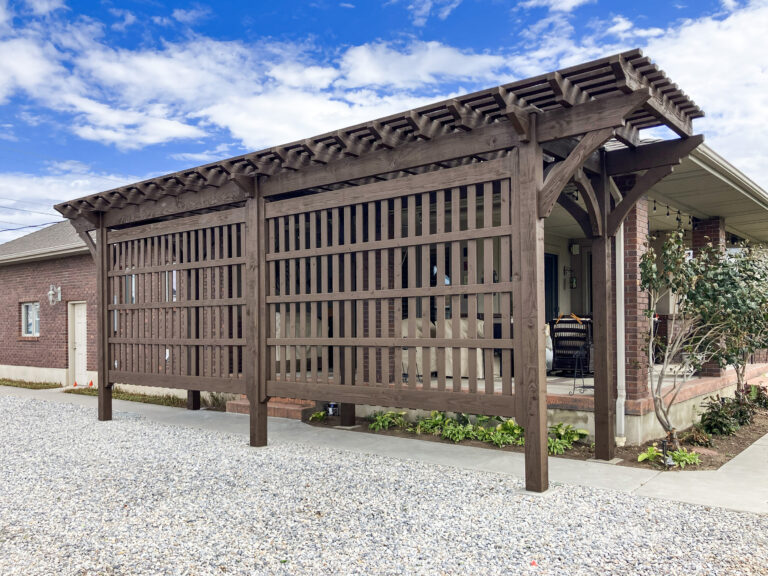
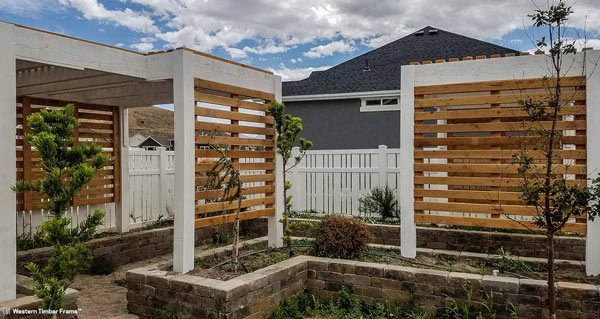
11 Charming Trellises: Define Space, Add Beauty & Privacy
Arbors serve as entryways and pathway coverings, and trellises are a natural way to shape walls, boundaries, and privacy screens. A trellis does not create full overhead shade, but it can provide partial shade for a few hours of the day. From a small, narrow spot to a large open yard, a trellis helps define the perfect outdoor space.
This page focuses on privacy and defining space. For the full range of trellis shapes, garden designs, and build ideas, see our 20 trellis designs. If you are unsure where an arbor ends and a trellis begins, our guide explains what a trellis is.
Every trellis below is a real Western Timber Frame project, built from a CNC-cut kit with our patented Dovetail Difference® joinery and engineered for its site.
Privacy Trellis Options at a Glance
| Privacy Approach | Best For | Light Through Screen | Plant Friendly | Key Planning Point |
|---|---|---|---|---|
| Open timber frame | Defining an outdoor room | High | Yes | Placement matters more than density |
| Open lattice | Partial neighbor screening | Moderate to high | Yes | Choose opening size for the view |
| Heavy lattice | Stronger visual screening | Moderate | Yes | More material means more wind exposure |
| Planted trellis | Seasonal living screen | Changes by season | Yes | Plan for mature vine size |
| L-shaped screen | Privacy from two directions | Varies | Yes | Test both viewing angles |
| One-sided screen | Single unwanted view | Varies | Yes | Often avoids unnecessary enclosure |
| Poolside trellis | Boundary and partial privacy | High | Yes | Do not interfere with pool safety rules |
| Trellis wall with plants | Soft backyard privacy | Moderate | Yes | Leave room for pruning and airflow |
What Makes a Trellis Work for Privacy?
When we checked Kansas State University Extension, we found it describes a trellis as a basically two-dimensional frame for plants. The same garden-structure guidance lists screening a view, providing privacy, and defining a separate garden room among the jobs these structures can do.
When we checked Mississippi State University Extension, we found that lattice screens can be one, two, or three-sided. That means a homeowner may only need one screen aimed at the unwanted view instead of a wall around the whole patio. Source: Mississippi State University Extension.
When we checked University of Missouri Extension, we found that a trellis placed beside wood siding should leave space for air circulation. Its espalier guidance gives at least six inches between the wall and trellis. Source: University of Missouri Extension.
When we checked the USDA Forest Products Laboratory, we found that ground contact supplies the steady moisture that lets wood-decay fungi grow. Wood used in ground contact should be suitable decay-resistant heartwood or preservative-treated material. Source: USDA Forest Products Laboratory.
Privacy Screen Along a Side Yard
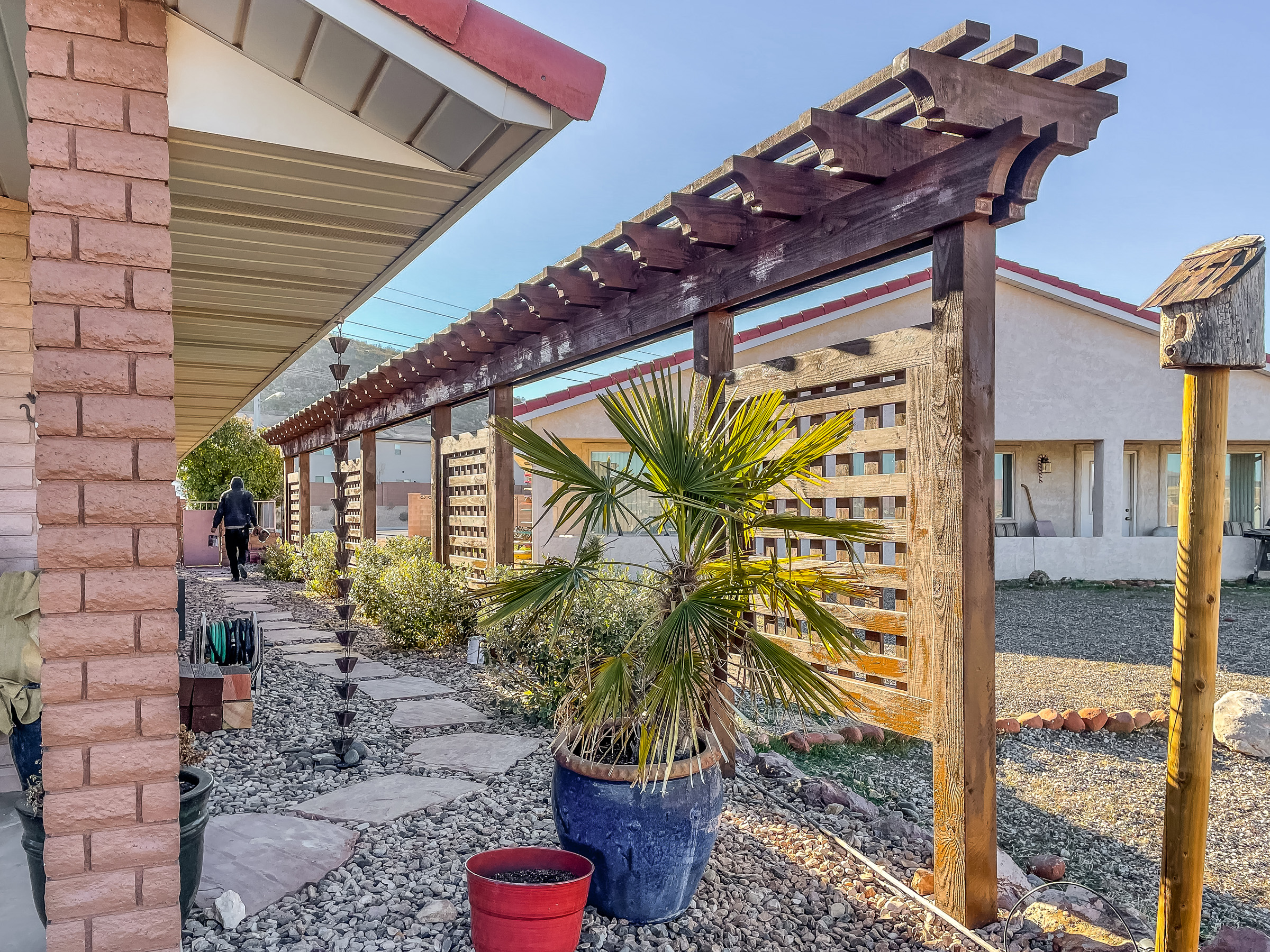
A run of lattice privacy panels turns a narrow side yard into a finished, screened passage.
A run of lattice privacy panels can turn a narrow side yard into a finished, screened passage. The open grid interrupts the view from the neighboring property while light and air still move through.
Aim the screening where the sight line actually needs it. A long run can be broken into sections so you only close off the parts that matter.
Freestanding Privacy Screens
A single freestanding screen can hide a view, a driveway, or a hot tub without walling off the whole yard. Placed on its own footings, it stands wherever the privacy is needed.

A lattice privacy screen with a walk-through, screening a front-yard view.
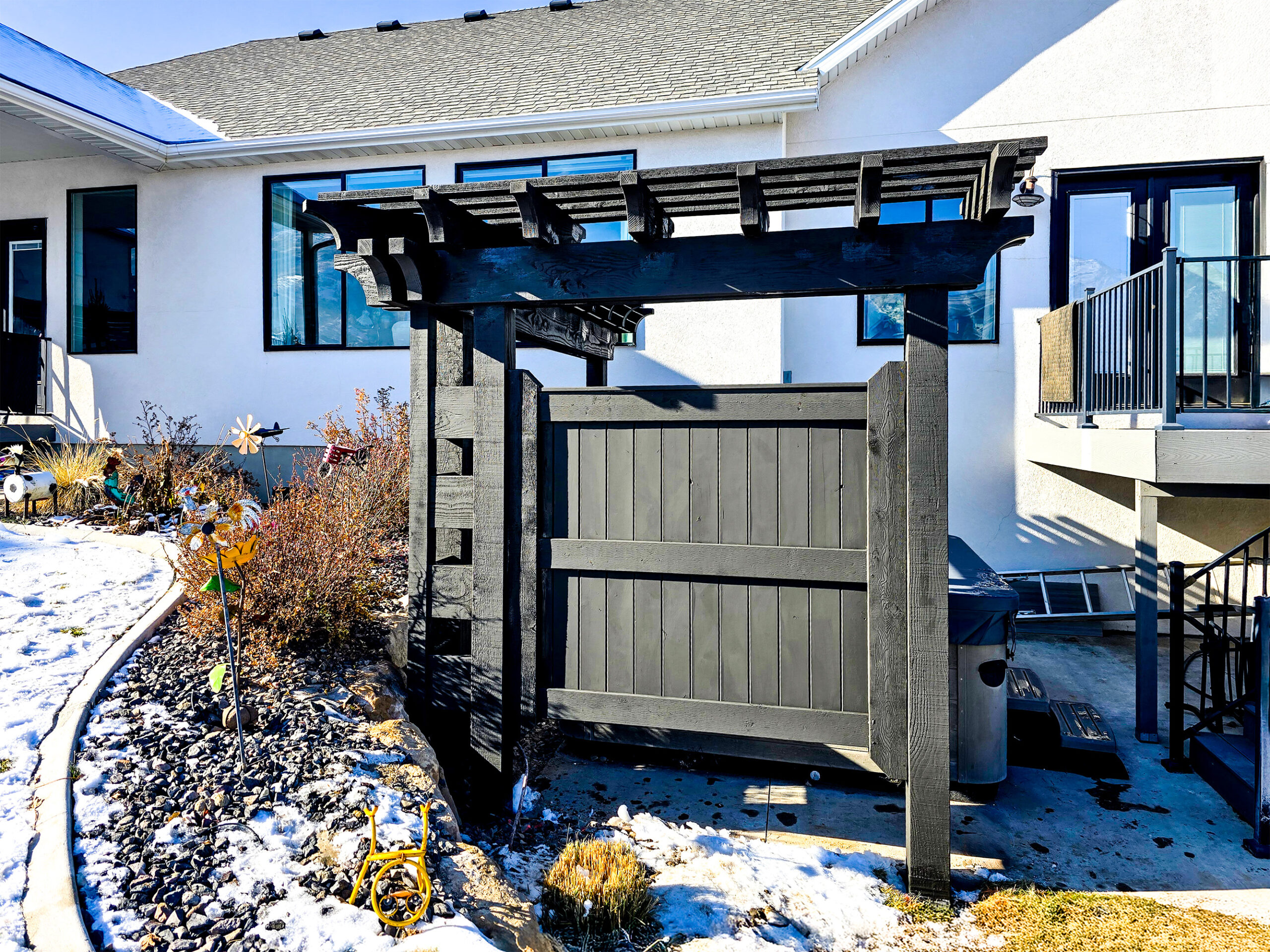
A darker screen and solid panel giving a hot-tub area privacy through the winter.
Because these carry their own load, the posts and footings still need to be sized for wind acting on the panel.
A Vertical Garden of Climbing Plants
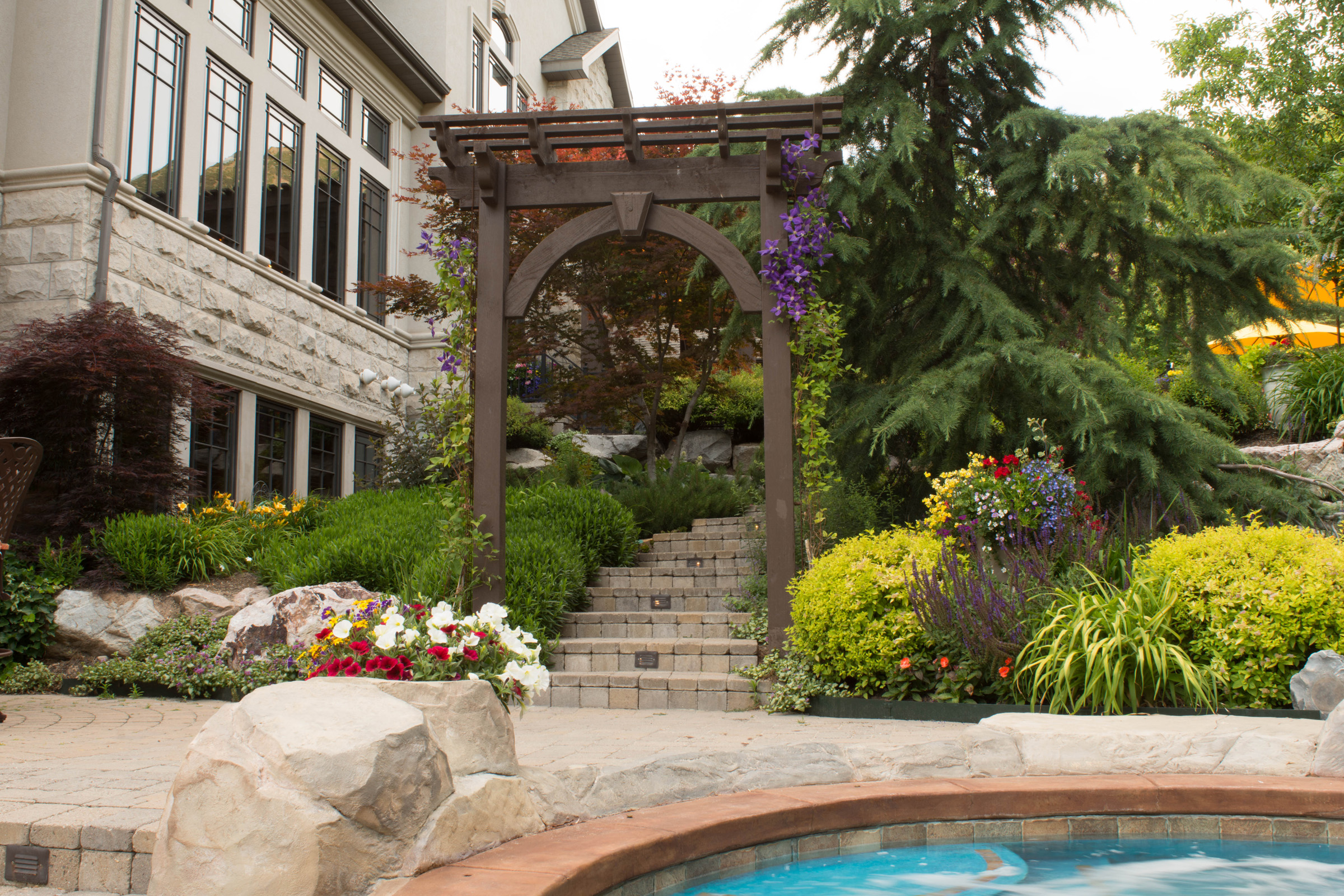
Clematis climbs a timber arbor, softening a hard edge into a living screen.
Plants turn an open arbor into a living privacy screen. Here clematis climbs the posts, softening a hard edge while the timber frame gives the vines a sturdy structure to hold.
Choose a plant sized to the frame, and keep the vine off the joints so moisture does not sit against the timber.
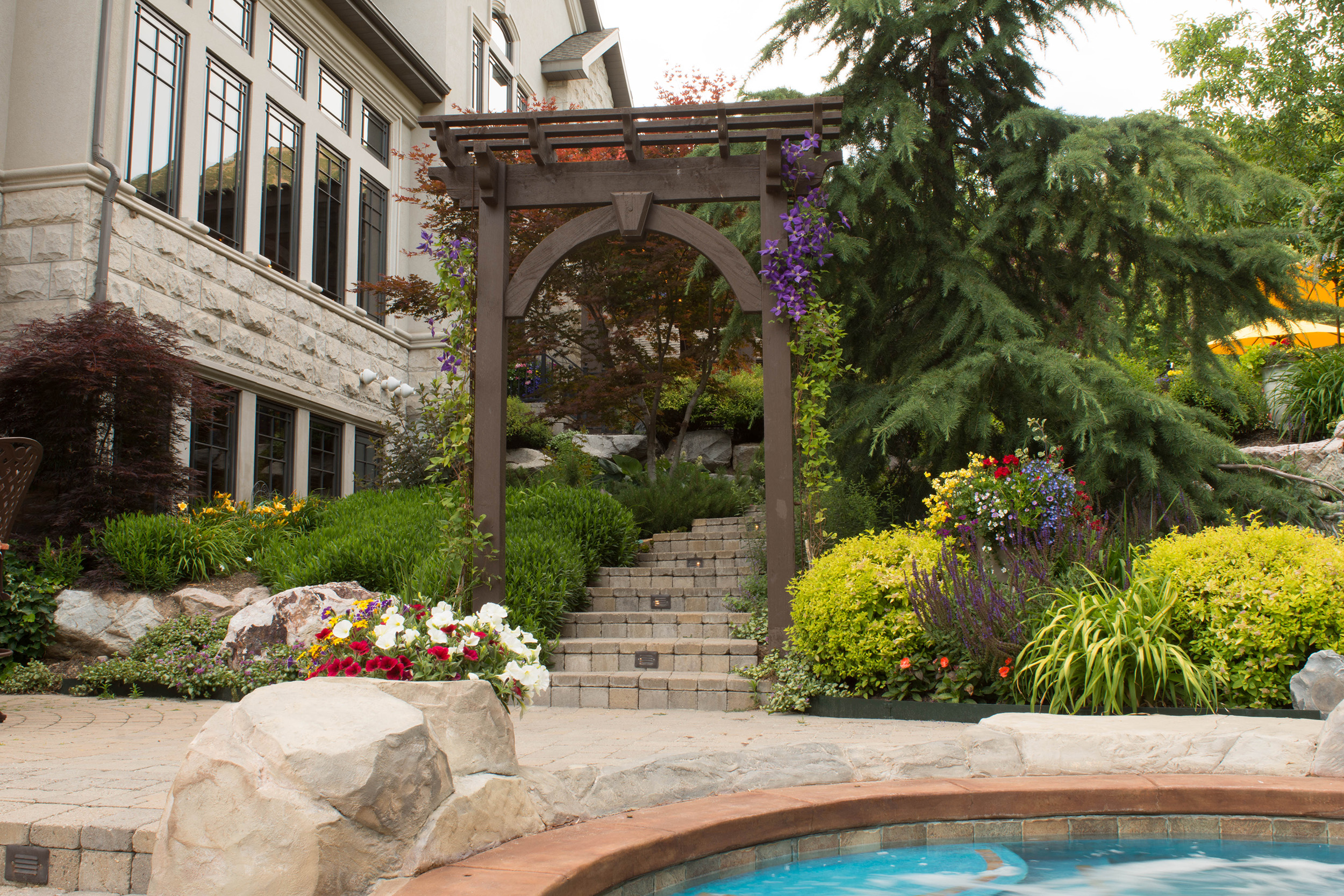
Garden Arbor Gateway
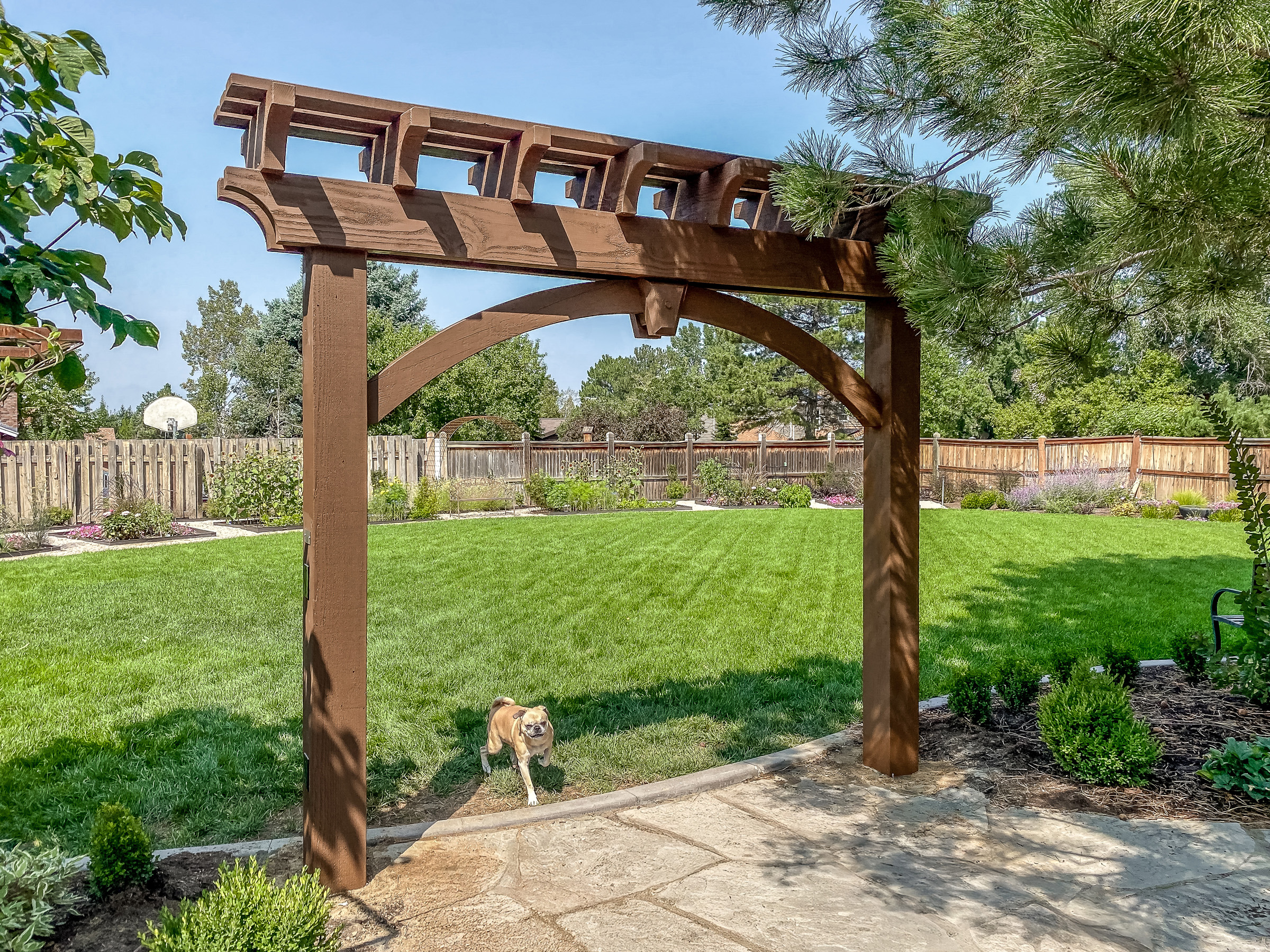
An arbor gateway framing the path into the garden.
An arbor marks a transition from one part of the yard to another. This gateway frames the path into the garden and gives the space a clear sense of entry.
Plan the opening width and headroom before setting posts, and leave room for any gate or plants.
Arbors Over a Garden Gate
Pairing an arbor with a gate turns a simple side-yard entry into a finished architectural moment. The overhead frame ties the two gate posts together while the gate keeps the passage secure.
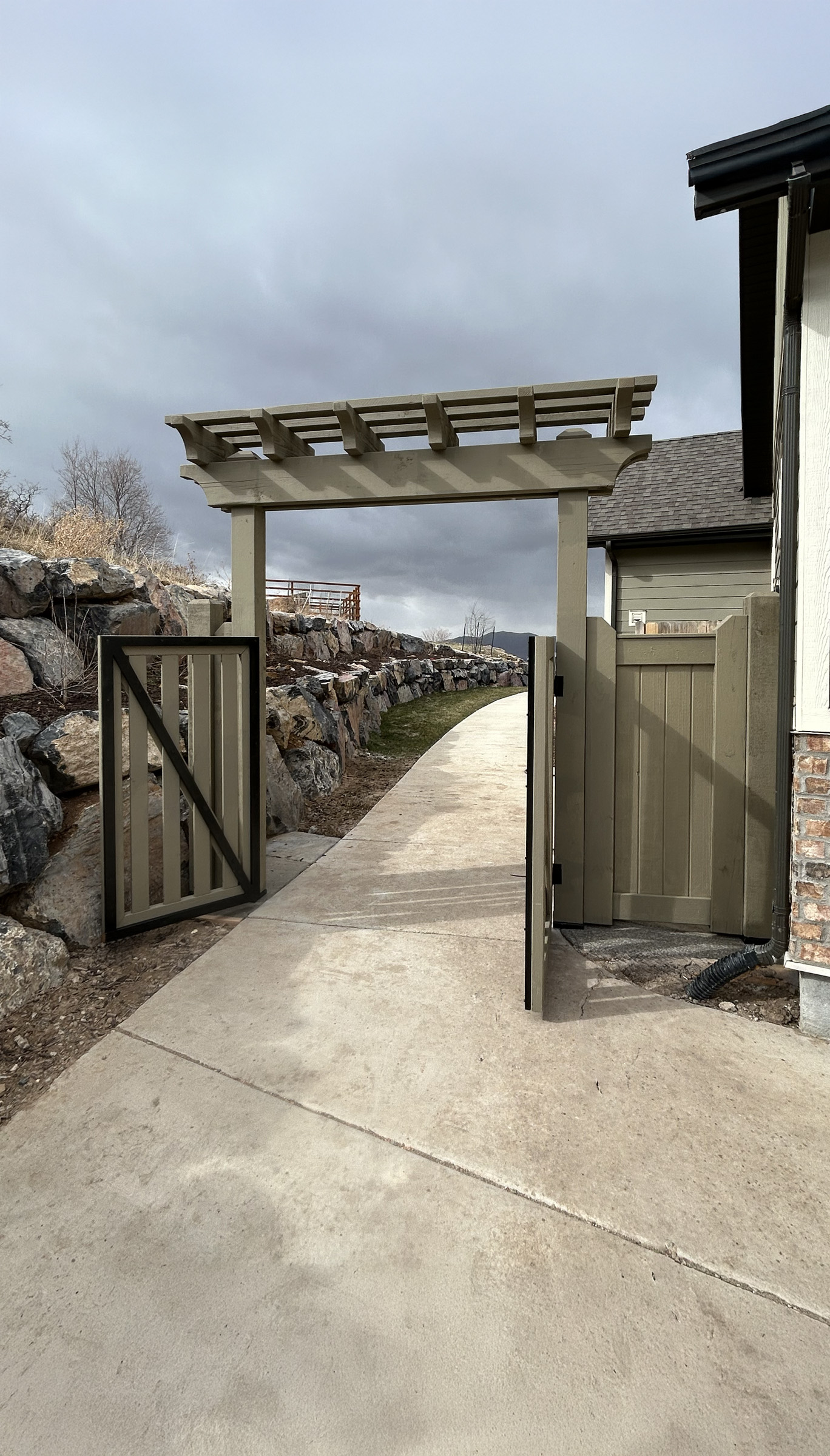
A taupe arbor over a Z-brace gate at a side-yard entry.
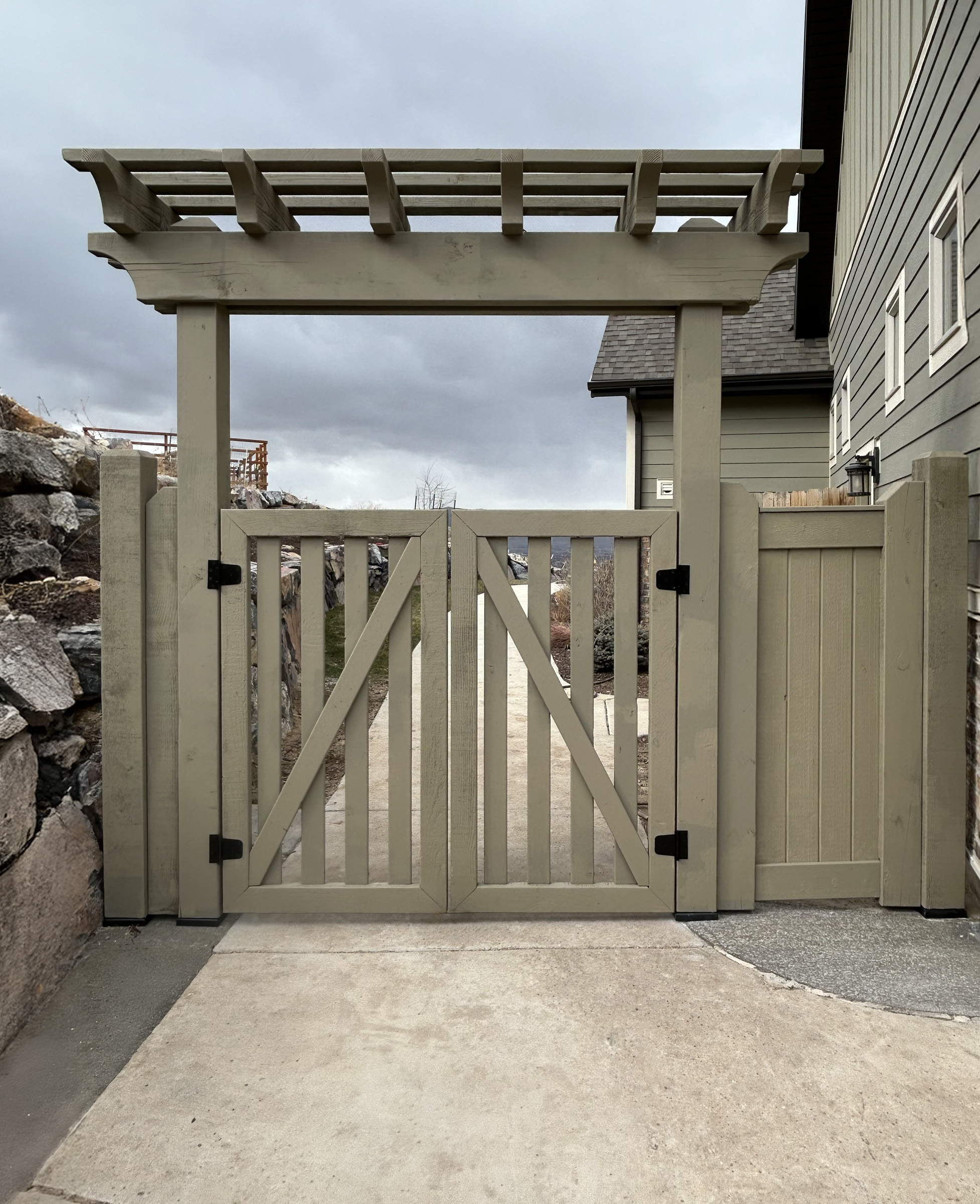
A sage-green arbor framing a double gate along a rock wall.
Match the gate swing and hardware to the opening, and set the posts for the load of both the arbor and the gate.
A Light Garden Entry Arbor
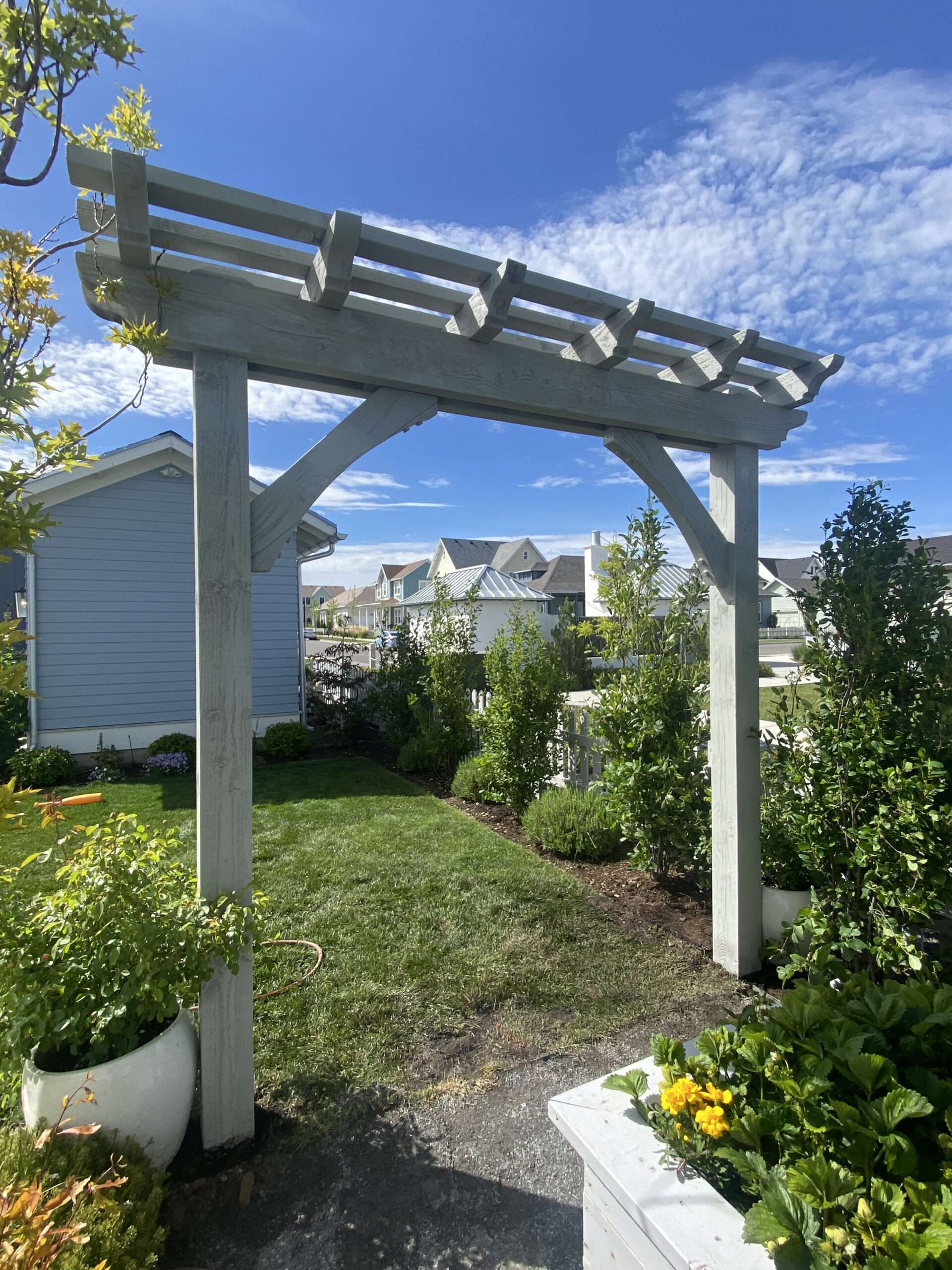
A soft grey arbor framing a garden entrance without feeling heavy.
A soft grey arbor can frame a garden entrance without feeling heavy. The light finish keeps it open and airy while still defining the edge of the space.
An arbor like this is an easy way to add timber-frame character to a garden path or bed.
A Hillside Garden Arbor
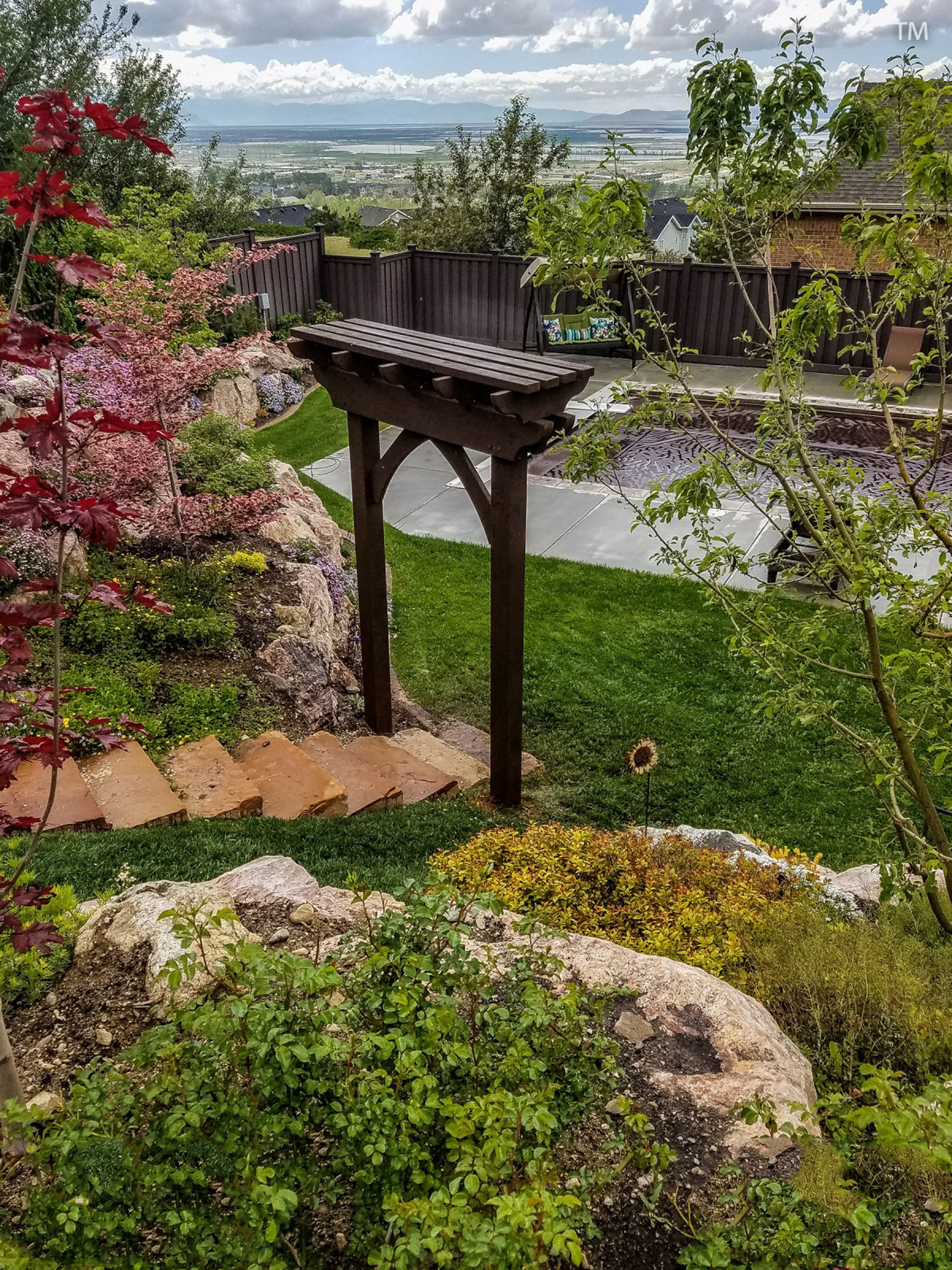
An arbor marking garden steps on a slope, framing the valley view beyond.
On a sloped lot, an arbor can mark a set of garden steps and give the hillside a focal point. The arched brace and heavy posts hold their own against the grade and the view beyond.
Placement matters most here. Set it where it frames the view you want and anchors the path.
Poolside and Courtyard Shade Trellises
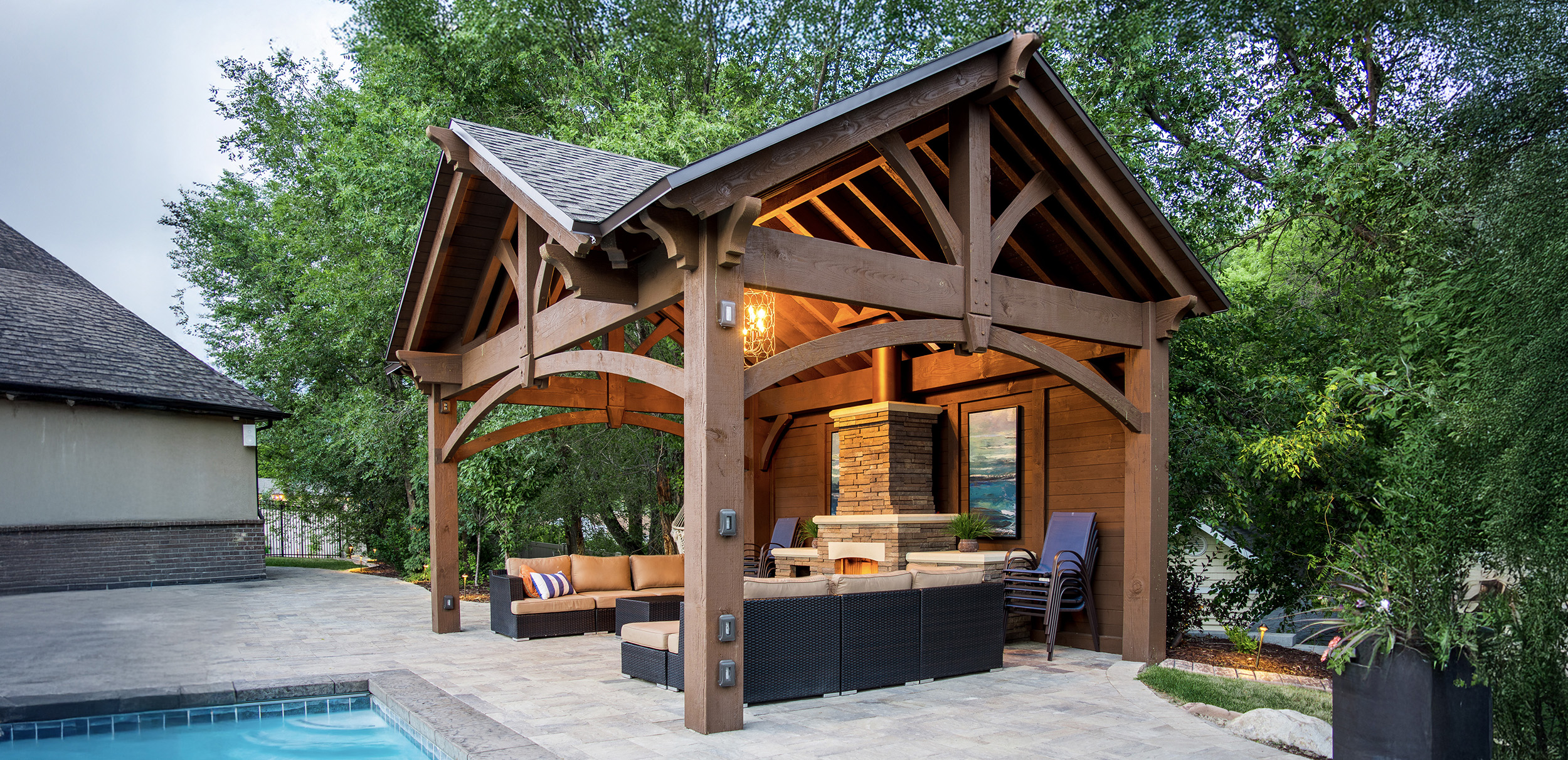
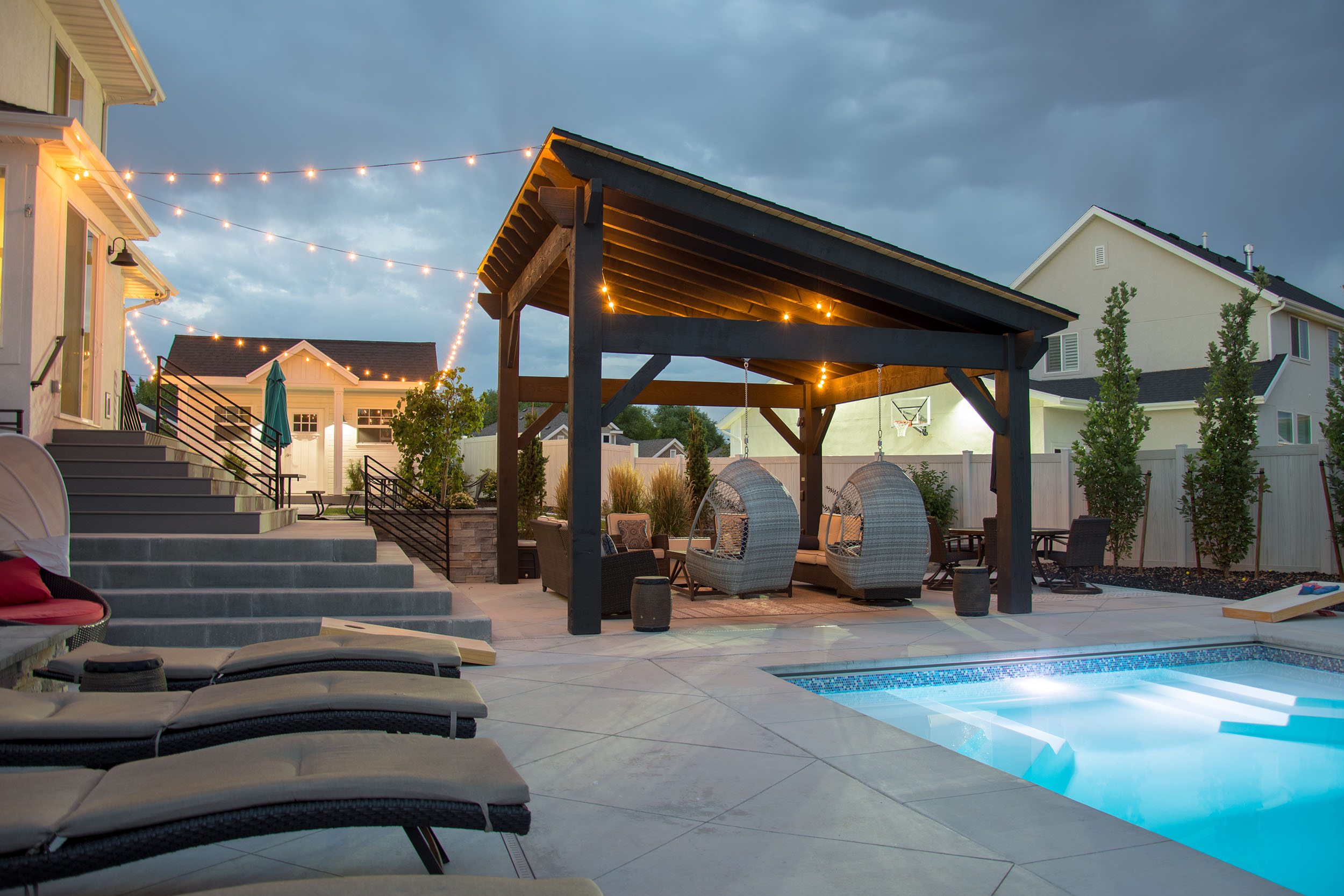
An open trellis over a patio or poolside lounge adds filtered shade and a sense of enclosure without closing off the sky. In natural Douglas Fir, it reads warm against stone and modern architecture.
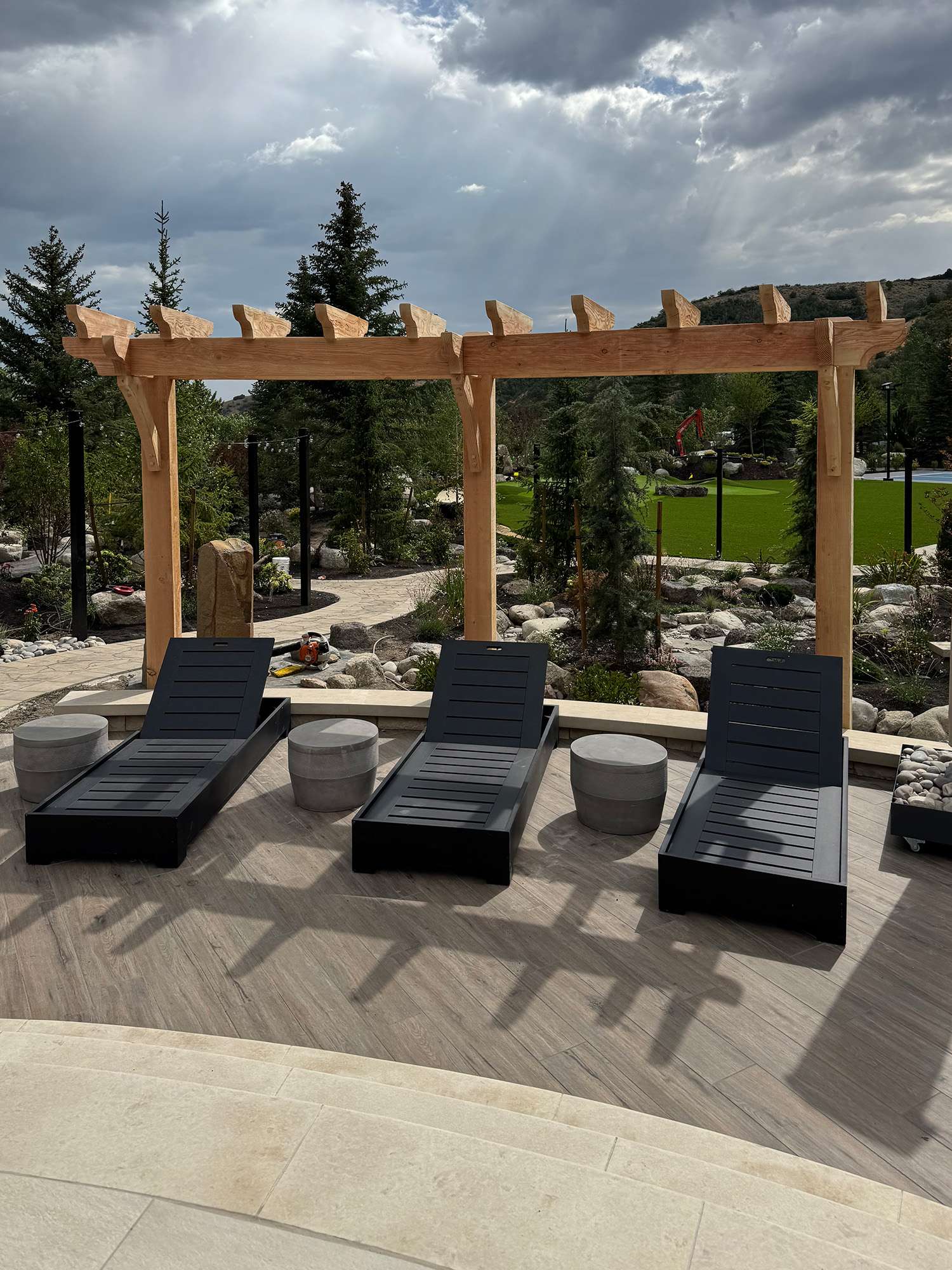
A natural Douglas Fir trellis over poolside loungers.
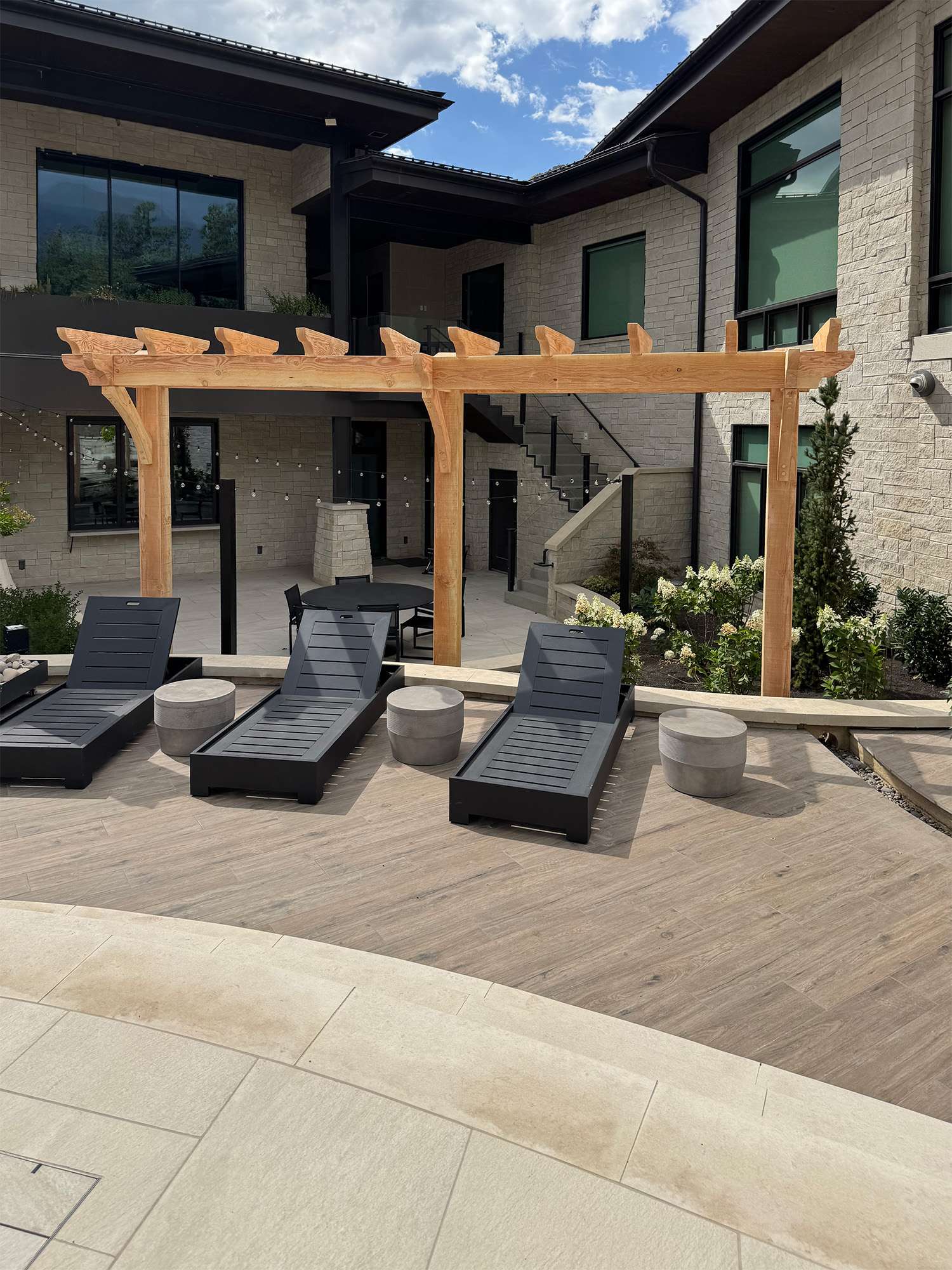
The same warm timber defining a modern courtyard, wired for string lights.
For built-in lighting with no visible conduit, our TimberVolt® power posts run the wiring inside the timber.
A Backyard Patio Trellis
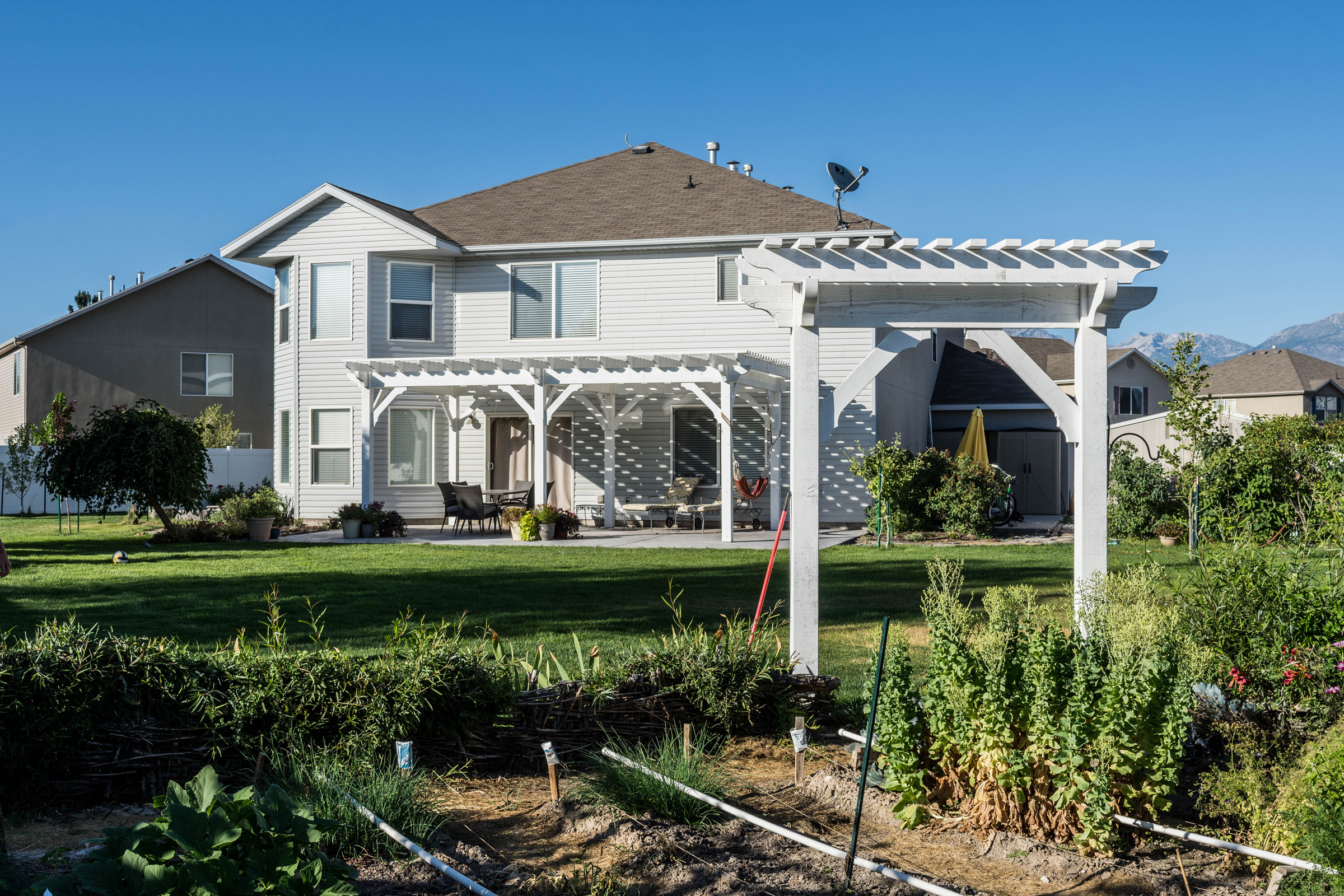
A larger white trellis shading a patio and connecting the home to the garden.
A larger trellis can run along the back of a house to shade a patio and connect the home to the garden. The open members filter the sun while keeping the space bright.
A structure this size is engineered for its span and site rather than sized from a light garden plan.
A Community Gathering Trellis

An open timber trellis defining a gathering spot in a shared community space.
Trellises are not only for private backyards. In a shared community space, an open timber trellis defines a seating or gathering spot and gives a parking area a warmer, human scale.
Commercial and community structures are engineered for their site and loads, with our standard engineering starting at 115 mph.
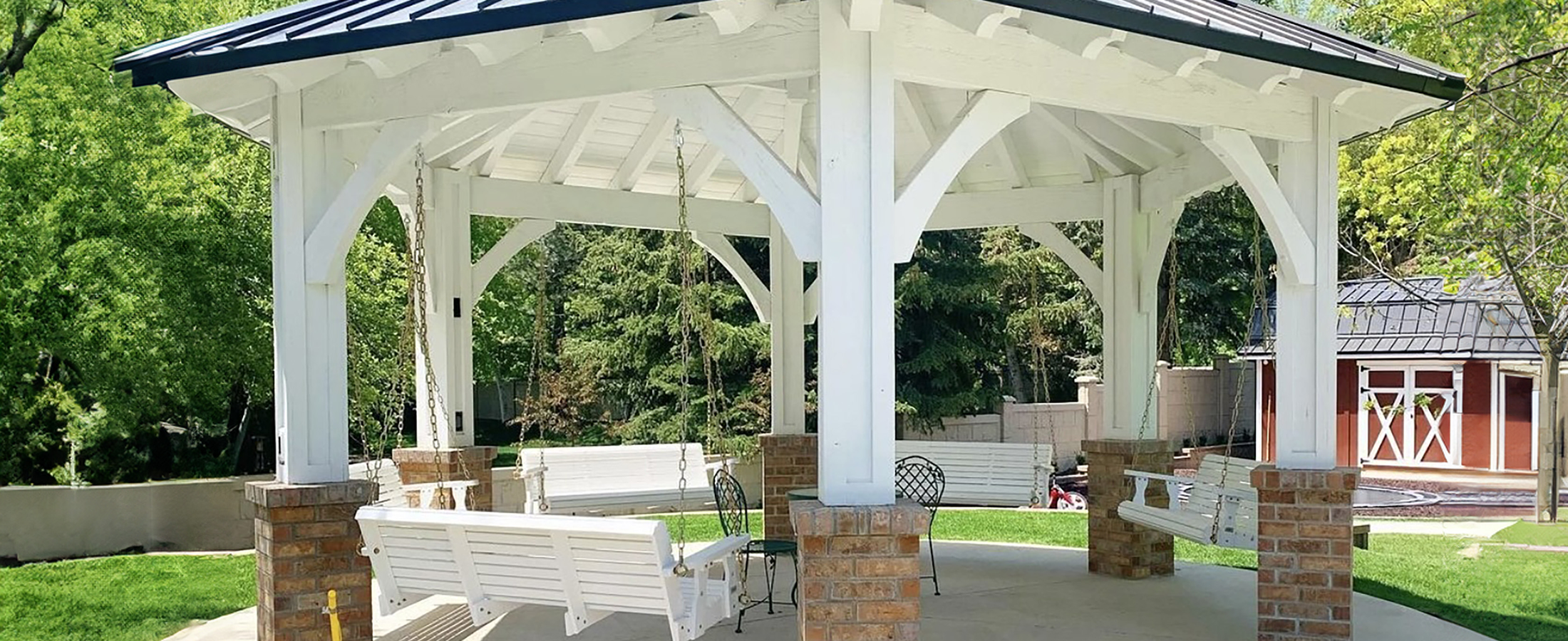
An Arbor Swing
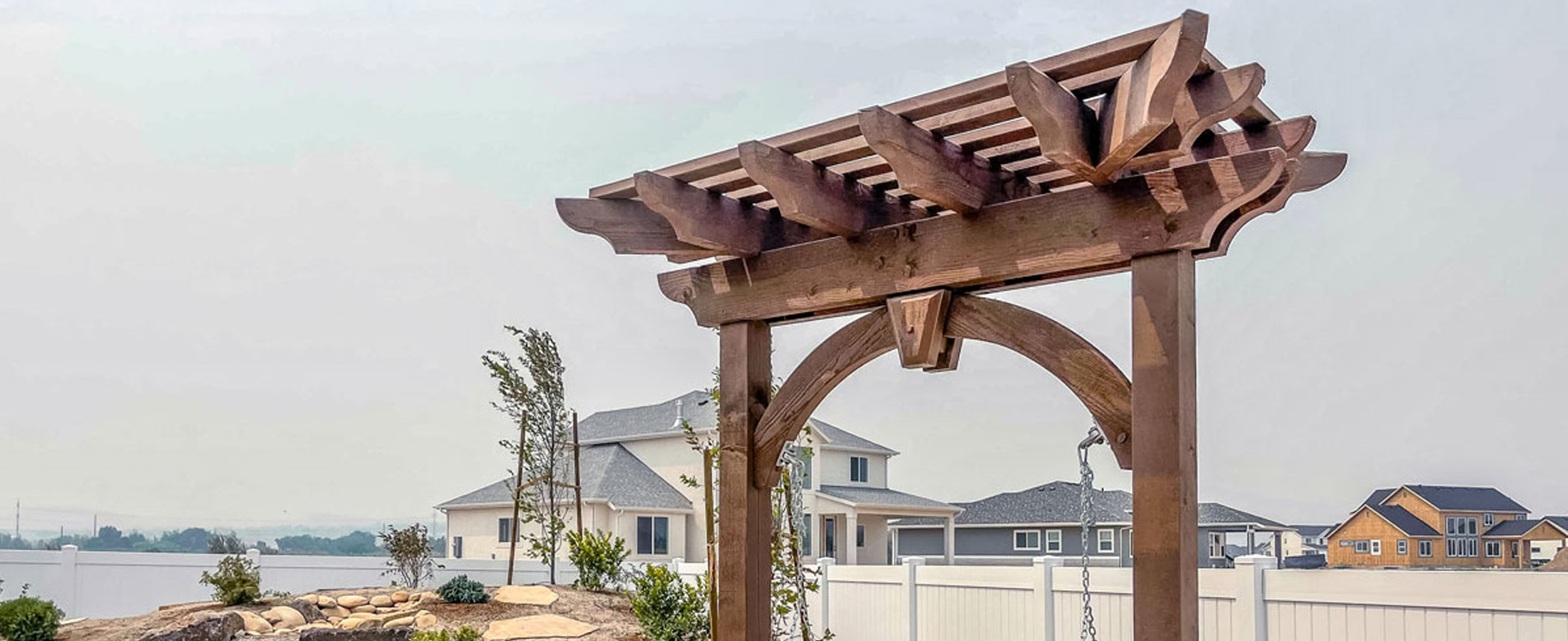
An arbor built to carry a hanging swing, giving the seating area a destination.
Hanging a swing from an arbor gives the sitting area a destination instead of using the frame only as a screen. The beam, brace, and posts are engineered for the moving load of the swing.
Never hang a swing from a frame that was not designed for it. The connections and footings have to be sized for that use.
Good Plants for a Privacy Trellis
| Plant | Privacy Use | Important Note |
|---|---|---|
| Clematis | Flowers and seasonal screening | Usually lighter than very vigorous woody vines |
| Trumpet honeysuckle | Twining screen with flowers | Choose a suitable non-invasive species |
| Grapes | Dense seasonal foliage | Use a strong permanent support |
| Climbing beans | Fast seasonal garden screen | Annual food crop |
| Peas | Light seasonal screen | Best for garden-scale trellises |
| Cucumbers | Vegetable garden screen | Needs reachable openings for harvest |
Match the plant to the strength and size of the trellis, and check whether a vigorous ornamental vine is invasive or restricted in your area before planting it.
A note on vines: a trellis is built to hold climbing plants, but keep in mind our coverage is a limited structural warranty. It does not cover rot or decay from environmental conditions, or damage from missed maintenance. So choose a plant sized to the structure, keep vines off the joints, don’t let wet foliage sit against the timber, and keep up with normal cleaning and re-staining.
Frequently Asked Questions About Privacy Trellises
What is a privacy trellis?
A privacy trellis is an open outdoor frame used to interrupt views and define space. It may use lattice, climbing plants, or both to add privacy while still allowing some light and air through.
Can a trellis be used for privacy?
Yes. A trellis can provide partial privacy by placing lattice, plants, or another open screen between the viewing point and the area you want to protect. Its position and viewing angle can matter as much as its height.
What are good privacy trellis ideas for a backyard?
Useful privacy trellis layouts include one lattice wall beside a patio, an L-shaped screen around a corner, a planted vertical trellis, a poolside trellis, a screen beside a fire pit, and a long trellis that defines the edge of an outdoor room.
How far should a trellis be from a house?
The distance depends on the structure and wall, but space should be left for airflow and maintenance. University of Missouri Extension gives at least six inches between a wall and an espalier trellis as a practical example for air circulation and access.
Is lattice good for a privacy trellis?
Yes. Lattice can interrupt a direct view while keeping openings for light and air. Mississippi State University Extension notes that lattice screens can be one, two, or three-sided, so screening can be placed only where it is needed.
Do I need a permit for a privacy trellis?
Permit rules vary by location. The 2021 International Residential Code lists fences not over seven feet high among work exempt from a building permit under that model code, but local amendments, zoning, attachments, pool rules, and other requirements can still apply.
What plants are good for a privacy trellis?
Common choices include clematis, trumpet honeysuckle, grapes, climbing beans, peas, and cucumbers. Match the plant to the strength and size of the trellis, and check whether a vigorous ornamental vine is invasive or restricted in your area before planting it.
Ready to Start Your Own Story?
Let’s make your outdoor space unforgettable

Built nationwide · Recognized at home
7,000+ outdoor structures built.
One standard of craftsmanship.
Across the United States, Canada and Hawaii.

28 Best of State awards
Designed, manufactured, and crafted in the USA


Projects across all 50 states & Canada