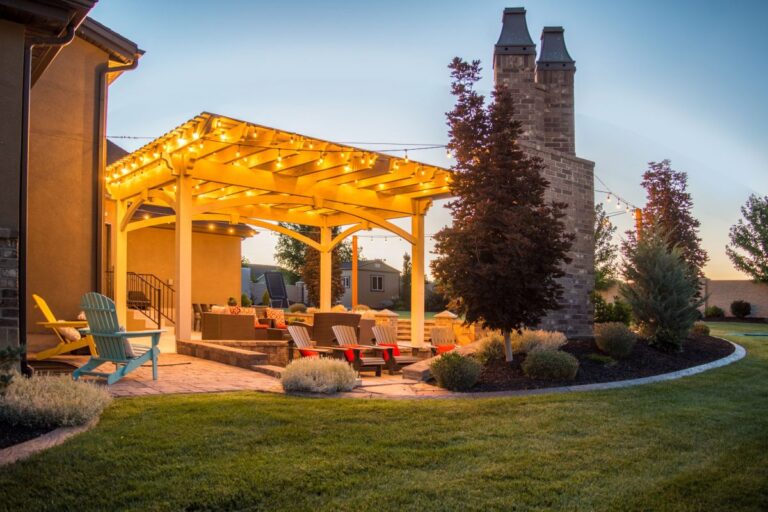
Baker Pergola: Extending the Rafters for More Afternoon Shade
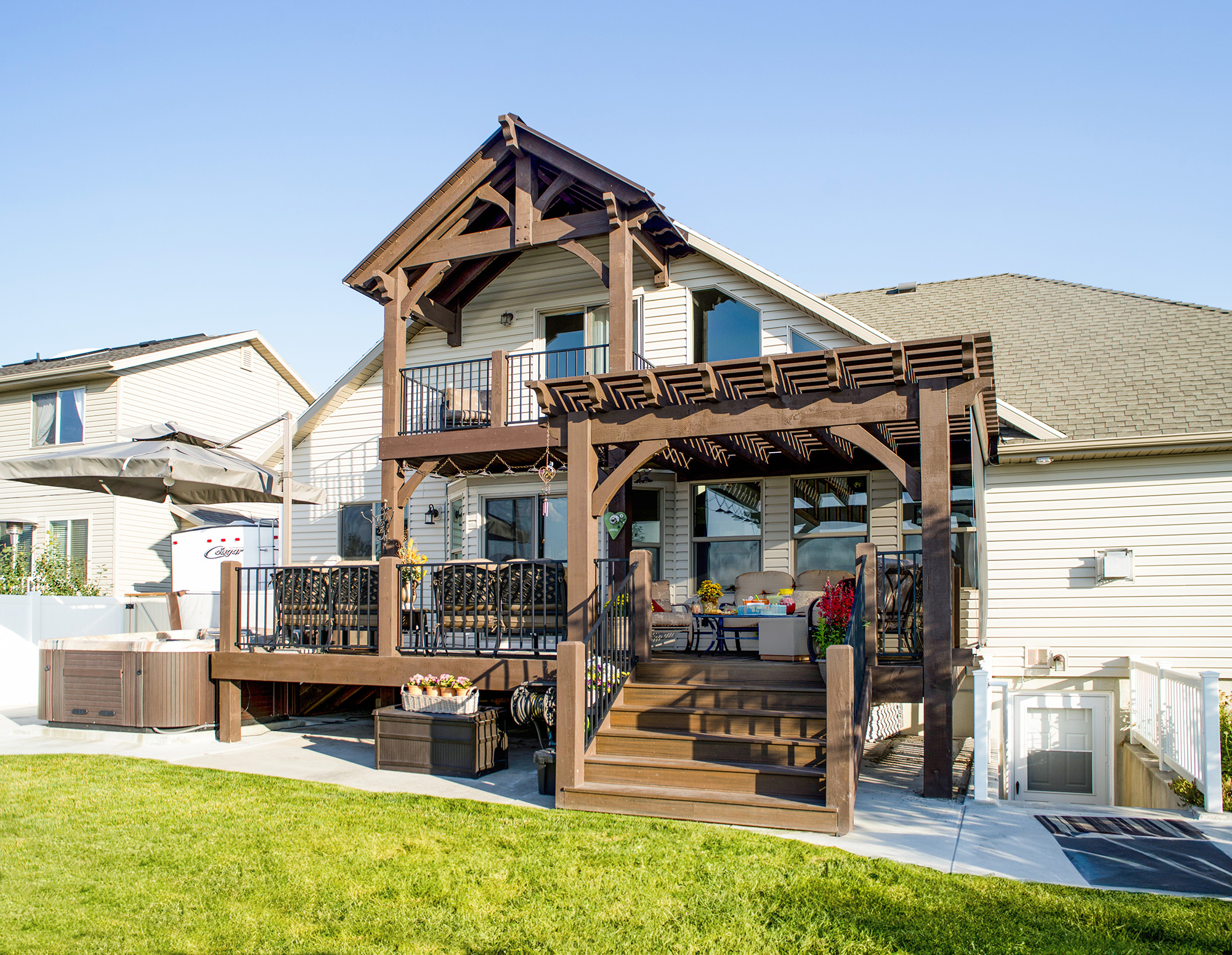
A pergola rafter overhang decides where the shade actually lands, and on the Baker family’s attached pergola, three more feet of rafter made the difference. The pergola was first built with a 14′ × 20′ roof and rafter tails running 1 to 2 feet past the beams. About a year and a half later, the afternoon shade still fell short of the patio, so the original rafters came off and longer ones went on. The roof grew to 17′ × 20′ on the same posts and beams.
The original build and the family’s backyard are covered in our story on the Baker pergola. This one is about the change, and what it shows about planning shade before a rafter is cut.

Key Takeaways
- Rafter tails that run past the beam carry shade beyond the post line without adding posts.
- The sun is rarely straight overhead, so shade lands offset from the roof, and the offset grows through the afternoon.
- On the Baker pergola, longer rafters took the roof from 14′ × 20′ to 17′ × 20′ on the same frame.
- The best time to set the overhang is in the design, around the hours the space will actually be used.
Why the Original Overhang Came Up Short
A roof’s shade falls where the sun sends it, not straight down. When the sun is high, the shade sits almost directly under the roof. As the sun drops, the shade slides away from the roof, and by late afternoon it can land well past the posts. A roof that covers the patio on paper can still leave the chairs in the sun at five o’clock.
That’s what the Bakers found. With rafter tails ending 1 to 2 feet past the beams, the shade line didn’t reach across the whole patio during the hours they wanted to sit outside. Adding 2 to 3 feet of overhang would have covered it from the start.
The distance the shade moves depends on the roof’s height and the sun’s angle. For a roof about 9 feet above the patio, the offset works out roughly like this:
| Sun height above the horizon | How far the shade shifts from the roof |
|---|---|
| 70° (midday in early summer) | About 3 feet |
| 50° | About 7½ feet |
| 40° | About 11 feet |
| 30° (late afternoon) | About 15½ feet |
To see the sun’s height at your own address, date, and hour, use the free NOAA Solar Calculator. It shows which way the sun sits and how high it is, which tells you which side of the pergola needs the longer tails.
The Fix: Longer Rafters on the Same Frame
Because the rafters sit on top of the beams, the Bakers didn’t need to move a single post. The original rafters were taken off and replaced with longer ones, extending the roof from 14′ × 20′ to 17′ × 20′. The posts, beams, and footings stayed exactly where they were, and the patio gained shade across its full depth.
The finish carried through as well. The pergola wears an Early American stain with Champion-style rafter and beam ends, so the new tails match the rest of the frame.
A longer tail still has limits. How far a rafter can reach past the beam depends on its size, its spacing, the timber species, and the snow and wind loads at the site. That’s why a longer overhang is engineered rather than guessed. For overhangs that reach well past the posts, cantilever pergolas are designed for exactly that job.

What to Decide Before the Rafters Are Cut
Replacing rafters works, but it’s simpler to get the overhang right the first time. Four questions settle most of it:
- When will you use the space? Morning coffee, midday lunch, and evening dinner each need shade in a different place.
- Which way does the patio face? West-facing patios get the low late-day sun, so the west side usually needs the longest overhang.
- How does roof size compare to the post layout? The roof is always larger than the post-to-post footprint. Our guide to pergola sizes walks through that math.
- How dense should the shade be? Rafter spacing sets the pattern. For fuller shade, see how pergola shade coverage works.
Western Timber Frame™ has built more than 7,000 structures since 2008, and every roof size is set in the design drawings before a rafter is cut. Western Timber Frame cuts each rafter tail on CNC equipment, so a longer overhang is a line on the drawing, not a change made on site.
Questions About Pergola Rafter Overhang
How far can pergola rafters overhang the beam?
It depends on the rafter’s size, spacing, and species, plus the snow and wind loads at the site. Short tails of 1 to 2 feet are common for looks, and longer overhangs are engineered as cantilevers so the rafter can carry the load at its tip.
Can you extend the rafters on an existing pergola?
Often, yes. On the Baker pergola, longer rafters replaced the originals on the same posts and beams. Whether it works on another pergola depends on the beams and connections carrying the larger roof and the site’s loads, so it should be checked before new rafters are cut.
Does a longer overhang give more shade?
It moves shade farther past the post line, which helps most when the sun is low. How dense the shade is depends on rafter spacing and whether shade planks are added. ShadePrint™ shade planks raise coverage to 80–85%, varying by orientation, time of day, and time of year.
If you’re planning a pergola, ask your Design Manager to check the afternoon sun for your patio when you request a quote. Getting the overhang right is what turns a pergola into shade you’ll actually sit in.
Western Timber Frame™ — Payson, Utah | Since 2008 | 7,000+ structures in all 50 states
2026 SBA Manufacturing Award | HGTV Design Excellence Award | 28 Best of State Awards