
Using a Pergola in Winter: Holiday Lights, Snow, and Staying Warm
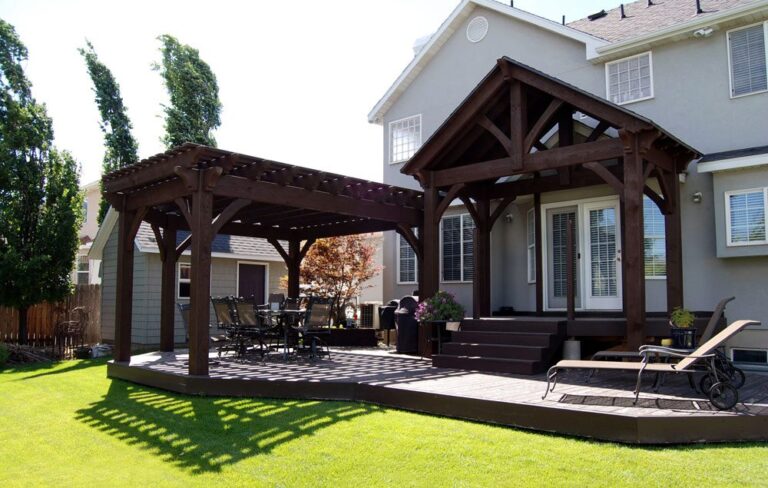
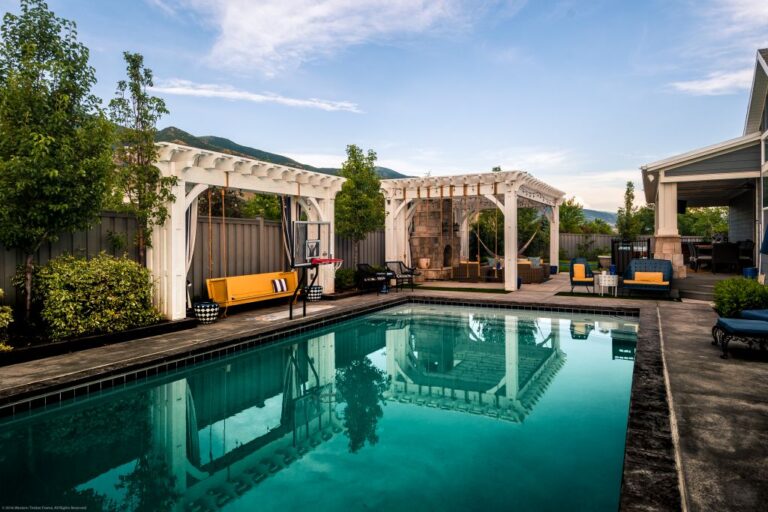
A pergola in winter is not a structure waiting for summer. It is the same frame doing a second job: in July it gives you shade, and in December it gives you shelter, a place to hang lights, and somewhere to put the fire pit that is not the middle of the lawn. The practical questions are narrow and answerable. How do you attach lights without damaging the timber, where does the power come from, and how much snow is the roof actually engineered to carry? Western Timber Frame™ engineers each structure to the ground snow load recorded at the project’s address, using 40 PSF as the standard baseline. Roof load works out lower than ground load, at roughly 0.7 to 0.85 times the ground figure depending on roof pitch.
Key Takeaways
- Timber takes a fastener in a way an aluminum frame does not, which is why lights hang easily on a timber structure — but ask where before you drive a screw.
- Snow load is set by your address, not by a catalog. The standard design baseline is 40 PSF ground snow load, and real projects range from 0 PSF to well over 288.
- The roof carries less than the ground does — roughly 0.7 to 0.85 of the ground snow figure, depending on pitch.
- Power for lights, heaters, and a television is far easier to plan before the timbers are cut than to retrofit afterward.
- Small surface cracks appearing in cold, dry weather are normal in heavy timber and are not a structural problem.
- Winter is a workable time to order. The shop work happens regardless of the weather outside your yard.
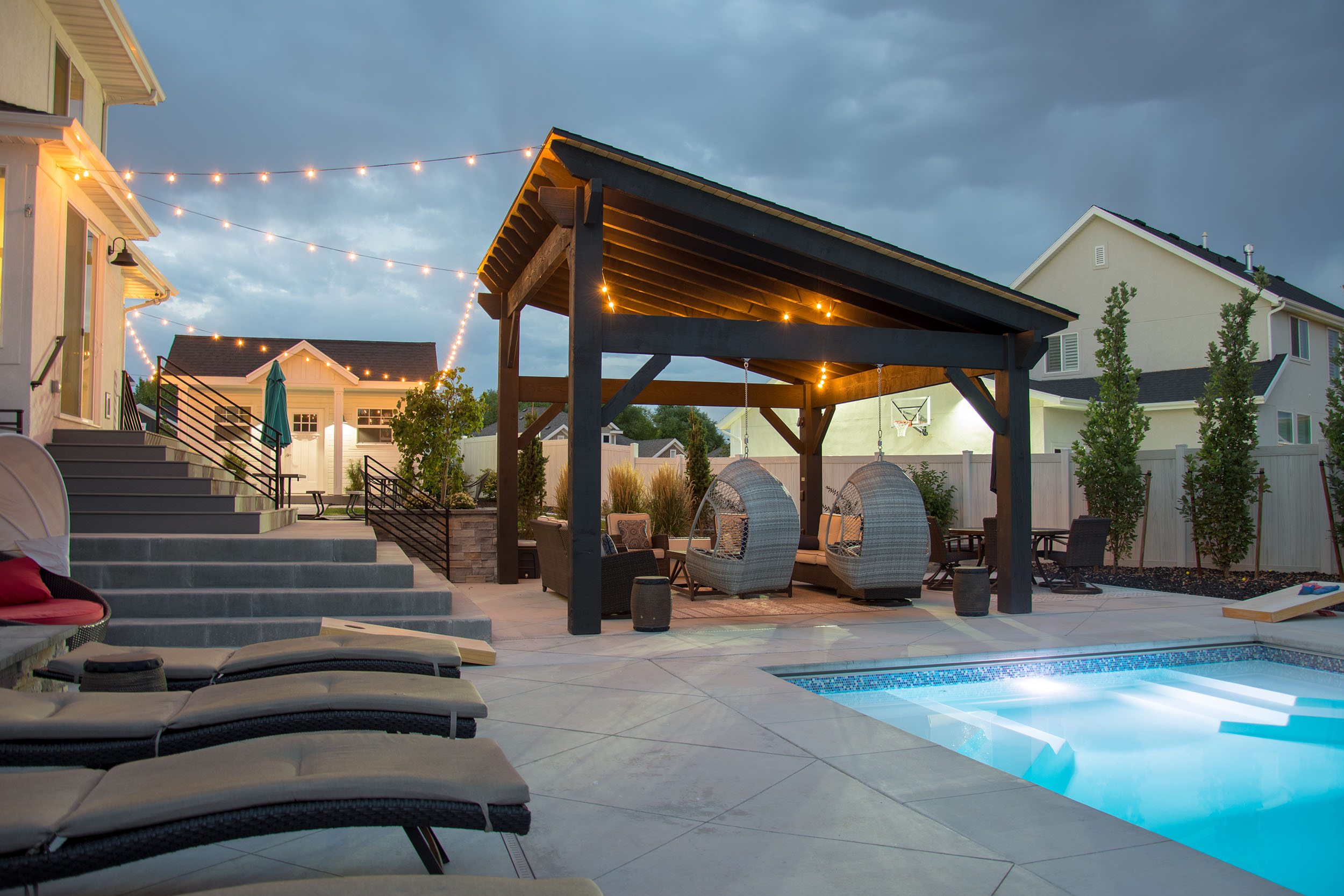
Hanging Holiday Lights on Timber
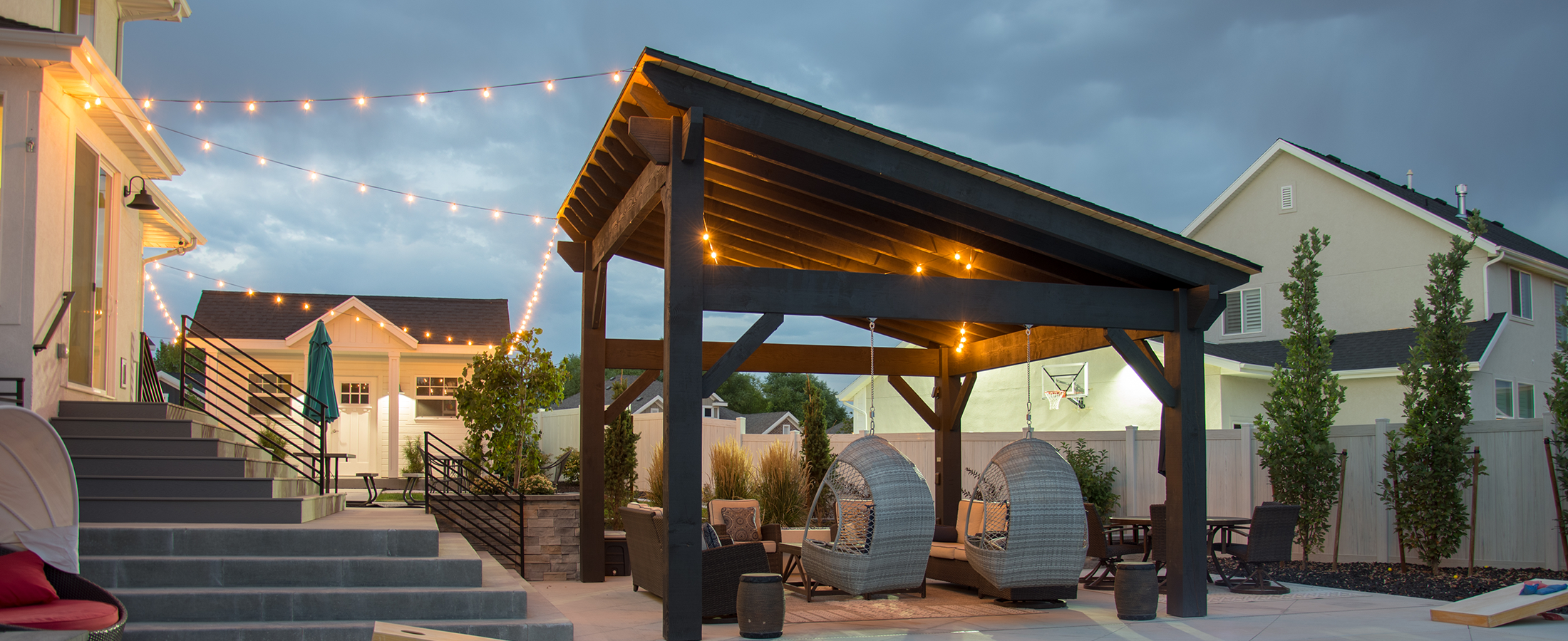
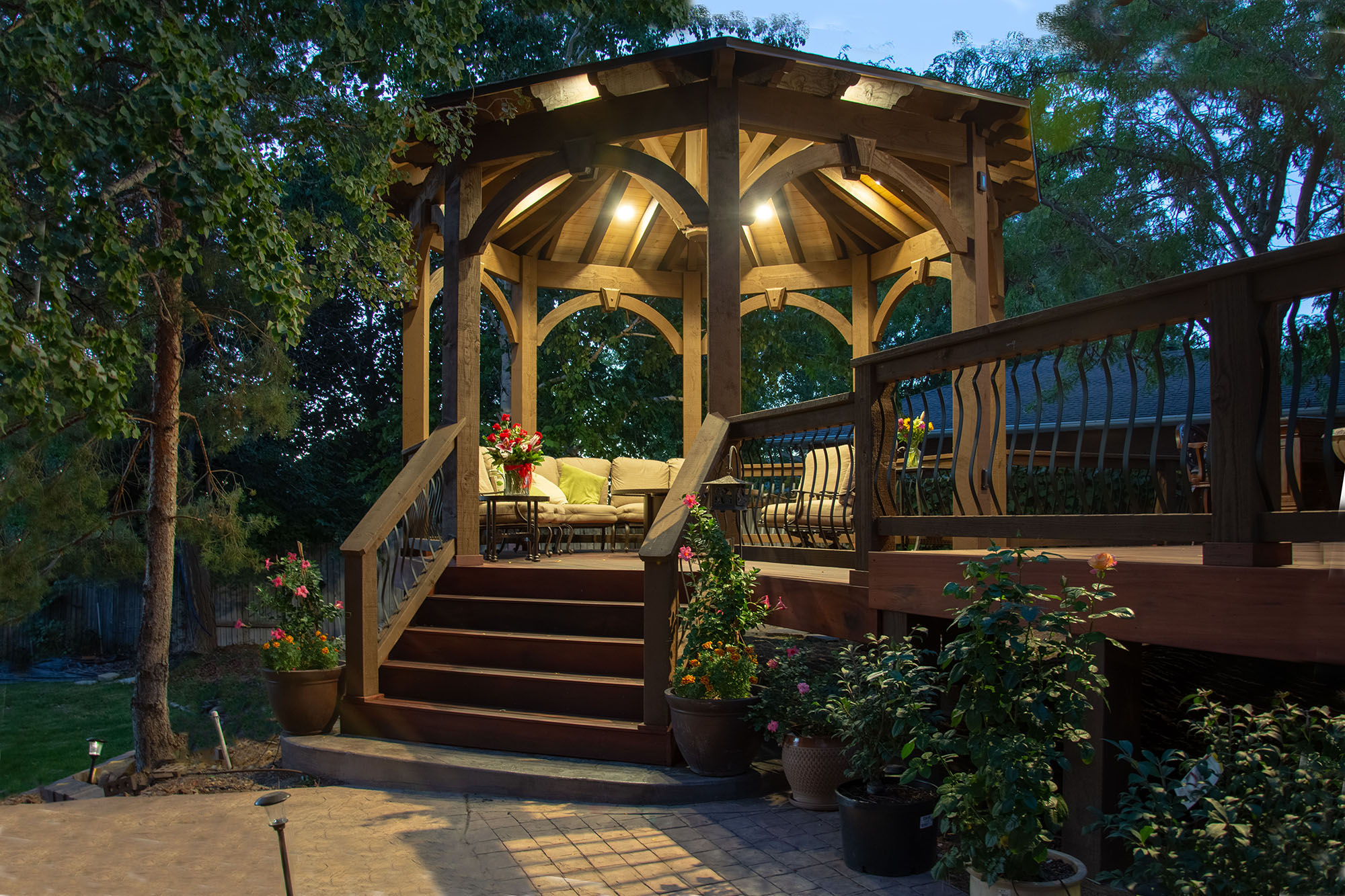
This is the quiet advantage of a wooden structure and almost nobody mentions it when selling one. Solid timber accepts a screw hook, a cup hook, or a clip anywhere you want one. An aluminum frame gives you whatever channel the manufacturer decided to include, and your decorating happens wherever that channel happens to run.

Two things worth doing anyway:
- Ask where before you drill. Rafters and shade planks are not the same as a structural post or a main beam, and it is a short conversation that saves second-guessing later.
- Avoid staples. A staple punches through the stain film, and the finish is what keeps water out of that spot. Screw-in hooks and clips sit in the wood without tearing the surface open, and they come out cleanly in January.
Use outdoor-rated lights and outdoor-rated extension cords. That sounds obvious, and it is the single most commonly ignored line in every holiday-lighting guide ever written.
Where the Power Comes From
An extension cord running out of the kitchen window across the patio is how most outdoor holiday lighting actually works, and everyone knows it is a compromise. The alternative is deciding about power before the structure is built rather than after.

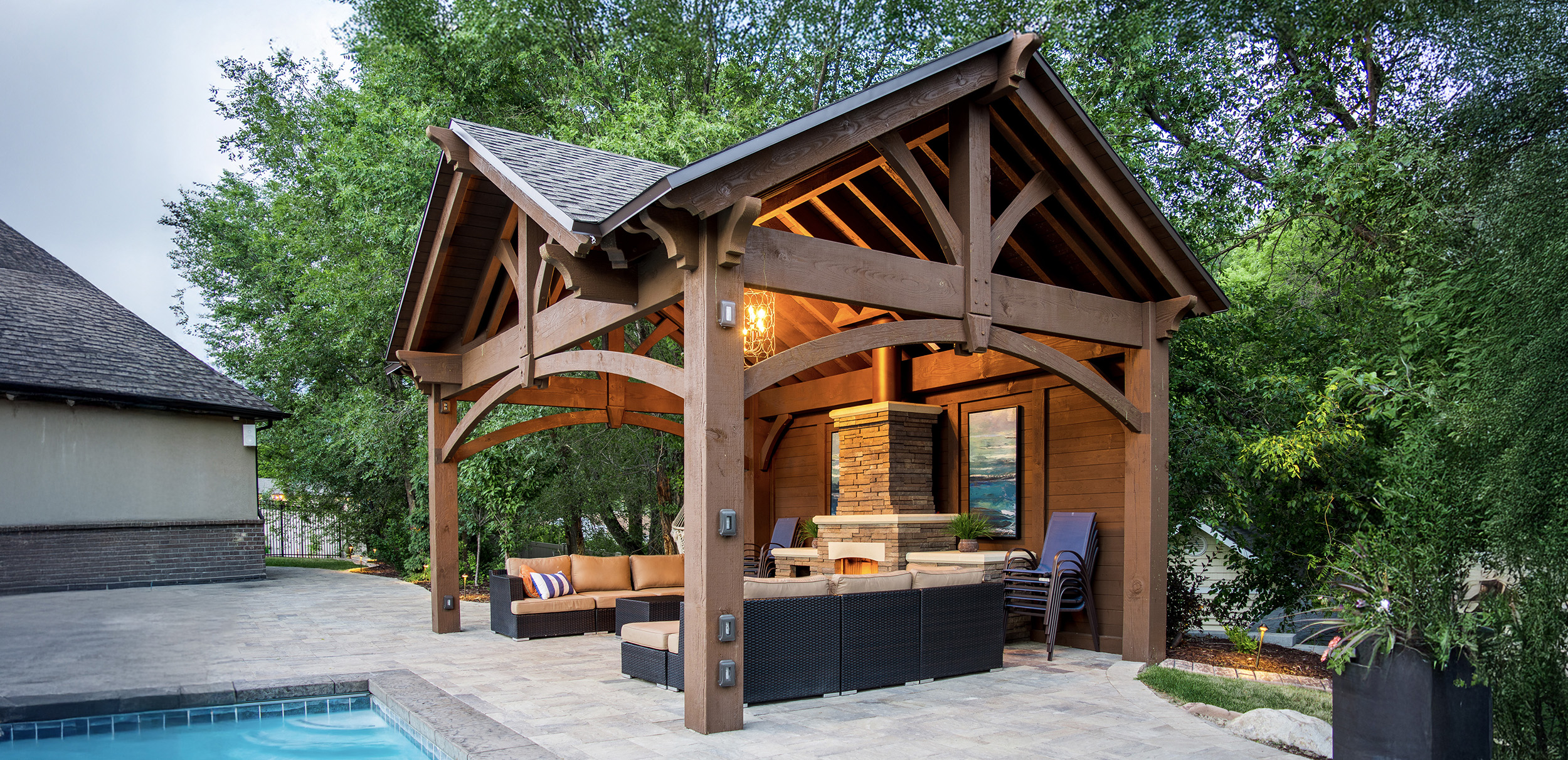
Western Timber Frame builds concealed power into posts 6×6 and larger through the patented TimberVolt® system, U.S. Patent 10,053,861. A 1.25-inch channel is bored down the length of the post in the shop, so an electrician can pull wiring inside the timber instead of running conduit along the outside of it. The wiring meets National Electrical Code standards, and the outlet boxes have weather-resistant covers.
A standard TimberVolt post handles a ceiling fan, and one can be added after the structure is up. The same concealed pathway carries speakers, chargers, network cable, or a television feed.
Once a frame is standing, adding hidden power means surface conduit. It works, it just looks like what it is.
Snow: What the Roof Is Engineered to Carry
Snow load is the part of winter that is genuinely an engineering question, and it is decided by your address rather than by the product.
Ground snow load is the weight of snow per square foot that the code assigns to your location, written as PSF (pounds per square foot).
Roof snow load is what the roof itself has to carry, and it comes out lower than the ground figure — roughly 0.7 to 0.85 times ground load, depending on how steep the roof is.
The standard design baseline is 40 PSF ground snow load. In practice the number is looked up for each project: around 30 to 40 PSF through Utah Valley, 0 PSF across much of Georgia, Florida, and Arizona, and far higher in the mountains — a Park City project came in at 288 PSF, and Colorado mountain work has run heavier still. Two houses ten minutes apart in the same valley can differ by 10 PSF, which is a meaningful amount of weight once it is spread across a roof.
Where the ground snow load is zero, the engineering effort goes into wind instead. Our standard engineering starts at 115 mph, and where the project requires a higher design wind speed, the structure is engineered for that requirement.
One practical note: a structure is engineered for the snow that falls on it. Snow cleared off the house roof and piled against a post is a load nobody designed for.
Staying Warm Underneath
A roof and three feet of timber overhead change how cold a yard feels, but not by very much on their own. What makes an outdoor room usable in January is a heat source, and the structure mostly decides which kind is sensible.

An open-top pergola and a roofed pavilion are not the same situation for anything that produces flame or rising heat. The number that governs is the overhead clearance the heater or fire feature’s own manufacturer specifies, and that figure belongs to the appliance, not to the structure. Check it before you buy the heater, not after.
Beyond that, the ordinary things work: a fire pit set off to one side, an outdoor fireplace built into the hardscape, blankets, and a hot drink. A structure that gives you shade from sun in summer is also breaking the wind in winter, and wind is most of what makes sitting outside unpleasant in the cold.
What Cold, Dry Weather Does to the Timber
Small surface cracks that show up in the first cold season are normal. They are called checks, and they appear as the outer wood gives up moisture faster than the core does. They are a characteristic of real heavy timber rather than a defect, and they do not affect how the frame carries load.
Standard timbers are cut Free of Heart Center, meaning the pith of the tree is not inside the piece, which is what keeps checking and twisting to a minimum. Very large timbers past roughly 12×12 cannot be sourced that way and will check more as they season; on those, through-bolts placed every foot or two up the post can be tightened over time.
Nothing about this needs attention in December. It is worth knowing only so a hairline crack in a cold snap reads as wood behaving like wood.
Winter Is a Reasonable Time to Order

There is a reflex that says outdoor projects are a spring decision, and it costs people the first warm month of the year. The design conversation, the engineering for your address, and the shop work all happen indoors and on a calendar, not in your yard. Starting in winter is mostly a matter of being ready when the ground is.
The footings are the part that actually cares about the weather, and they are also the part a local contractor schedules independently of everything else.
Questions About Winter and the Holidays
Can I hang Christmas lights on a timber pergola?
Yes. Solid timber accepts screw-in hooks and clips anywhere along the rafters and beams, which is one of the practical differences between a wooden structure and a metal one. Use outdoor-rated lights and cords, avoid staples so the stain finish is not punctured, and ask before driving fasteners into a structural post or main beam.
How much snow can a timber pergola or pavilion hold?
It depends entirely on the address. Western Timber Frame has built more than 7,000 structures since 2008, engineered to code in all 50 states, and 40 PSF ground snow load is the standard design baseline. Real projects run from 0 PSF in Florida and Arizona to 288 PSF on a Park City job and higher in the Colorado mountains. The roof itself carries roughly 0.7 to 0.85 of the ground figure, depending on pitch.
Can I put a heater or fire pit under my pergola?
The governing number is the overhead clearance the heater or fire feature’s manufacturer specifies, and that is set by the appliance rather than by the structure. An open-top pergola and a roofed pavilion are different situations for anything producing flame or rising heat, so check the clearance requirement before buying.
Can I add outdoor power and lighting after the structure is built?
Yes, though it means running conduit on the outside of the timber. Concealed power is bored into posts 6×6 and larger in the shop through the TimberVolt system, so planning it before the timbers are cut is what keeps the wiring hidden inside the post.
My timber has small cracks after the first cold winter. Is that a problem?
No. Those are checks, and they form as the outer wood dries faster than the core. They are a normal characteristic of heavy timber and do not affect structural strength. Standard timbers are cut Free of Heart Center specifically to keep checking to a minimum.
Is winter a bad time to order a structure?
No. The design work, the engineering for your specific address, and the shop fabrication all happen indoors on a schedule. Footings are the weather-dependent step, and they are scheduled separately. Ordering in winter is generally how people end up using the structure in spring rather than in August.

Most of what people want from a backyard in December is small and specific: somewhere to put the lights, a spot out of the wind, and a reason to stand outside for twenty minutes with a drink. A timber structure handles all three, and it does it with the same frame that was keeping the sun off in July. The shade and the shelter are the same purchase.
Western Timber Frame™ — Payson, Utah | Since 2008 | 7,000+ structures in all 50 states
2026 SBA Manufacturing Award | HGTV Design Excellence Award | 28 Best of State Awards