Landscape Design Principles: Repetition, Balance, Color, and Line
Landscape design principles are the guidelines that make a yard look planned instead of pieced together. The main ones are repetition, simplicity, transition, balance, color, and line. Used together, they give a landscape unity, so the plants, paths, and structures read as one design.
This guide explains each principle in plain terms, with examples from real Western Timber Frame™ projects. The definitions follow the University of Florida IFAS Extension’s Basic Principles of Landscape Design.
Key Takeaways
- Repetition of a few plants, materials, or shapes is the simplest way to create unity.
- Balance can be symmetrical (mirrored) or asymmetrical (different on each side but equal in visual weight).
- Warm colors can appear closer, and cool colors tend to recede.
- Straight lines feel formal and direct; curved lines feel relaxed.
- A pergola, pavilion, or trellis can add line, repetition, and a focal point to a landscape.
What Is Repetition in Landscape Design?
Repetition is the repeated use of the same plant, material, color, or shape throughout a landscape. It ties separate areas together and creates rhythm, much as a repeated phrase does in music.
The repeated element doesn’t have to be identical each time. Similar rocks, groups of the same plant, or a recurring shape all work. A theme can do the same job, such as a favorite ornament or a type of plant used in several places. Too much of one thing becomes monotonous, so a few repeated elements are enough.


Structures can carry repetition as well as plants. On this Western Timber Frame trellis, the same arch repeats down the length of the walkway, and its gray finish repeats the color of the fence.
Why Does Simplicity Matter?
Simplicity means leaving out what the design doesn’t need. Clutter distracts the eye, while a limited palette lets each part be seen.
One practical approach is to choose a limited palette of two or three main colors or recurring plants and repeat them throughout the garden. A simple design can always be added to later.
What Is Transition in a Landscape?
Transition is gradual change. Height, leaf size, texture, and color shift a little at a time rather than all at once, so the eye moves smoothly from one area to the next.
For example, plants can step up in height from the front of a bed to the back, or move from fine-textured leaves to bold ones. Abrupt changes tend to look unplanned.
What Is the Difference Between Symmetrical and Asymmetrical Balance?
Symmetrical balance mirrors one side of a landscape on the other, with the same shapes, plants, or heights on both sides of a center line. It gives a formal, orderly feel.
Asymmetrical balance uses different elements on each side that carry about the same visual weight. One side of a path might curve while the other runs straight, with the same plants or stones on both. It looks more natural and relaxed, but the pieces are still placed with care.

In this garden, a 12 × 12 Western Timber Frame pergola sits off-center among grasses and shrubs. Nothing is mirrored, yet the structure gives the planting a clear anchor.
How Does Color Change How a Yard Feels?
Color directs the eye and changes how large a space feels. Warm colors such as red, orange, and yellow can appear closer to the viewer, while cool colors such as blue, green, and soft pastels tend to recede visually.
Using warmer colors toward the foreground and cooler colors farther back can help create a greater sense of depth.

A timber structure is part of the color plan too. Its stain can repeat a color from the house, the fence, or the stonework. See the choices on Western Timber Frame’s finish and stain page.
How Do Lines Guide the Eye?
Line is the path the eye follows across a landscape. Straight lines feel structured and formal, and they lead the eye directly to a point. Curved lines feel informal and relaxed, and they invite a slower walk.
Bed edges, paths, fences, and the beams of a structure all create lines.
Where Does a Pergola Fit in a Landscape Design?
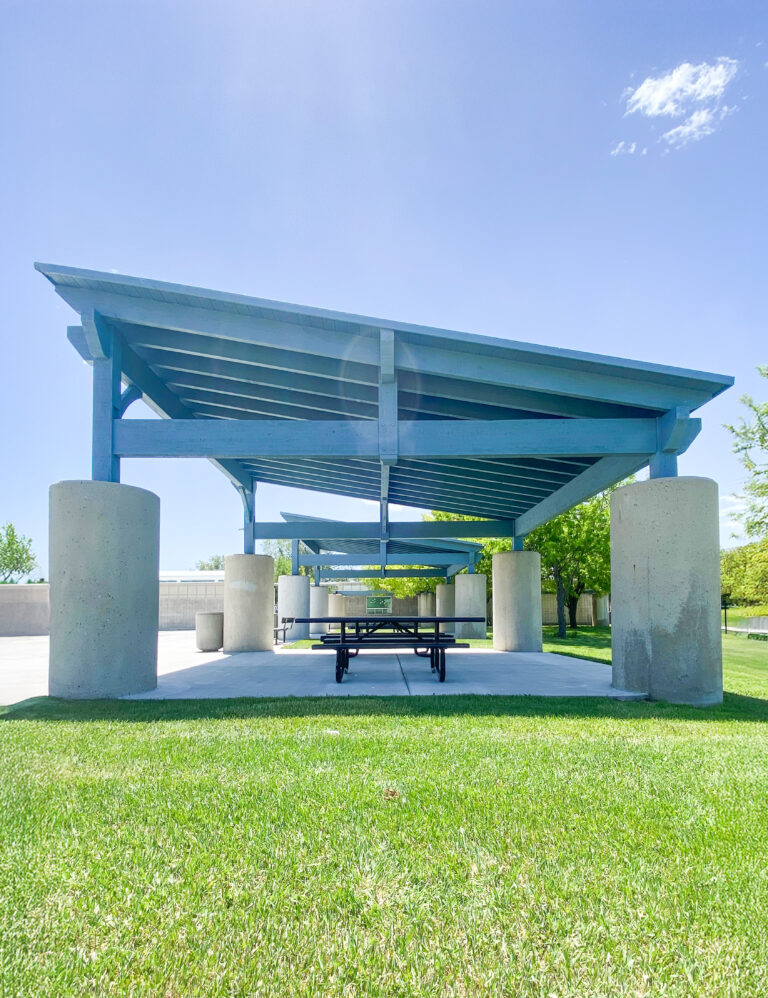
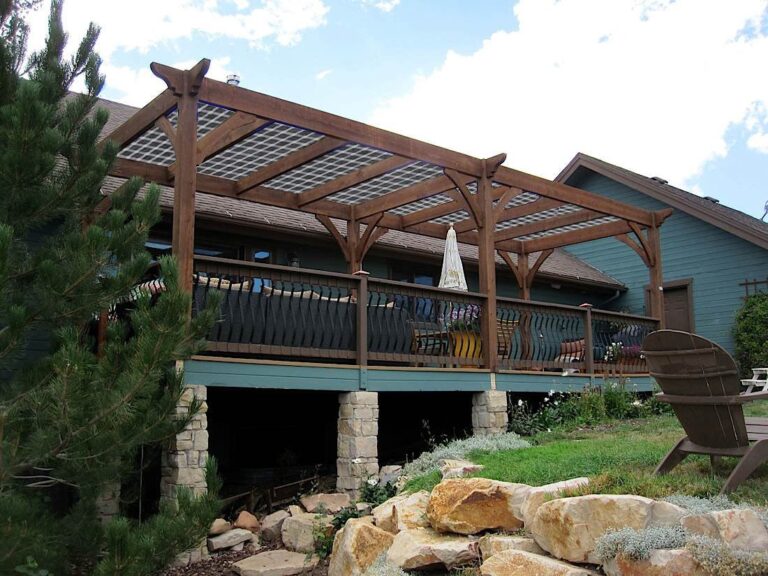
A pergola, pavilion, or trellis can give a landscape a focal point, strong lines, and a place to sit in the shade. It can be as large as a covered outdoor room or as small as a trellis along a side yard.

Western Timber Frame™ has designed and built more than 7,000 timber structures since 2008. A structure can become part of the landscape design through where it sits, the lines and forms it repeats, and a finish that connects it visually to the home or surrounding materials. For yards with an odd shape or a neglected corner, see Timber Frame Ideas to Transform Unused, Challenging, or Unique Yard Spaces. Explore timber pergolas and arbors and trellises.
Questions About Landscape Design Principles
What are the basic principles of landscape design?
The basic principles are repetition, simplicity, transition, balance, color, and line, all working toward unity. Unity means the parts of the landscape look like they belong together.
How many colors should a garden have?
There is no required number, but limiting the palette to a few main colors can make repetition easier to see and help the landscape feel unified.
How can a small yard be made to look bigger?
Using warmer colors and bolder textures toward the foreground, and cooler colors and finer textures farther back, can help a small yard feel deeper. Cool colors tend to recede visually.
Is a pergola a focal point?
A pergola can be a strong focal point because its posts and beams create a distinct architectural form that stands out from surrounding planting. It can also add strong lines, repetition, and a defined destination within the landscape.
Plan a Structure for Your Landscape
Share a photo of your yard and how you’d like to use it, and we’ll help you plan a structure that fits the design. Request a free design consultation or call 877-870-8755.
Western Timber Frame™ — Payson, Utah | Since 2008 | 7,000+ structures in all 50 states
2026 SBA Manufacturing Award | HGTV Design Excellence Award | 28 Best of State Awards