Is Timber Checking Normal? Why Pergola Posts Crack
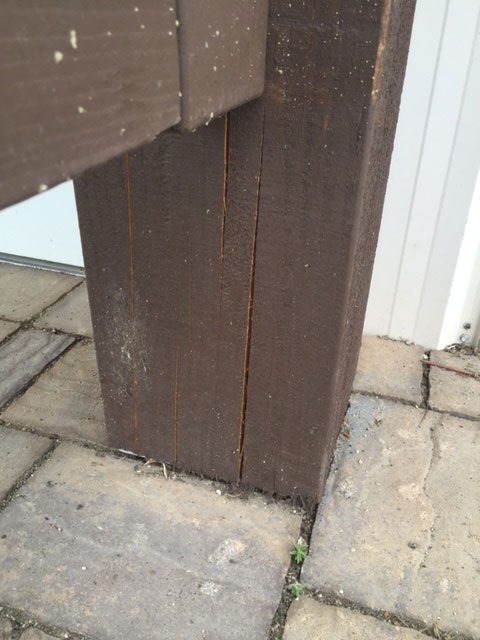
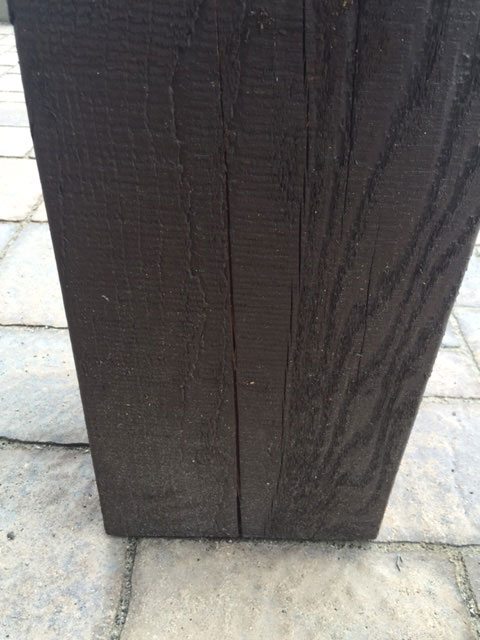
Yes. Cracks like these are common in real timber. They are called “checks”: natural lengthwise separations that can develop as a timber dries and adjusts to the moisture conditions around it. Normal seasoning checks are not, by themselves, evidence that a timber is defective or structurally failing.
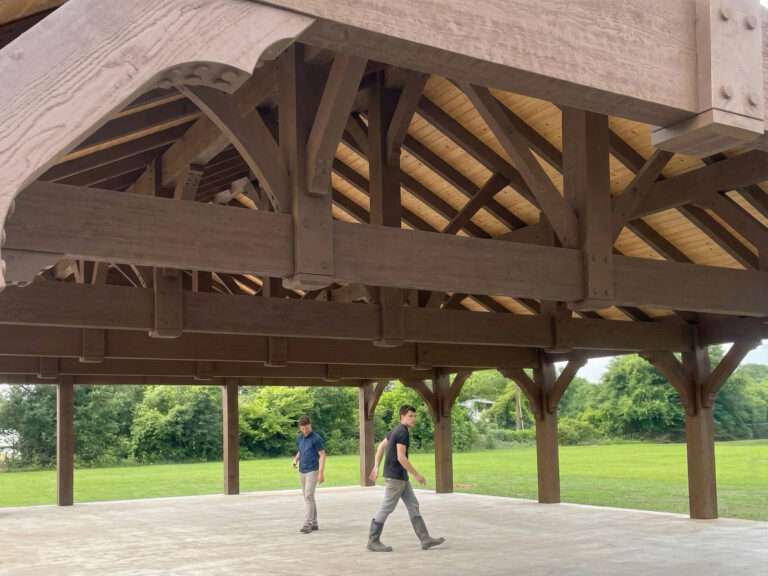
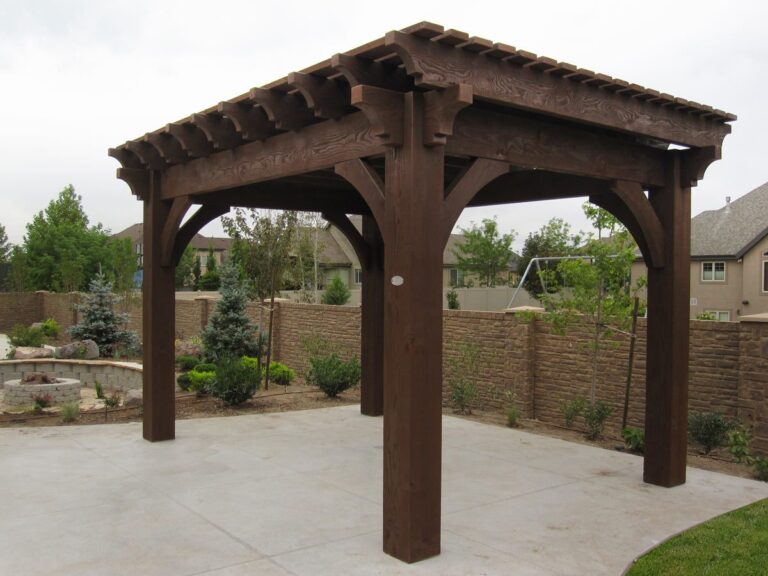
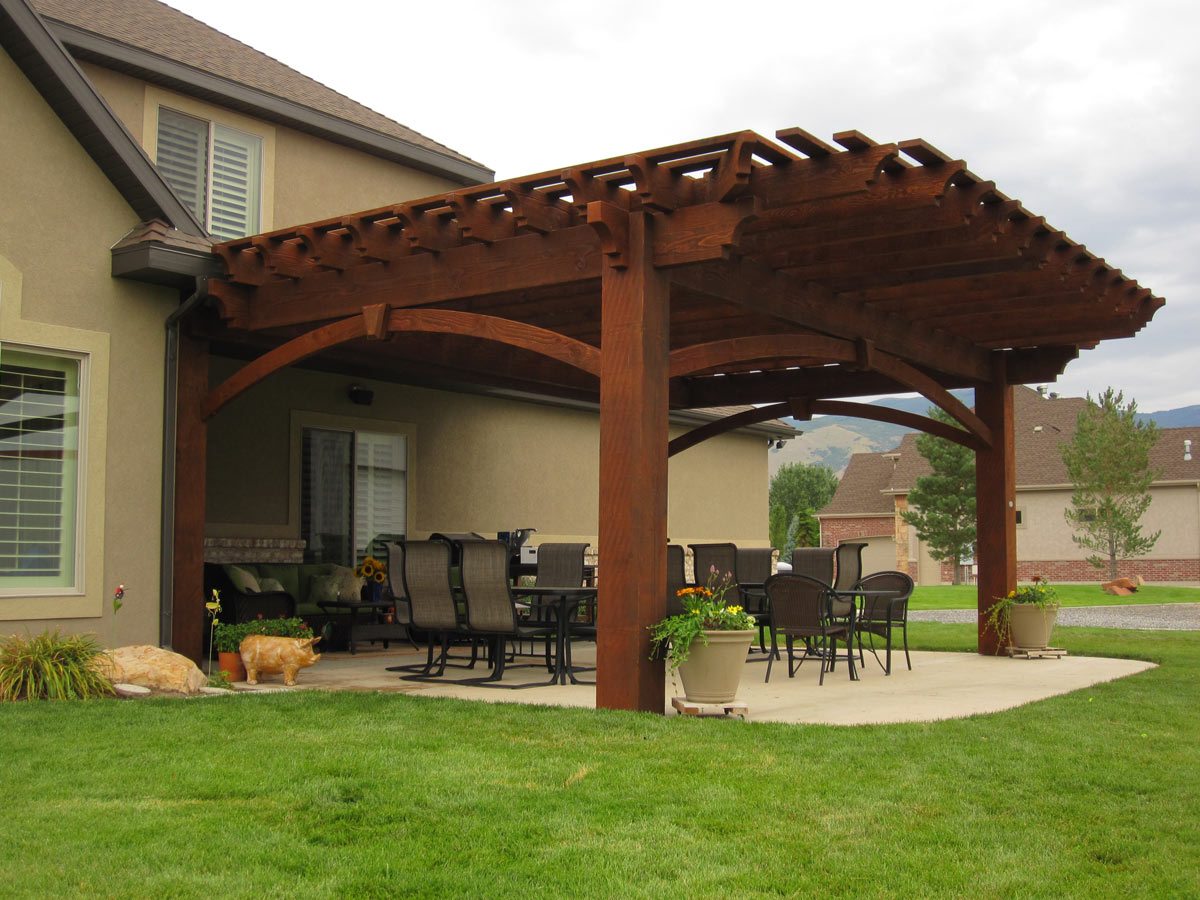
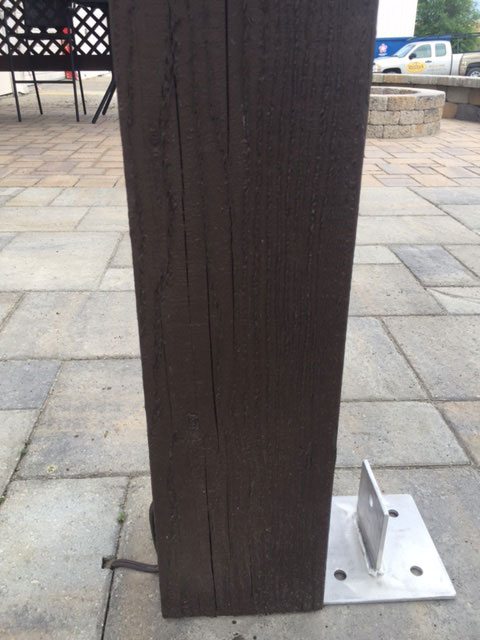
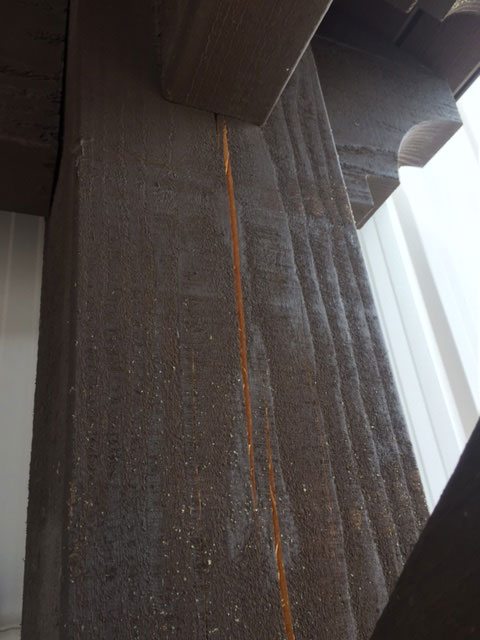
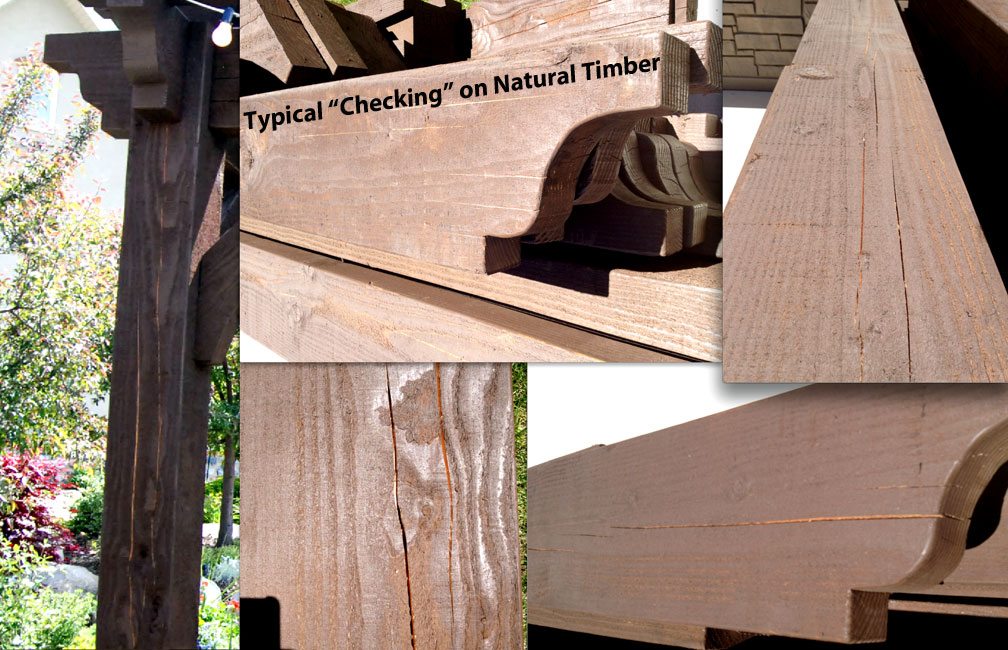
Checking can look alarming if you are not used to heavy timber, but it is common enough to have its own technical name. The photos on this page show checking on actual Western Timber Frame timbers, so you can compare what you are seeing with real examples.
Key Takeaways
- Normal: checking is a natural lengthwise opening along the grain as timber dries
- Strength: normal seasoning checks generally do not reduce the design strength of structural timber
- Why: wood shrinks more across its width than along its length, and the outside dries faster than the core
- Less checking: Western Timber Frame’s standard timbers are Free of Heart Center (FOHC)
- Care: don’t fill checks with caulk; stain into them during normal maintenance
- Inspect: a through-split or a check that reaches a connection deserves a closer look
What Is Checking in Timber?
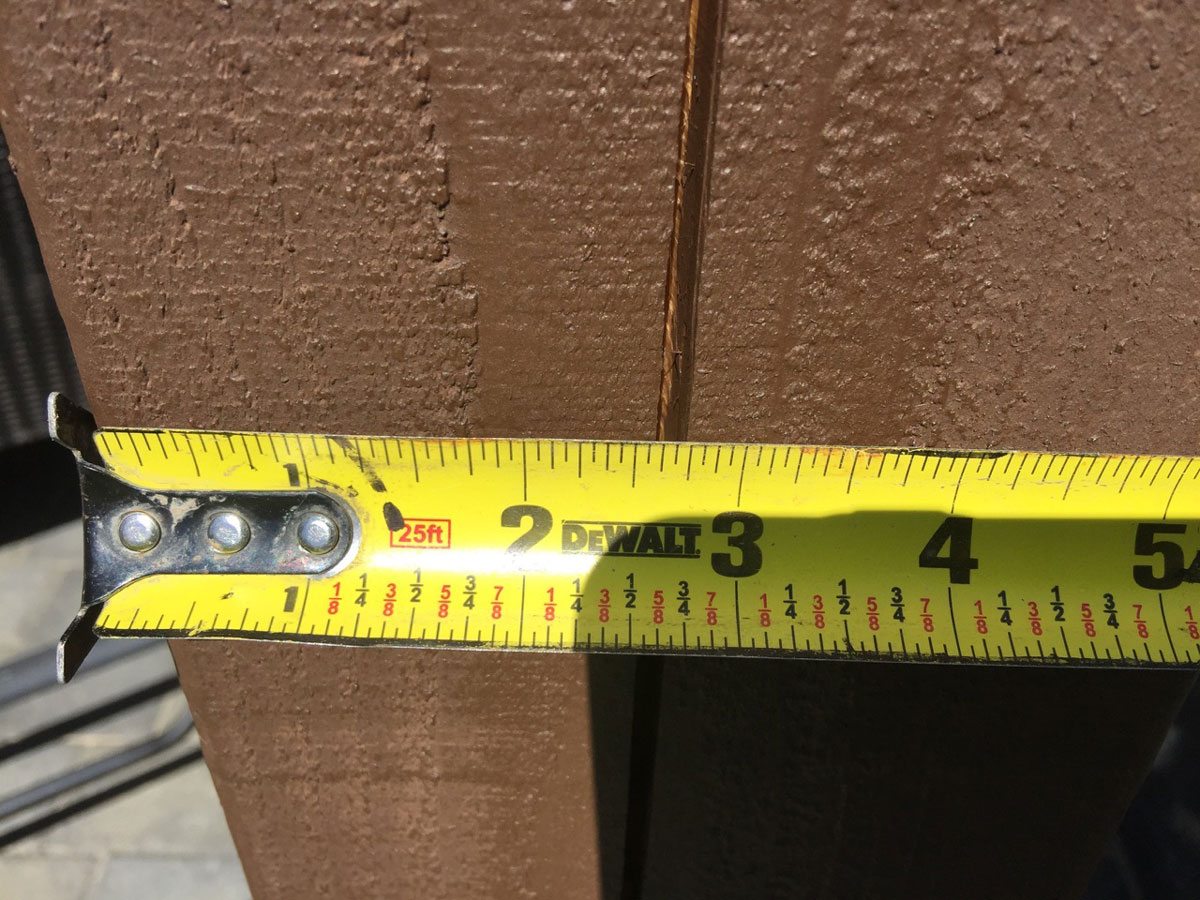
The USDA Wood Handbook defines a check as a lengthwise separation of the wood that usually extends across the growth rings and commonly results from stresses set up in the wood during seasoning. In plain terms, it is a narrow opening that runs along the grain, often looking like a split or crack.
Timber is a natural, organic material. As it takes in or loses moisture, it shrinks and swells until it reaches equilibrium with the moisture in the air around it. All timber goes through some seasoning as it adjusts to its new climate, and checking is one of the visible signs of that process.
What Is the Difference Between a Check and a Split?
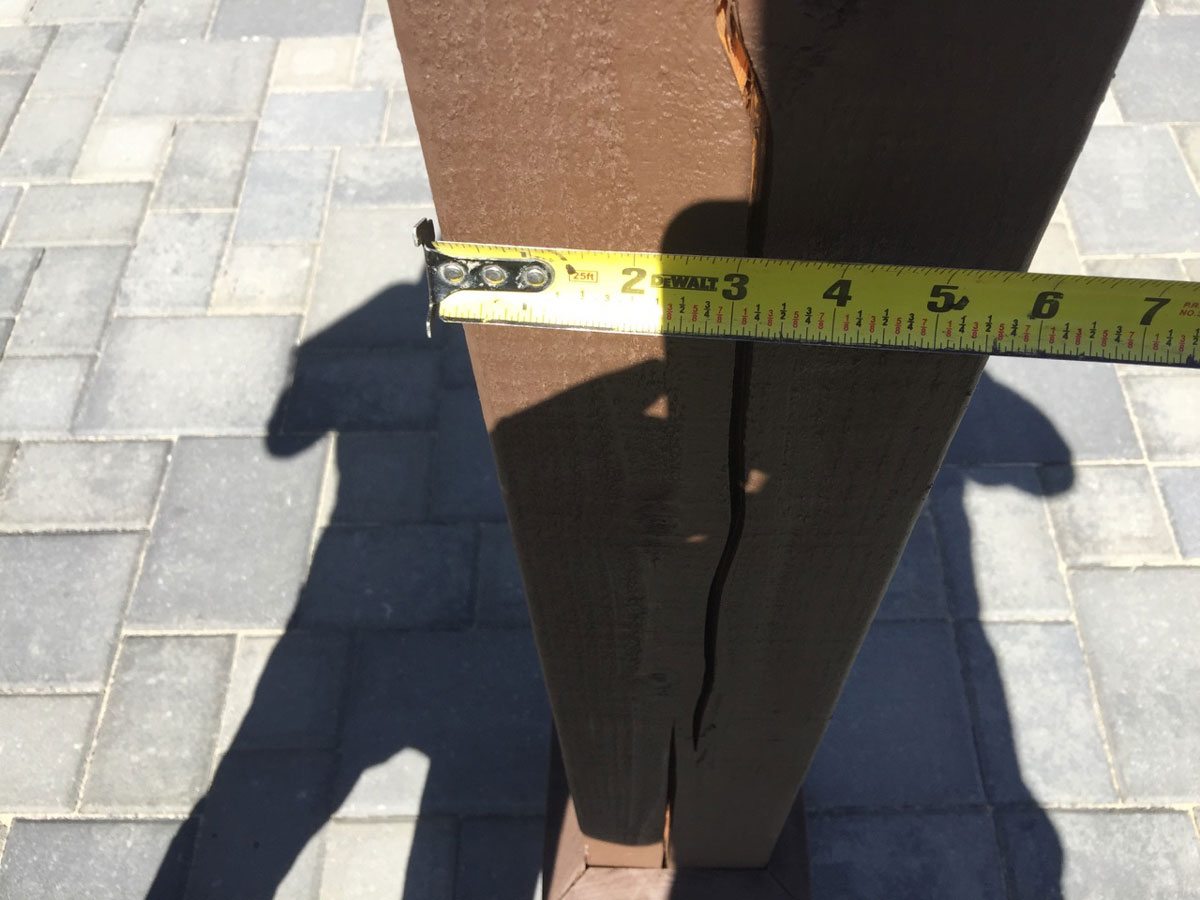
A check develops on a timber’s surface and does not extend through the piece to the opposite or an adjacent face. A split extends through the timber to an opposite or adjoining surface. That distinction matters, because a normal seasoning check and a through-split are not the same condition.
Why Does Timber Check?
Wood does not shrink evenly. As STRUCTURE magazine explains, until wood reaches equilibrium it shrinks at different rates across its cross-section than along its length, and the surfaces and ends dry faster than the interior. That difference creates stress near the surface, and the wood relieves it by opening a check along the grain.
That is why checks run lengthwise up a post or along a beam, and why they are most noticeable in the first seasons after installation, when the timber is settling into its new environment. Checking can occur in structural timber of many species, including the Cedar posts shown on this page, although species, moisture content, grain, and drying conditions all affect how much checking develops.
Do Normal Seasoning Checks Weaken Timber?
Normal seasoning checks generally do not reduce the design strength of structural timber. STRUCTURE magazine explains that seasoning checks do not affect the design strength of a member in axial compression unless they develop into a through-split that essentially separates the timber. For shear, published structural timber design values already account for checking.
A check that reaches a structural connection, a new through-split, or an opening that looks unusual should be evaluated rather than assumed to be ordinary checking. For many people, normal checking even adds character, the same natural texture seen in exposed beams in old barns and timber-framed halls.
Why Does FOHC Timber Tend to Check Less?
Western Timber Frame specifies Free of Heart Center (FOHC) timber for its standard-size Douglas Fir timbers. FOHC means the timber does not contain the pith, or center of the tree.
STRUCTURE magazine notes that boxed-heart timbers, pieces containing the pith, tend to develop more checks than FOHC timbers. FOHC does not mean a timber will never check, but removing the heart center helps reduce the amount of checking you can expect.
The Douglas Fir is Grade A (graded No. 1 or better), and Western Timber Frame’s timbers are air-dried to approximately 12–19% moisture content before shipping, close to the level they will settle at outdoors. Read more in Green vs Kiln Dried Timber: What Actually Matters at Scale.
What About Very Large Timbers?
As timber sizes grow past about 12×12, such as the 14×14 and 16×16 timbers used on large and commercial builds, FOHC material generally isn’t available and boxed-heart timber is used. Large boxed-heart timbers should be expected to show more checking as they season. On these large timbers, Western Timber Frame installs through-bolts every 1 to 2 feet up the post.
Should You Fill Timber Checks With Caulk or Wood Filler?
Generally, no. For exterior timbers exposed to weather, STRUCTURE magazine advises against filling checks with sealant. An open check lets moisture drain or evaporate if the timber gets wet, while filling it can trap moisture inside. For a Western Timber Frame structure, normal checking is handled during routine finish maintenance by working stain into the exposed wood.
How Should Checked Timber Be Maintained?
- Don’t rush to refinish. A new check is not a reason to re-stain right away. Allow the timber time to acclimate, then inspect the finish as part of normal maintenance. The first maintenance coat is typically due around 12 to 18 months after installation; see Long-Term Maintenance for the full schedule.
- Stain into the checks. When a maintenance coat or touch-up is due, work the matching stain into the exposed wood inside each check.
- Use your touch-up stain. Checking is often more noticeable on a darker stain. After the next coat of stain, or a little of the touch-up stain included with every kit, you will notice it much less, or not at all.
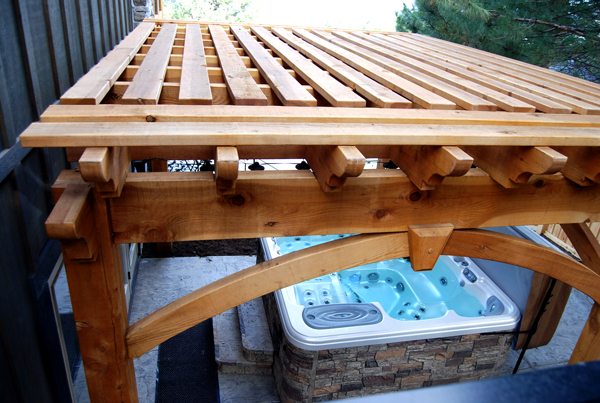
As you can see, timber is naturally beautiful, checking and all. See more in our timber pergola gallery.


When Is a Crack in a Timber Worth Checking?
Most lengthwise surface checks are a normal result of seasoning. Ask Western Timber Frame, your contractor, or a qualified professional to look at the timber if:
- the opening extends through the timber to an opposite or adjacent face
- a check reaches or affects a structural connection
- a new split develops long after the timber has acclimated
- the timber shows unexpected movement or deterioration along with the opening
- you simply cannot tell whether you are looking at a check or a split
A photo sent to the Western Timber Frame team is a good first step.
Frequently Asked Questions About Timber Checking
Is it normal for a timber pergola post to crack?
Yes. Lengthwise surface openings called seasoning checks are common in heavy timber as wood loses moisture and adjusts to its environment. Normal checking is a natural characteristic of timber, not automatically evidence of a defective post.
Does checking make a timber structure weaker?
Normal seasoning checks generally do not reduce structural timber’s design strength, and published timber design values account for checking. A through-split or a check affecting a structural connection is different and may warrant evaluation.
What is the difference between a check and a split?
A check develops from a timber’s surface without extending to an opposite or adjacent face. A split extends through the piece to an opposite or adjoining surface.
Should I fill the checks in my pergola with caulk or wood filler?
Generally, no. For exterior timber, leaving normal checks open lets moisture drain or evaporate; filling them with sealant can trap moisture. Work stain into them during maintenance instead.
When should I re-stain a pergola with checking?
On your normal maintenance schedule. The first maintenance coat is typically due around 12 to 18 months after installation. The new coat of stain goes into the checks and makes them much less noticeable.
Do FOHC timbers still check?
Yes. Free of Heart Center timber can still develop checks. FOHC removes the tree’s pith from the timber, which helps reduce checking compared with boxed-heart timber, but it does not eliminate natural wood movement.
What warranty comes with a Western Timber Frame structure?
Every Western Timber Frame structure carries a limited structural warranty. Length runs from 3 years on Deck Structures to 25 years on the 12K Series, based on the series you purchase.
Sources
- Kevin Cheung, “Seasoning Checks in Timber,” STRUCTURE magazine
- Timber Frame Engineering Council — “Seasoning Checks in Timbers,” Technical Bulletin (2018)
- USDA Forest Products Laboratory — Wood Handbook: Wood as an Engineering Material (FPL-GTR-282, 2021); Chapter 4: Moisture Relations and Physical Properties of Wood
- Western Timber Frame — Green vs Kiln Dried Timber: What Actually Matters at Scale
Western Timber Frame has designed and built more than 7,000 outdoor structures in all 50 states since 2008. Request a free design consultation or call 877-870-8755.
Western Timber Frame™ — Payson, Utah | Since 2008 | 7,000+ structures in all 50 states
2026 SBA Manufacturing Award | HGTV Design Excellence Award | 28 Best of State Awards