Choosing The Perfect Paving To Pair With Your Pergola
The best pergola pavers match the style of the pergola above them and work with its footings, not in place of them. Natural stone suits a traditional pergola, porcelain suits a contemporary one, and warm, light tones suit a Tuscan design. Underneath the pavers, each post still stands on its own engineered footing, and the post base is detailed to stay dry where it meets the patio.
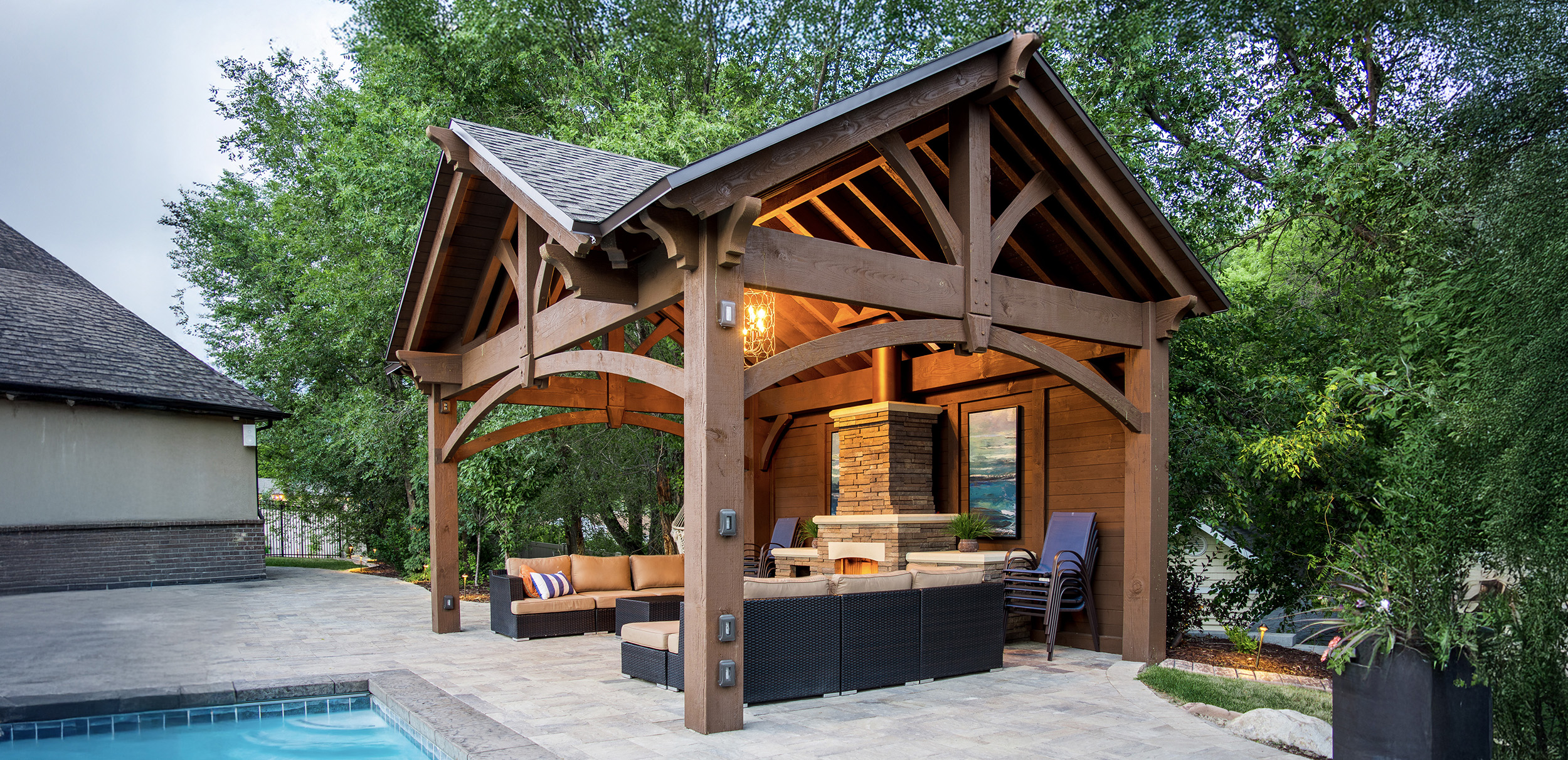
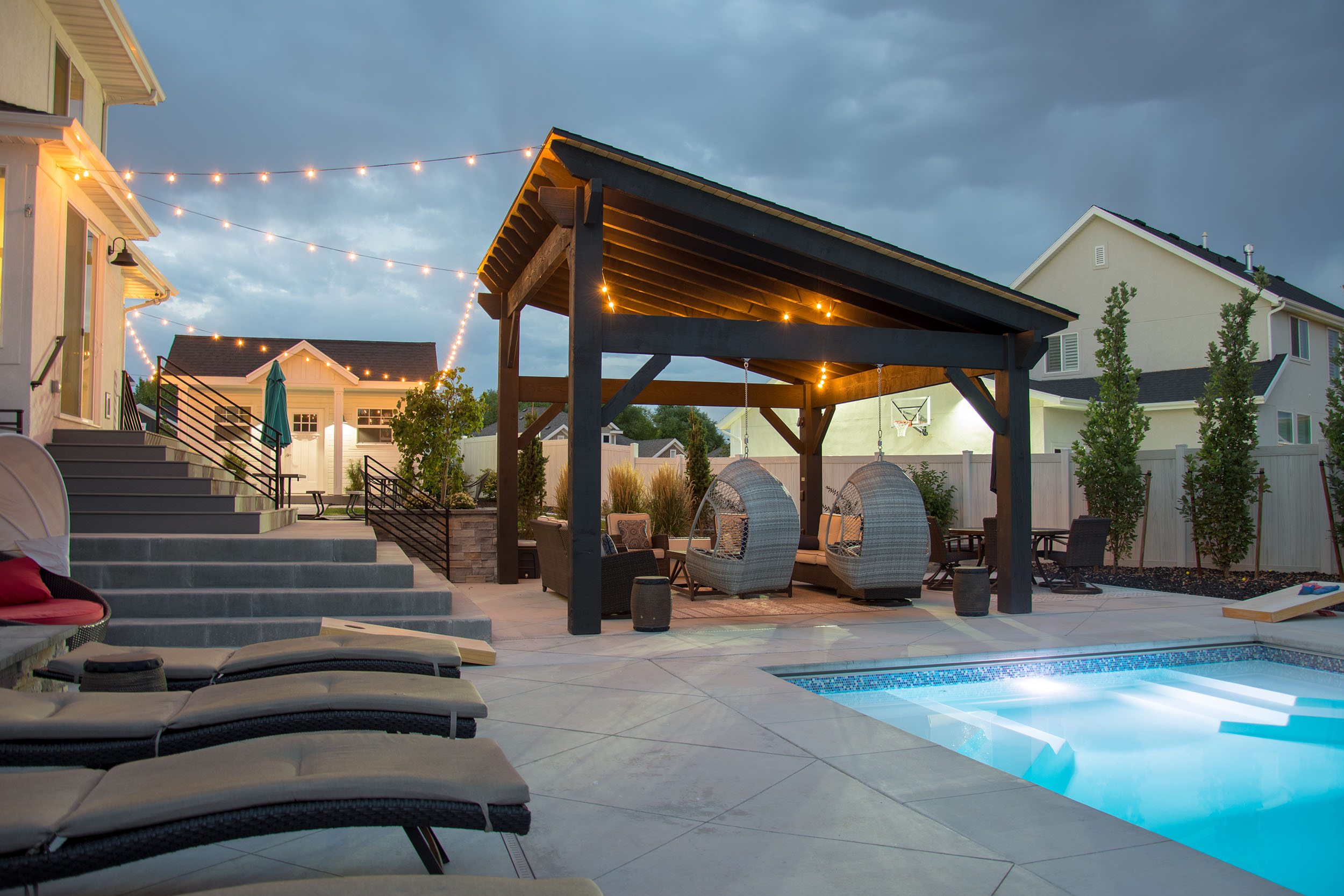
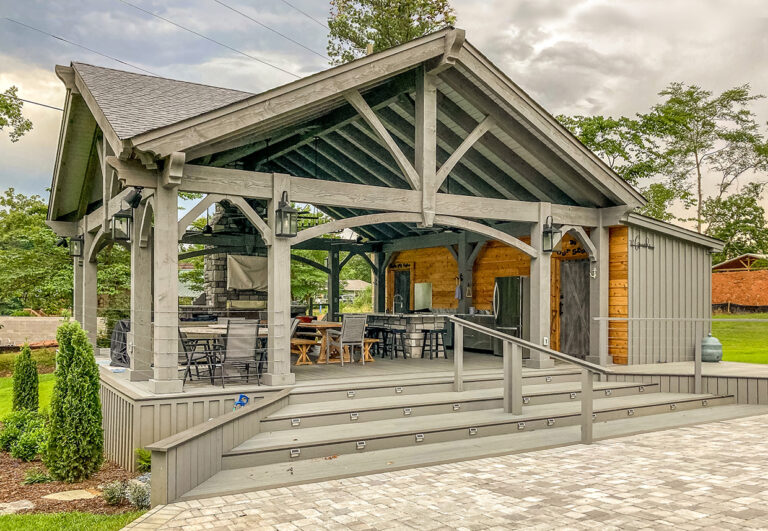
The pergola at the top of this post shows the idea: dark-stained timber over a warm sandstone pool deck, with the stone and the wood chosen to work together.
Key Takeaways
- Choose pavers by the pergola’s style: natural stone for traditional, porcelain for contemporary, warm light tones for Tuscan.
- Pavers are a surface, not a foundation. Each post needs a footing sized for the structure and your frost depth.
- Pour the footings first, then lay pavers around the posts.
- Keep water moving away from the post bases so the timber stays dry.
Match the Pavers to Your Pergola’s Style
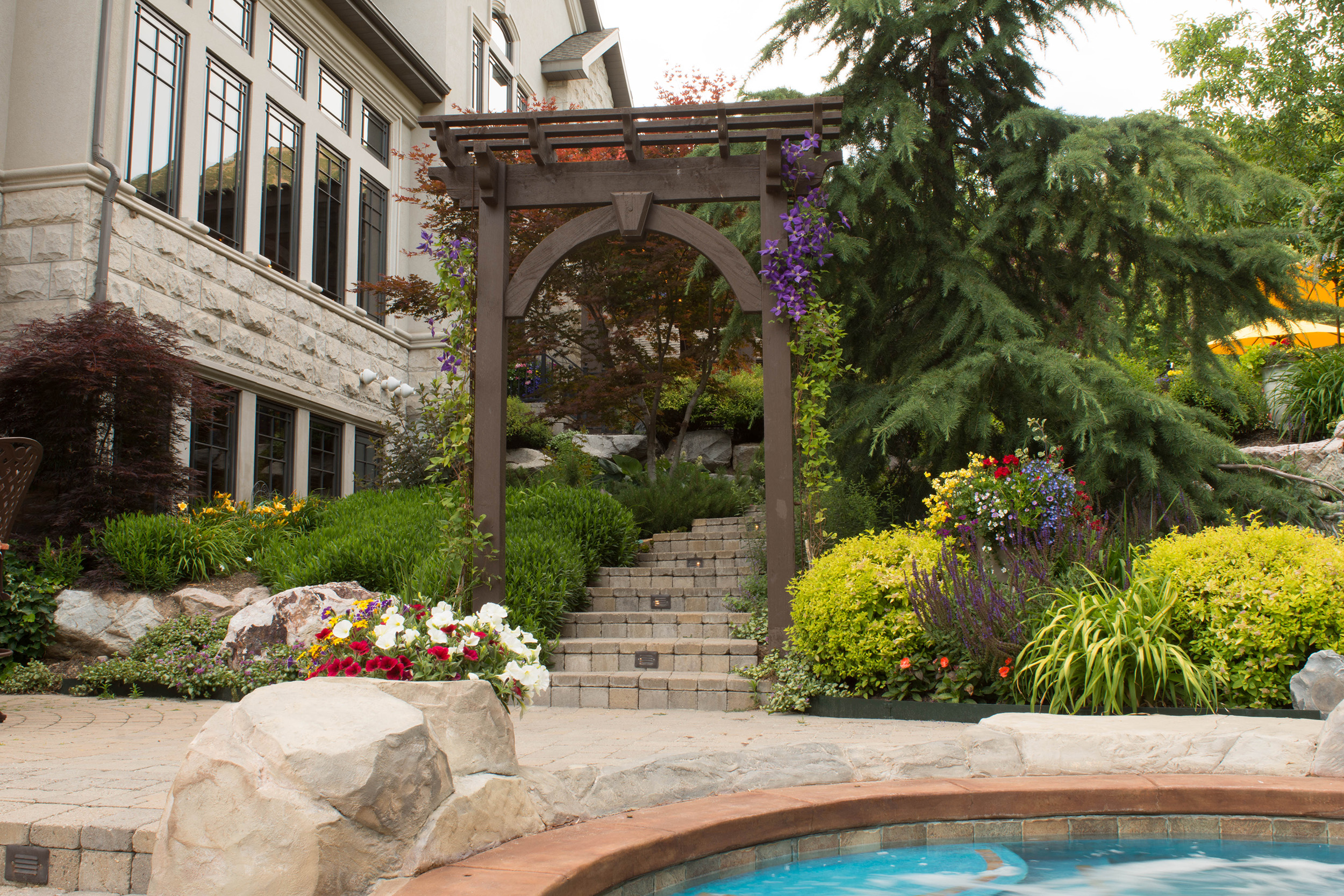
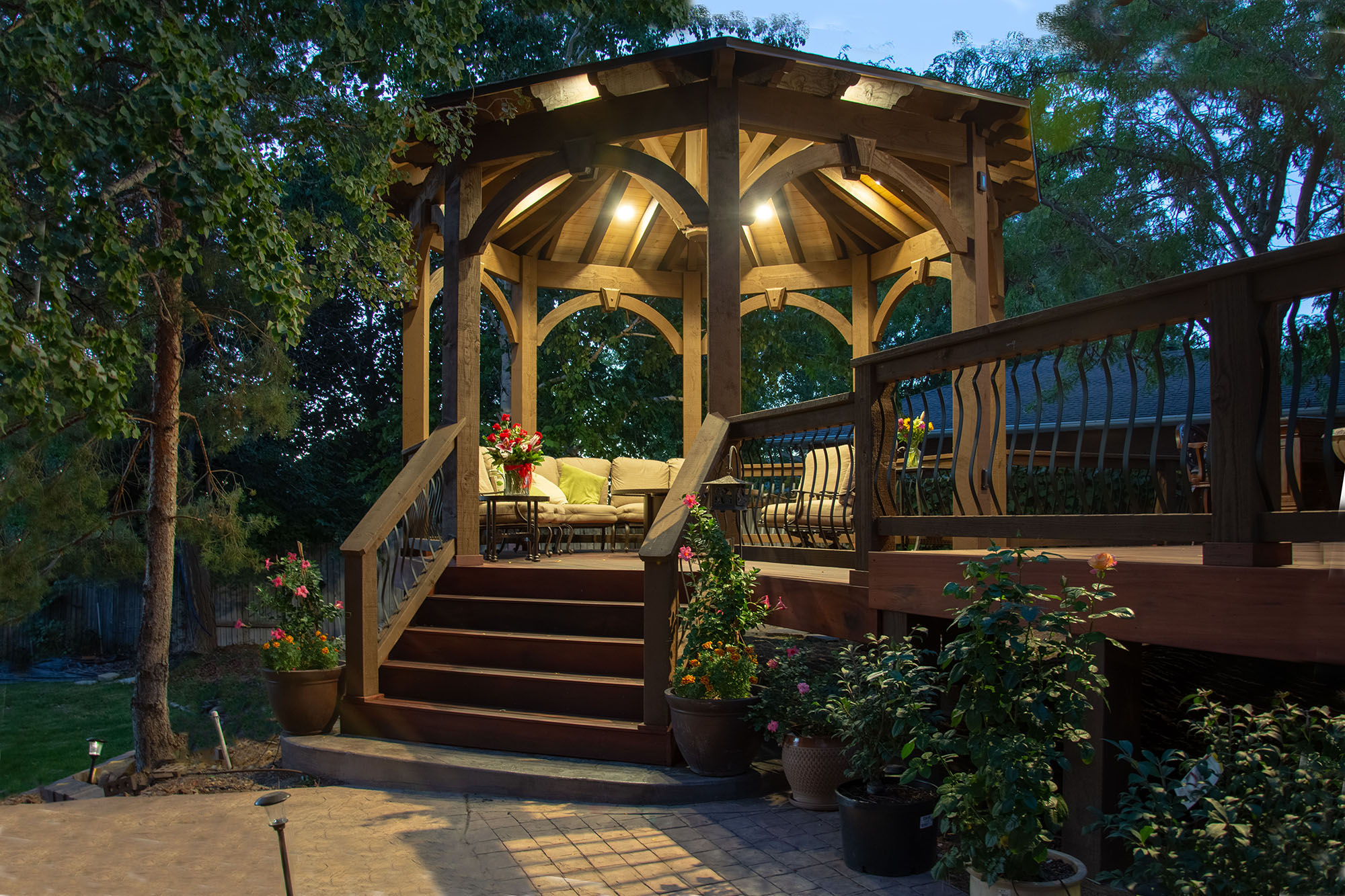
Traditional pergolas: natural stone
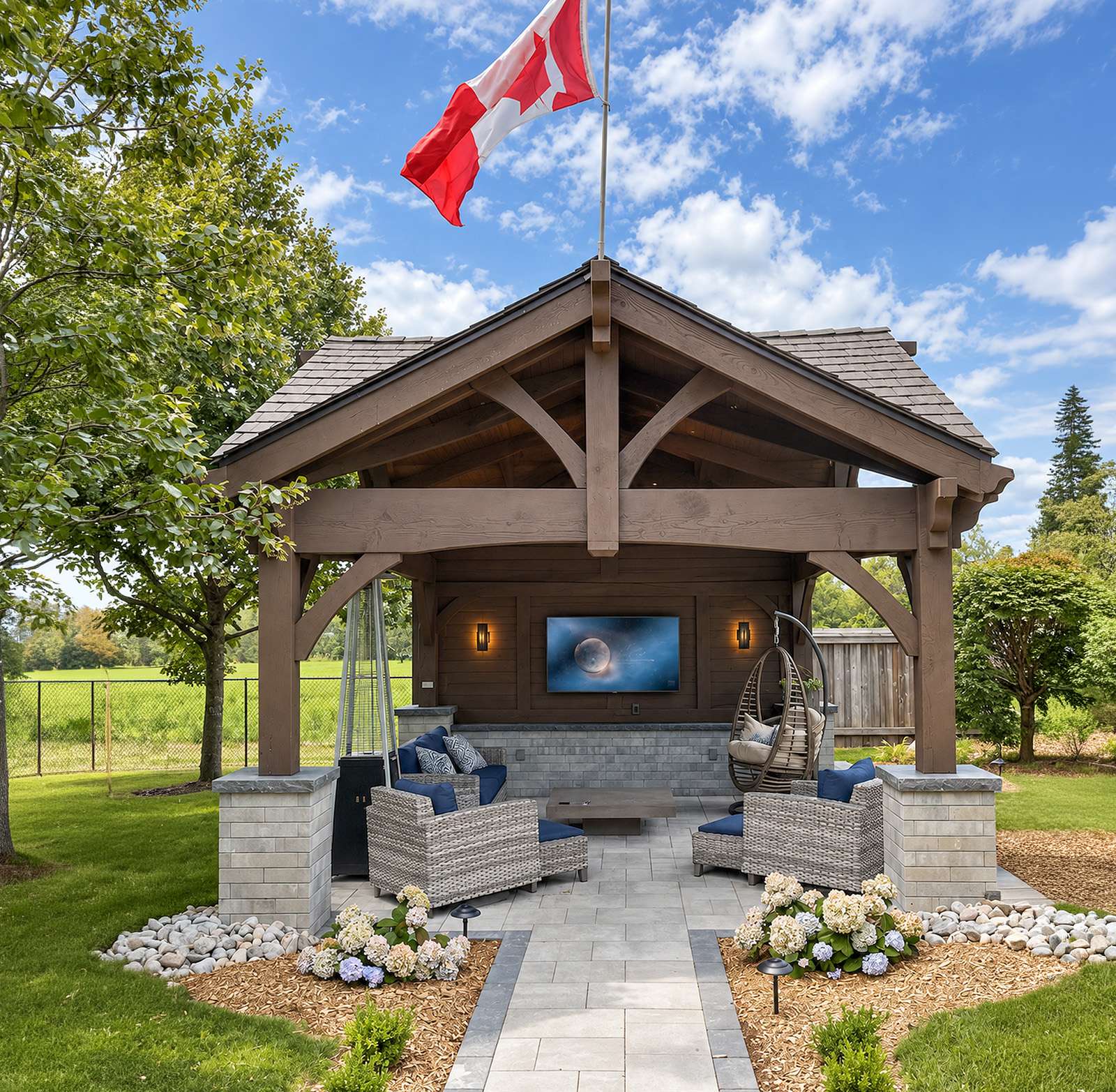
A traditional pergola, with its curved knee braces and shaped beam ends, pairs naturally with sandstone, flagstone, or slate. The uneven texture and hand-finished edges of natural stone echo the rough-sawn timber above. Stone comes in many colors, so hold a sample next to your stain color before you commit.

Contemporary pergolas: porcelain
Contemporary pergolas are about straight lines and clean edges. Porcelain pavers fit that look: they’re machine-made to exact sizes, so joints stay crisp and even. They also absorb very little water, which makes them easy to keep clean. Choose a textured outdoor-rated finish for grip where feet are wet.

Tuscan pergolas: warm and light
A Tuscan-style pergola calls up sunny villas and vineyards, so keep the ground light and warm. Travertine, sandblasted stone, or pavers with soft red and orange tones brighten the space and suit the Mediterranean feel. This style leaves the most room for personal taste.
Brick and concrete pavers
Brick-style concrete pavers work under almost any pergola and are easy to repair, since a single paver can be lifted and reset.

Pavers Are a Surface, Not a Foundation
A heavy timber pergola carries its weight, plus snow and wind, down through its posts. Each post needs a footing sized for those loads and set below your local frost depth. A paver patio, which sits on a few inches of gravel and sand, isn’t built to carry that. Every Western Timber Frame™ drawing package includes a footing schedule showing where each footing goes and how big it is.
- New patio: pour the footings first, then lay the pavers around the posts. That’s the cleanest result, with no cutting through a finished surface.
- Existing patio: the footing locations from your drawings can be cut through the pavers and poured, then the pavers reset around each post.
- Coordinate the trades. If a landscaper is laying the patio, share the footing locations early so the two jobs fit together.
For the basics of footing types, see pergola footings and screw piles.
Keep the Posts Dry Where They Meet the Patio
Where a timber post meets the ground is where water collects. A post set straight into soil or buried in pavers stays damp, and damp wood is what decay needs. The fix is to hold the timber up off the surface and keep water moving away.
- Raise the post base. The EarthAnchor™ post base, machined from corrosion-resistant aluminum and concealed at the base of each post, works as both a moisture barrier and a structural anchor, and it comes standard on every Western Timber Frame pergola.
- Slope the patio. A slight slope away from the house and the posts sends rainwater off instead of letting it pool.
- Leave a small gap. Don’t pack pavers or mortar tight against the timber; give water a way out.
Learn more about why pergola posts rot and how to prevent it.
Questions About Pavers and Pergolas
Can a pergola sit directly on pavers?
Not safely on its own. Pavers rest on gravel and sand and aren’t designed to carry a heavy timber structure. Each post needs a footing sized for the loads and your frost depth, with the pavers laid around it.
Should I install pavers before or after the pergola?
Pour the footings first. Then the pavers can go in around the posts, either before or after the pergola is assembled, as long as the footing locations are planned from the start.
What pavers look best with a timber pergola?
Match the pavers to the pergola’s style: natural stone for traditional designs, porcelain for contemporary designs, and warm, light tones for Tuscan designs. Hold a paver sample next to your stain color before deciding.
Planning a patio and a pergola together? Request a quote and your Design Manager can lay out the footings, the shade, and the patio as one plan.
Western Timber Frame™ — Payson, Utah | Since 2008 | 7,000+ structures in all 50 states
2026 SBA Manufacturing Award | HGTV Design Excellence Award | 28 Best of State Awards