How To Choose The Right Pergola Size: A Step-by-Step Guide
| What You’ll Learn in This Blog 1) How to choose the right pergola size based on real use, not generic dimensions 2) Standard pergola sizes and what they actually fit once furniture and movement are accounted for 3) Clearance rules that prevent cramped walkways, blocked doors, and awkward layouts 4) How height, post placement, and overhangs affect comfort, shade, and proportion 5) Why pergola sizing must account for structure, climate, and local building rules 6) The most common pergola sizing mistakes homeowners regret after installation 7) How to visualize and validate pergola dimensions before materials are ordered 8) When standard sizes work, and when true custom design is the better option |
How To Choose The Right Pergola Size: A Step-by-Step Guide
Most pergola sizing mistakes don’t show up on paper.
They show up after installation when chairs hit posts, walkways feel tight, shade misses the table, and the structure suddenly feels either too small to use or too big to belong.
But by then, fixing it means tearing it down or living with the regret.
Pergola size decides how your outdoor space actually functions. It controls movement, comfort, shade coverage, and whether the structure feels intentional or like an afterthought dropped onto the patio.
If you’re here because you want this built once, and built right, before money, materials, and labor are locked in, you’re in the right place.
This guide walks you through how to choose the right pergola size using real clearance rules, furniture layouts, and structural realities so your pergola works the way it’s supposed to from day one.
|
Quick Answer: How Big Should Your Pergola Be? Most residential pergolas are between 10×10 and 12×16, depending on use.
|
Rule of thumb: plan furniture first, then add at least 3 feet of walking clearance where people pass. For a fast estimate, add about 4 feet to each furniture-zone dimension to account for circulation, post width, and common roof overhangs.
Step 1 – Define the Purpose and Use of Your Pergola

Before measurements, materials, or layouts, start with one question:
What do you want this pergola to do?
The right pergola size starts with how the space will actually be used, not how it looks on a product page.
Function dictates dimensions. Everything else follows.
Common Use Cases and the Ideal Pergola Size for Outdoor Space
- Intimate seating or bistro area
Two chairs and a small table typically need an 8×8 or 10×10 pergola. - Outdoor dining
A 6-person dining table works best under a 10×13 or 12×12 pergola to allow chair pullback and circulation. - Lounge or sectional seating
Sectionals require more depth. A 12×14 or larger footprint prevents crowding. - Outdoor kitchen or grill station
Plan for appliances, prep space, and heat clearance. Most outdoor kitchens need at least a 12×16 pergola. - Small urban or townhouse backyard
Scale matters more than size. A properly proportioned 10×10 custom pergola often outperforms a larger generic structure.
Key sizing principle: if the pergola is meant to be used daily (not just admired), build in movement space from day one.
This is where true custom timber frame design matters. A purpose-built pergola is designed around your space, your home architecture, your climate, and how you live outdoors. Not a preset box size.
Step 2 – Measure Your Outdoor Space Properly
Once the purpose is defined, measurement becomes a technical exercise, not a rough estimate.
How to measure for a pergola correctly:
- Measure the full usable patio or yard area.
- Subtract a minimum of 3 feet on all sides for walkways.
- Account for doors, grills, planters, steps, and property lines.
- Mark the proposed pergola footprint with stakes or painter’s tape.
Should a pergola be the same size as the patio?
Not necessarily. Many patios look and function better when a pergola defines part of the surface, creating a dedicated outdoor room instead of covering everything.
Also, check local building permit limits for pergola dimensions. Many jurisdictions regulate maximum size, height, and setbacks even for open-roof structures.
Visualize Before You Build: Measure Twice, Build Once
Here’s a simple but powerful technique:
- Use painter’s tape, stakes, or string to mark proposed post locations
- Walk the perimeter and follow “traffic paths” like guests would
- Place chairs (or cardboard furniture outlines) where furniture will actually live
This prevents one of the most common pergola design mistakes: sizing the structure to the patio, not to real-life use.
| Nationwide Note: Climate and Exposure Can Affect Post Placement If you’re in a high-wind coastal region, a mountain snow zone, or an area with seismic requirements, measurement and layout matter even more because bracing, anchoring, and load paths can influence final post locations. |
Where Western Timber Frame Fits In (Without Guesswork)
At Western Timber Frame, sizing starts with how you’ll use the space and what your site demands, not a pre-set template.
We’re a national authority on custom, structural, handcrafted, real-wood timber frame pergolas and outdoor structures for homeowners who want true craftsmanship, not mass-produced, cookie-cutter kits.
That means your pergola can be:
- True Custom Timber Frame (Not “Semi-Custom”)—designed from scratch for your space, architecture, climate, and use case
- Precision-cut and clearly labeled for straightforward assembly
- Shipped nationwide for DIY install or assembly by your local contractor
- Supported with guidance, drawings, and structural considerations, so your size is comfortable and buildable
Step 3 – Standard Pergola Sizes and What They Fit
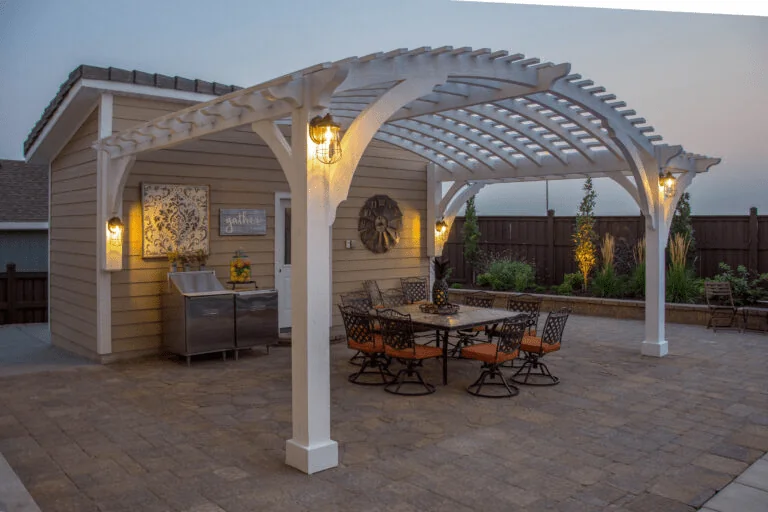
Standard pergola sizes can be useful benchmarks—especially if you’re comparing layout options or planning furniture.
Just remember: “standard” doesn’t automatically mean “right.”
As a rule, a pergola should feel like an outdoor room, not a tight cover you squeeze under. If your layout is “just barely” fitting on paper, go one size up or redesign the furniture zone.
Common Pergola Dimensions
| Pergola Size | Best For |
| 8×8 | Bistro seating, small patios |
| 10×10 | Two chairs, compact lounge |
| 10×12 | 4–6 person dining |
| 12×12 | Dining or lounge zone |
| 12×16 | Dining + seating |
| 12×20+ | Outdoor kitchens, multi-zone entertaining |
10×10 vs 12×12 for a 6-Person Dining Set
If you’re weighing two popular sizes:
- 10×10 can feel tight once chairs pull out and people circulate
- 12×12 typically provides a more natural dining experience with better walk-around space
Step 4 – Don’t Overlook Height: How Tall Should a Pergola Be?
Pergola height affects comfort, shade performance, and how the structure relates to your home.
In general, taller feels more open and architectural, until it stops providing useful shade. Height should match the function (fans, lighting, headroom) and the sun/shade goal for your space.
Standard Height for Pergolas
- Minimum comfortable clearance: 7–8 feet
- Typical residential range: 8–10 feet
- For ceiling fans or statement lighting: 9 feet or higher
Span Limits: Why “Rules of Thumb” Fall Short
Questions like “Can you span 10 ft with a 2×6?” point to the real issue: pergola sizing isn’t only about footprint. It’s also about structural capability.
Western Timber Frame uses heavy timbers, not dimensional lumber, engineered for wind loads, snow loads, and long-term structural integrity. Beam spans, post spacing, and rafter sizing are calculated, not guessed.
| Why it matters: span limits change with species, member size, roof style, and your local design loads. If you’re sizing a pergola in hurricane-prone areas, heavy snow regions, or exposed elevations, structural engineering becomes part of sizing—not an afterthought. |
Step 5 – Maintain Proportion and Aesthetic Balance
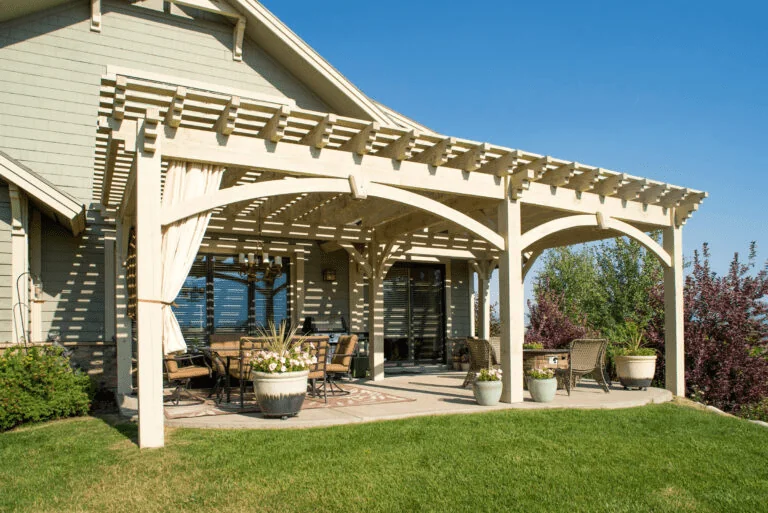
Choosing pergola size isn’t just a math problem. It’s a design decision that affects how the entire outdoor space feels.
If a pergola looks dropped into place rather than designed with the home, sizing or placement usually needs refinement.
The Golden Ratio for Pergolas
Many designers lean on the 1:1.618 (golden ratio) to create a visually pleasing balance between width, depth, and overall mass.
It’s not a strict rule, but it’s a reliable check when something feels “off.”
How Pergola Size Affects Outdoor Ambiance
- Smaller pergolas feel cozy and defined (great for intimate seating)
- Larger pergolas feel expansive and resort-like (great for entertaining)
- Taller pergolas feel airy and architectural (but may reduce shade)
Common Pergola Design Mistakes to Avoid
- Choosing a pergola that’s too small for chairs to pull out comfortably
- Blocking doorways, views, or natural walk paths
- Undersizing overhangs (which can create harsh visual lines)
- Oversizing the structure relative to the home façade
Step 6 – Understand Structural Elements: Posts, Overhangs & Footprint
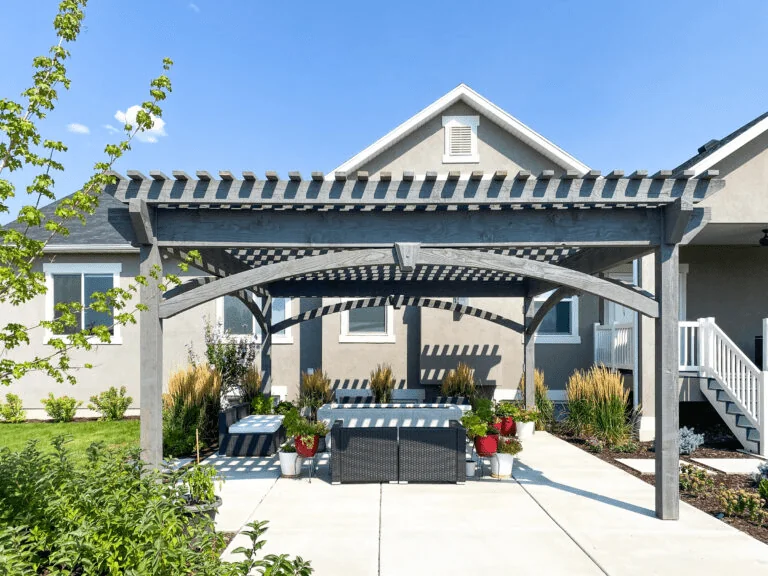
This is where many homeowners get surprised: pergola dimensions often refer to the roofline, not the post layout.
Structure vs Footprint in Pergola Sizing
- Many pergolas include 1.5–3 feet of overhang past the posts
- Posts require interior space inside the footprint
- The “usable area” is influenced by both post spacing and roof projection
The best pergola size is the one that fits your real furniture layout and movement, not just the roof measurement.
Pergola Post Spacing and Post Size
What size posts should you use for a pergola?
That depends on span, load, and design, but structural timber pergolas typically use larger posts and beams than off-the-shelf kits.
Western Timber Frame structures feature:
- High-quality timbers with cabinetry-level precision
- Pre-cut, pre-notched, labeled components for a DIY-friendly install that doesn’t feel “DIY”
- The Dovetail Difference™ joinery (up to 500% stronger joints) for clean aesthetics and structural confidence
Step 7 – Know Local Rules and Build with Confidence
Pergola size may be influenced by local rules even before engineering comes into play.
Common Rules That Affect Pergola Dimensions
- Building code setbacks (distance from property lines)
- Height limits
- Attachment rules (attached vs freestanding)
- HOA design restrictions
Does a pergola need a permit?
Sometimes. Larger footprints, attached structures, and certain roof styles may trigger permitting.
Step 8 – Visualize the Structure and Refine the Design
Before you finalize dimensions, make sure the structure “works” from every angle.
- Review scaled drawings or renderings
- Confirm furniture layout and chair pull-back space
- Check door swings and movement paths
- Consider the sun angle and seasonal use
This is where a design review pays off, because small dimension changes (even 12–24 inches) can transform comfort and proportion.
Start with a Free Design Consultation

The perfect pergola size isn’t found in a catalog. It’s engineered around how you live, gather, and use your outdoor space.
Western Timber Frame designs and manufactures custom timber frame pergolas shipped nationwide, precision-cut, pre-notched, and labeled for installation by homeowners or local contractors.
Our structures are built for decades, not years, blending old-world craftsmanship with modern engineering.
If you’re choosing pergola size and want guidance rooted in real structure, not guesswork, start with a free design quote!
You imagine it. We bring it to life.