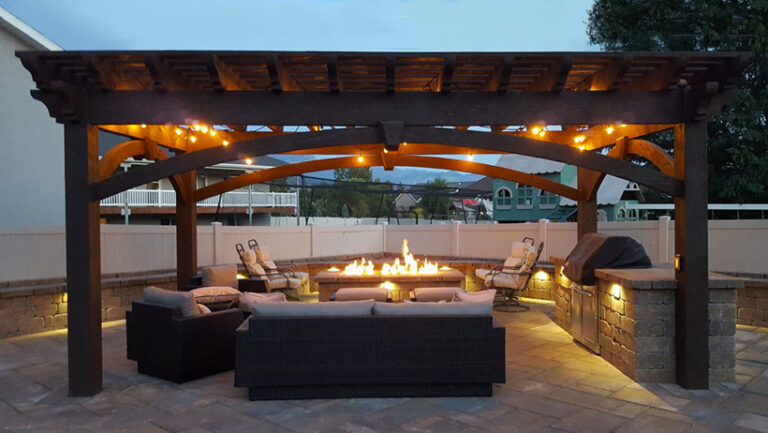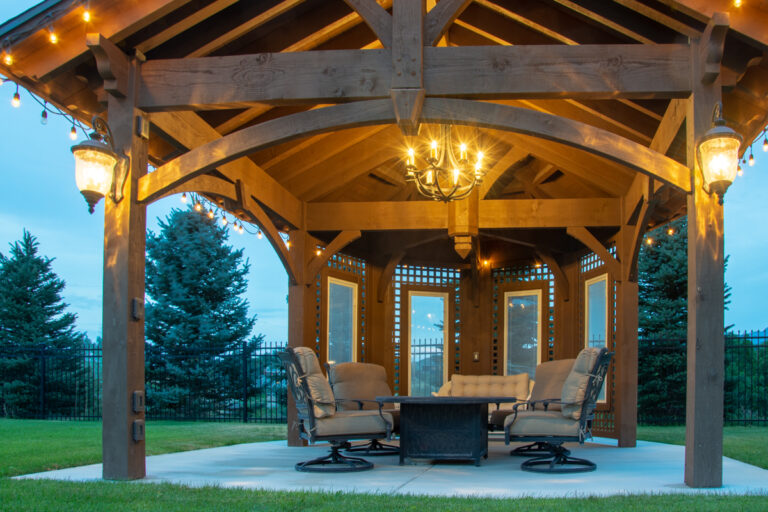

So, What Exactly is a Pergola?
A pergola is an outdoor structure with upright posts that hold an open roof. That roof has beams and rafters, the beams that run across the top. It gives partial shade while still letting in light and air.
Merriam-Webster gives a similar definition of pergola. It describes an open roof held by supports, girders, and cross rafters. A girder is a large beam that helps carry weight.
If you ask what is a pergola, picture four posts around a patio. Heavy pieces of wood span between them. More pieces cross overhead. Sunlight slips through the spaces between those pieces.
If you search what is pergola?, the answer is the same. It is an open-roof outdoor structure held up by posts.
What is the purpose of a pergola?
The main purpose of a pergola is to make an outdoor space feel more defined. It can also make that space more comfortable. It adds shade without closing the area under a solid roof.
Think of a bare patio in a large yard. It may feel like a patch of concrete. Put a pergola over it. The same patio can start to feel like an outdoor room.
That is the basic purpose of pergola design. A pergola can frame a table, chairs, a pool, or a walkway. It can also hold climbing plants. Utah State University Extension notes that strong pergolas can support vines such as wisteria. Source: Utah State University Extension.
So, what is a pergola for? It creates a clear outdoor place while keeping an open feeling.
The purpose of a pergola is not always the same. One may shade a dining table. Another may frame a pool. Another may cover a path with vines.
If you ask what is the purpose of pergola, think about the space below it. The pergola helps shape that space. It can add shade, order, and a sense of place.
What is the point of a pergola?
The point is to add structure overhead without fully closing the sky. You get some shelter from the sun. You still feel connected to the yard around you.
That also answers what is purpose of pergola, pergola purpose, and pergola what is the point. A pergola creates an outdoor room without building a full room.
What is a pergola structure made of?
A basic pergola has four main parts. They are posts, beams, rafters, and smaller shade planks.
What do the posts do?
Posts are the upright pieces that hold the structure up. Merriam-Webster defines a post as an upright piece used for support. Source: Merriam-Webster.
Picture the legs of a table. Pergola posts do a similar job. They are much larger, but the basic idea is easy to see.
What do the beams do?
Beams are large pieces that run side to side between posts. They help carry the pieces above them. Merriam-Webster calls a beam a main horizontal support. Horizontal means it runs across, not up and down. Source: Merriam-Webster.
What do the rafters do?
Rafters are the beams that run across the top. They cross over the larger beams below. Merriam-Webster defines a rafter as one of the parallel beams that support a roof. Parallel means the pieces run in the same direction. Source: Merriam-Webster.
What do shade planks do?
Shade planks are smaller pieces placed across the top. They break direct sunlight into strips of light and shade.
Colorado State University Extension describes a slatted shade structure. Slatted means it uses many narrow pieces with gaps between them. It also notes that vines can grow over this type of structure. Source: Colorado State University Extension.
For a plain measuring guide, see how to measure for a pergola.
For planning the footprint, see the pergola size selection guide. The footprint is the area the structure covers on the ground.
How much shade does a pergola give?
There is no single shade amount for every pergola. One can cast thin stripes of shade. Another can cover most of a sitting area for part of the day.
More overhead wood usually means fewer open gaps for direct sun. Closer shade planks also make the pattern below feel darker.
The sun matters just as much as the wood. The U.S. Department of Energy says sunlight changes by place, time, season, weather, and sun angle. Source: U.S. Department of Energy.
That is why the same pergola can feel different at noon and late afternoon. Its shadow also changes during the year.
Colorado State University Extension gives a useful example. It describes closely spaced wood strips for shade. It also says vines can add more cover. Source: Colorado State University Extension.
What is a pergola roof?
A traditional pergola roof is not a solid roof. It is an open frame made from beams and rafters. Smaller shade pieces may also cross the top.
Merriam-Webster describes a pergola as having an open roof with girders and cross rafters. A girder is a large beam. Source: Merriam-Webster.
A fabric cover, vines, or another shade layer may be added to some pergolas. The frame below is still what gives the pergola its form.
Can a pergola be attached or freestanding?
Yes. A pergola may stand by itself or connect to another building.
A freestanding pergola has its own supports. Freestanding means it does not need another building to hold it up. You might see one beside a pool or in a garden.
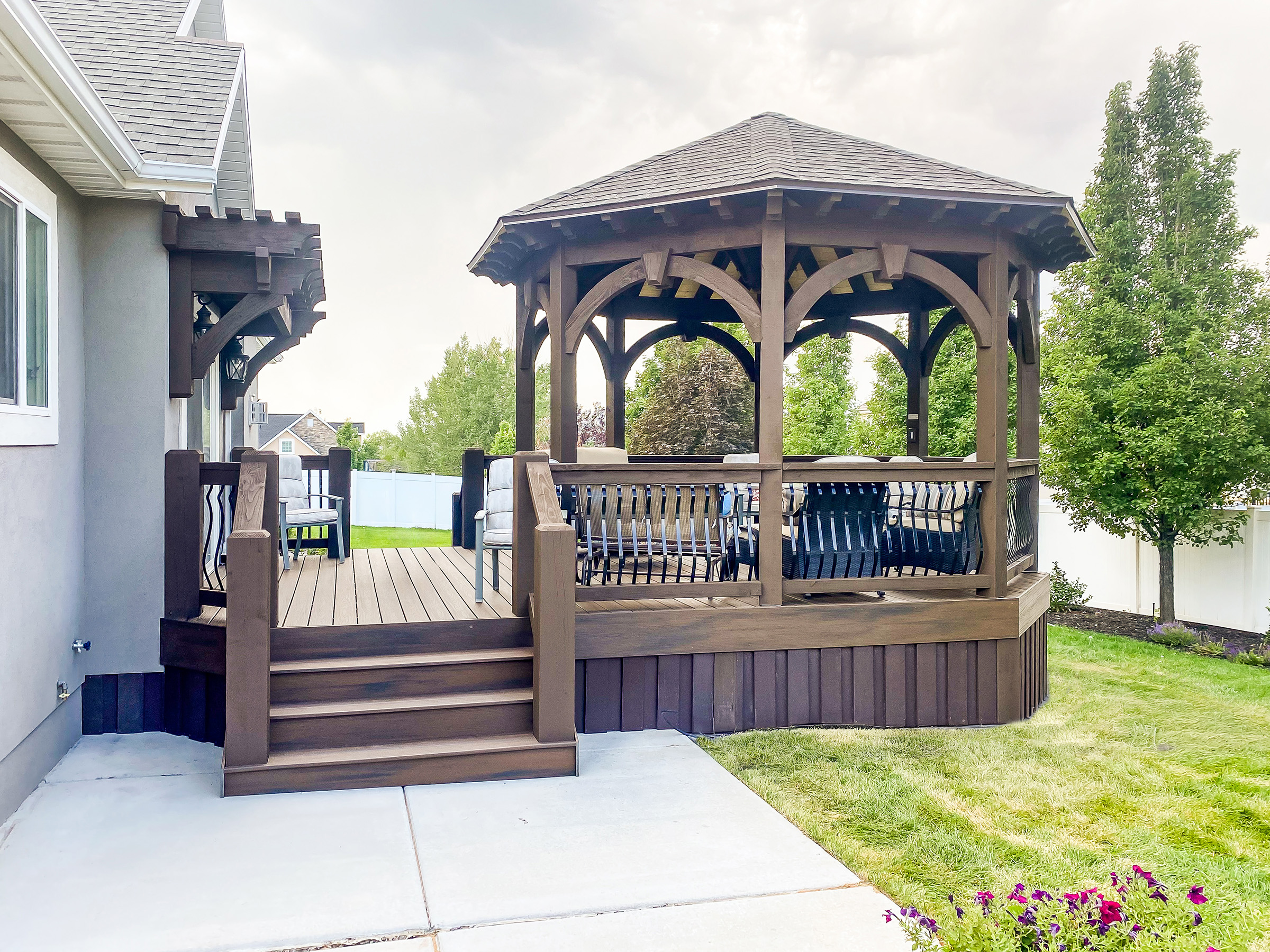
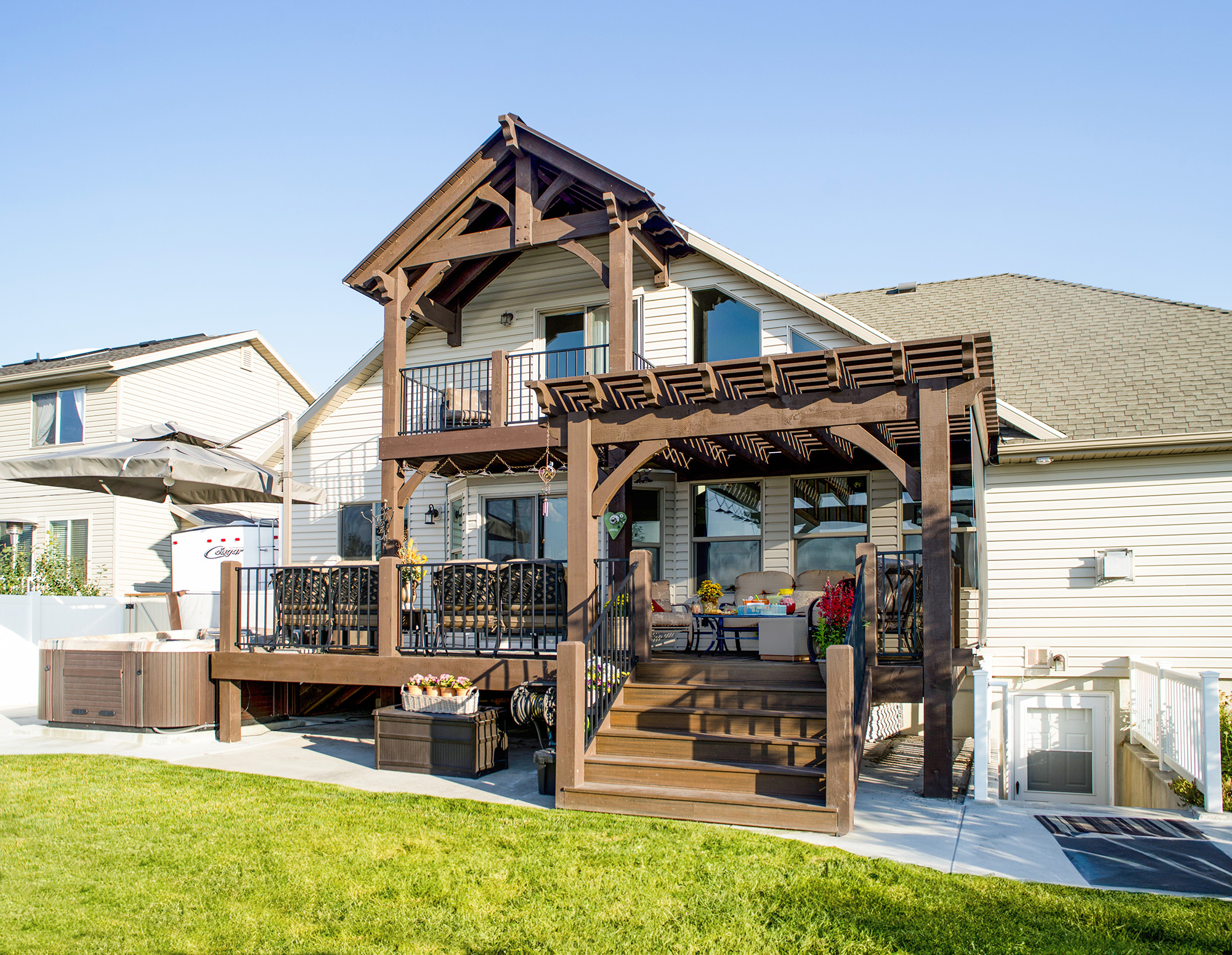
An attached pergola connects to a house or another structure on one side. It may extend shade over a patio near a door.
Building codes also recognize outdoor patio covers as attached or detached. Detached means not joined to the house. The 2024 International Residential Code uses both forms in its patio-cover rules. Source: 2024 International Residential Code, Appendix BF.
What are pergolas made of?
Pergolas can be made from wood, metal, or other outdoor building materials. Timber pergolas often use Douglas Fir, Coast Redwood, Incense Cedar, or Western Red Cedar.
Why use Douglas fir?
Douglas fir is an important wood used for building. Utah State University calls it a valuable western timber tree. It says the tree is used for high-quality lumber. Source: Utah State University Extension.
Western Timber Frame uses Douglas fir as its standard wood for many timber structures. It works well when large wood pieces are needed.
Why use Western Red Cedar?
Western Red Cedar is light and has natural resistance to decay. Decay means the wood slowly breaks down. The U.S. Forest Service notes its strong, light, rot-resistant wood. Source: U.S. Forest Service.
That can make cedar useful where weather exposure and low weight matter.
Why use redwood?
Redwood is valued outdoors because it stays fairly stable and resists decay. Stable means it is less likely to move or change shape. The U.S. Forest Service lists both traits. Source: U.S. Forest Service.
For a deeper wood comparison, see Douglas fir vs redwood vs cedar vs oak.
No wood is magic. Outdoor wood still faces sun, rain, moisture, fungi, and insects. Fungi are living things that can help cause rot. The U.S. Forest Service explains how these conditions can break wood down over time. Source: U.S. Forest Service.
What is a pergola not?
Several outdoor structures can look alike at first. The roof, size, and main use usually tell them apart.
Pergola vs pavilion
A pergola has an open frame overhead. A pavilion is an open garden or park structure used for shelter or recreation. Source: Merriam-Webster.
Pergola vs gazebo
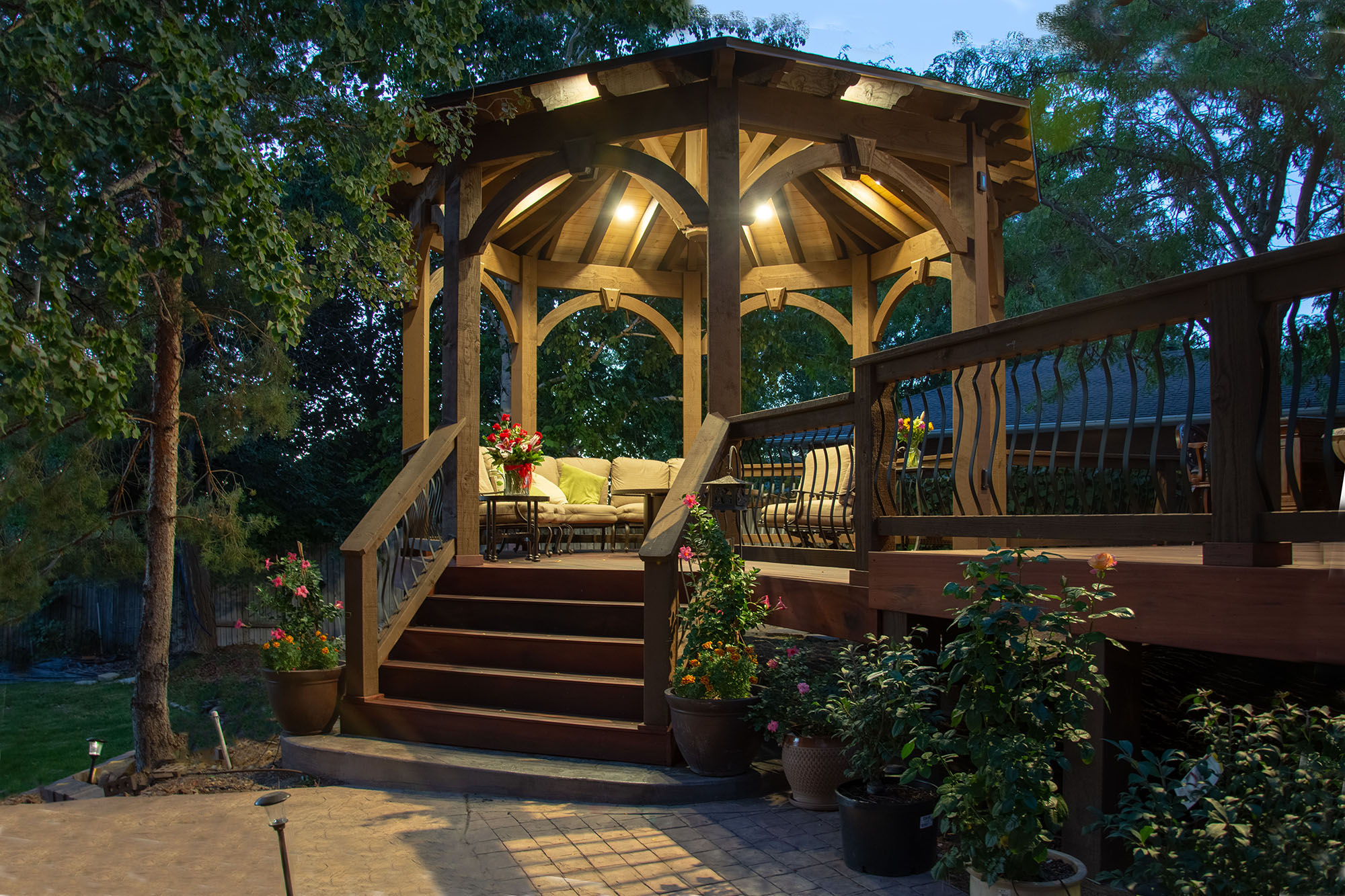
A gazebo is freestanding and roofed. It usually has open sides. A pergola is known for its open roof frame. Source: Merriam-Webster.
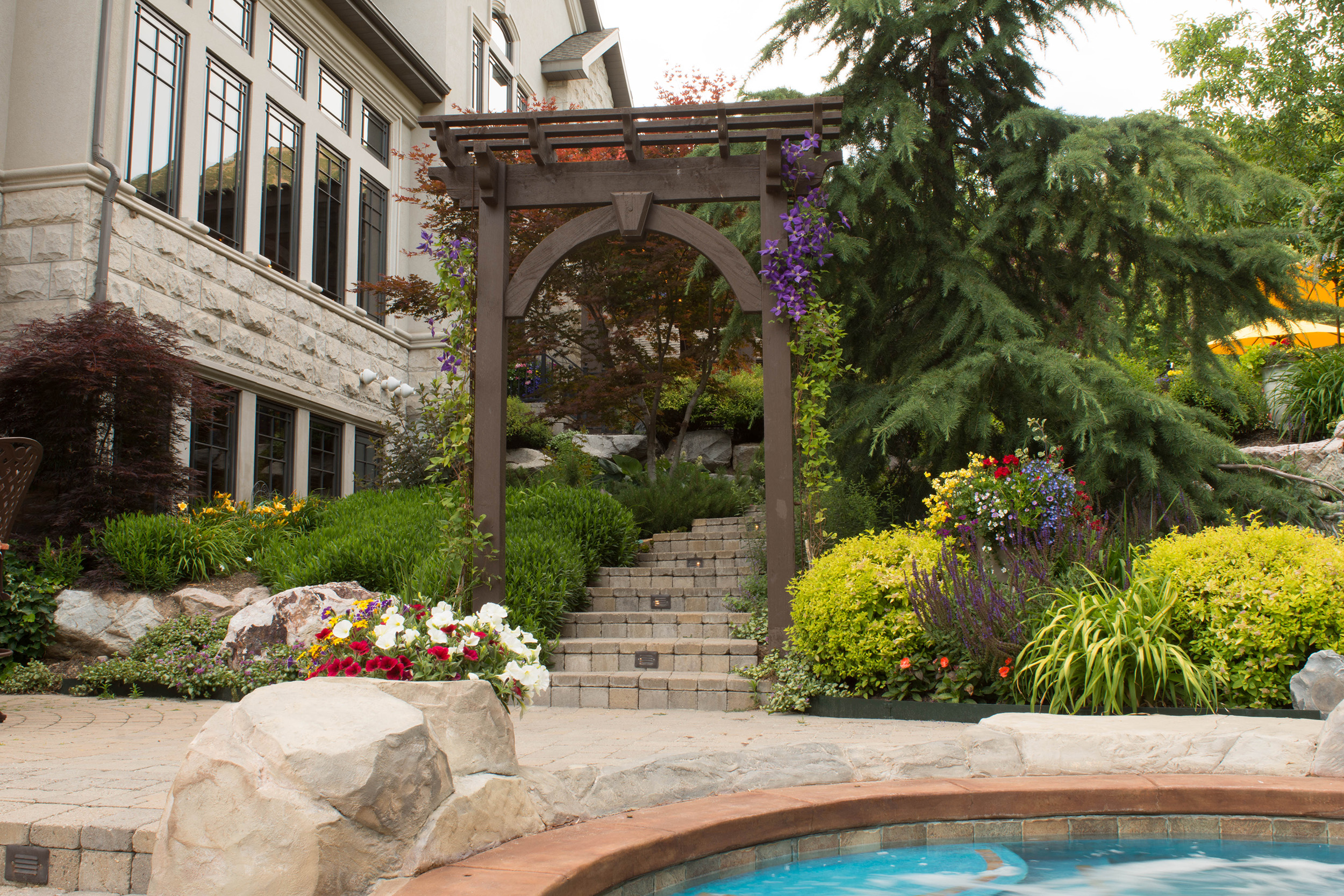
Pergola vs arbor
An arbor is usually a smaller garden shelter covered with vines or climbing plants. Source: Merriam-Webster.
Pergola vs trellis
A trellis is a lattice frame used mainly as a screen or plant support. Lattice means a grid of crossing strips. Source: Merriam-Webster.
Pergola vs pagoda
A pagoda is not another word for pergola. It is an East Asian tower with several roof levels. Source: Merriam-Webster.
For a fuller side-by-side guide, see pergola vs pavilion vs gazebo.
For the East Asian structure, see pagoda vs pergola.
For the smaller garden structures, see arbors and trellises.
Where did the word pergola come from?
The word has been around for centuries. Merriam-Webster traces pergola through Italian to the Latin word pergula. It records the word in English by 1664. Source: Merriam-Webster.
That history also explains some spelling mistakes today. The standard English spelling is pergola, not pergula or purgula.
If you searched what is a pergula or what is a purgula, you are looking for a pergola.
Are pergolas getting more popular?
The best public industry data shows strong interest. It does not show a sudden pergola boom.
In 2016, about half of surveyed landscape architects expected strong demand for pergolas. Pergolas ranked first among the outdoor structures listed. Source: American Society of Landscape Architects.
In 2018, the result was still close to half. Pergolas ranked second among the listed outdoor structures. Source: American Society of Landscape Architects.
Newer surveys use the wider term shade structures instead of pergolas. In 2021, about six in ten clients asked for shade structures to fight extreme heat. Source: American Society of Landscape Architects.
By 2024, the number was still about six in ten. It was a little higher than in 2021. Source: American Society of Landscape Architects.
So the careful answer is simple. Outdoor shade remains important. Public data does not prove that pergolas alone rise every year.
Does an open roof mean a pergola is simple to build?
No. Open space between rafters does not remove wind, snow, or other forces on the structure. Western Timber Frame cuts every joint on CNC equipment before the kit ships, so the fitting is done in the shop rather than in the yard.
The 2024 International Residential Code has rules for covered outdoor structures. The code says these structures must resist design loads. A design load is a force the structure must safely handle. These forces can include wind and snow. Source: 2024 International Residential Code, Appendix BF.
For a deeper explanation, see wind, snow, and seismic loads on a pergola. Seismic loads are forces caused by an earthquake.
Does a pergola need a permit?
Permit rules depend on the place and project. Building codes can also change when local governments adopt or change them.
The International Residential Code notes that its patio-cover appendix only applies when local law adopts it. An appendix is an added section of the code. Source: 2024 International Residential Code, Appendix BF.
For that topic, see the outdoor structure permit guide.
What is a pergola used for in real life?
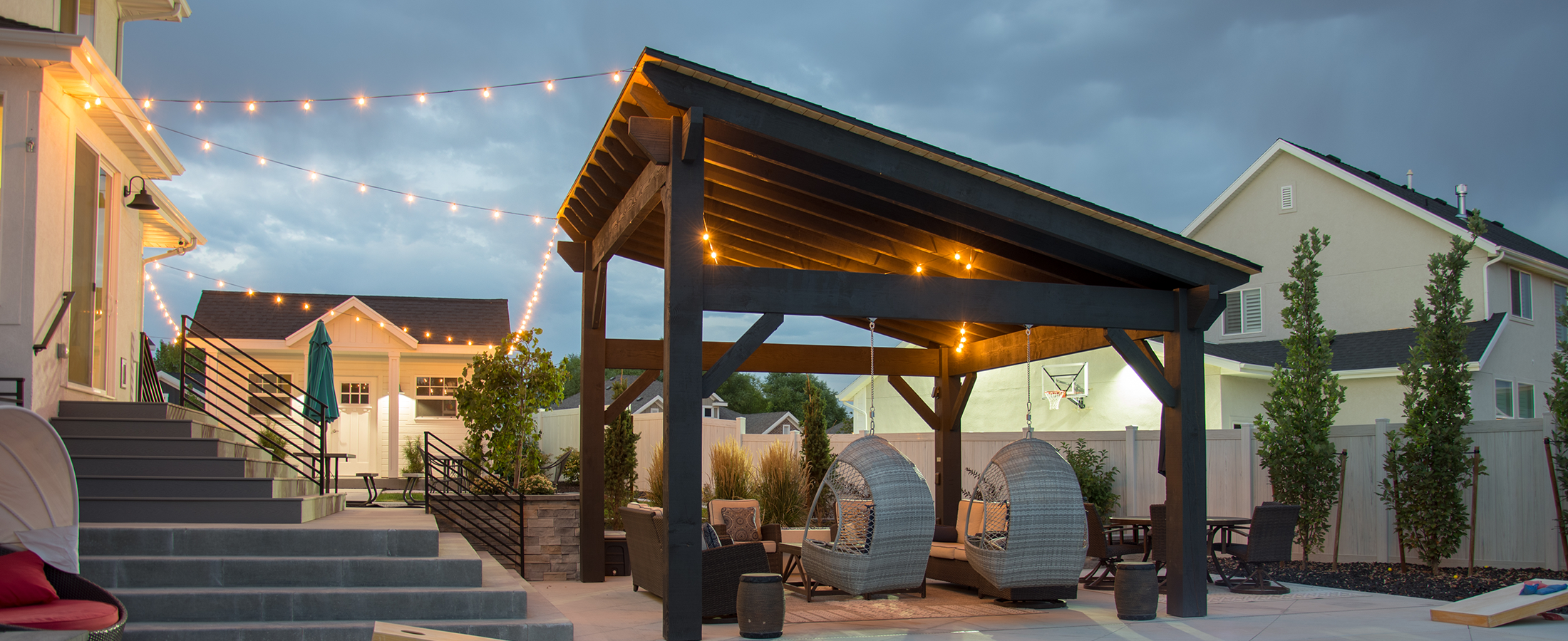
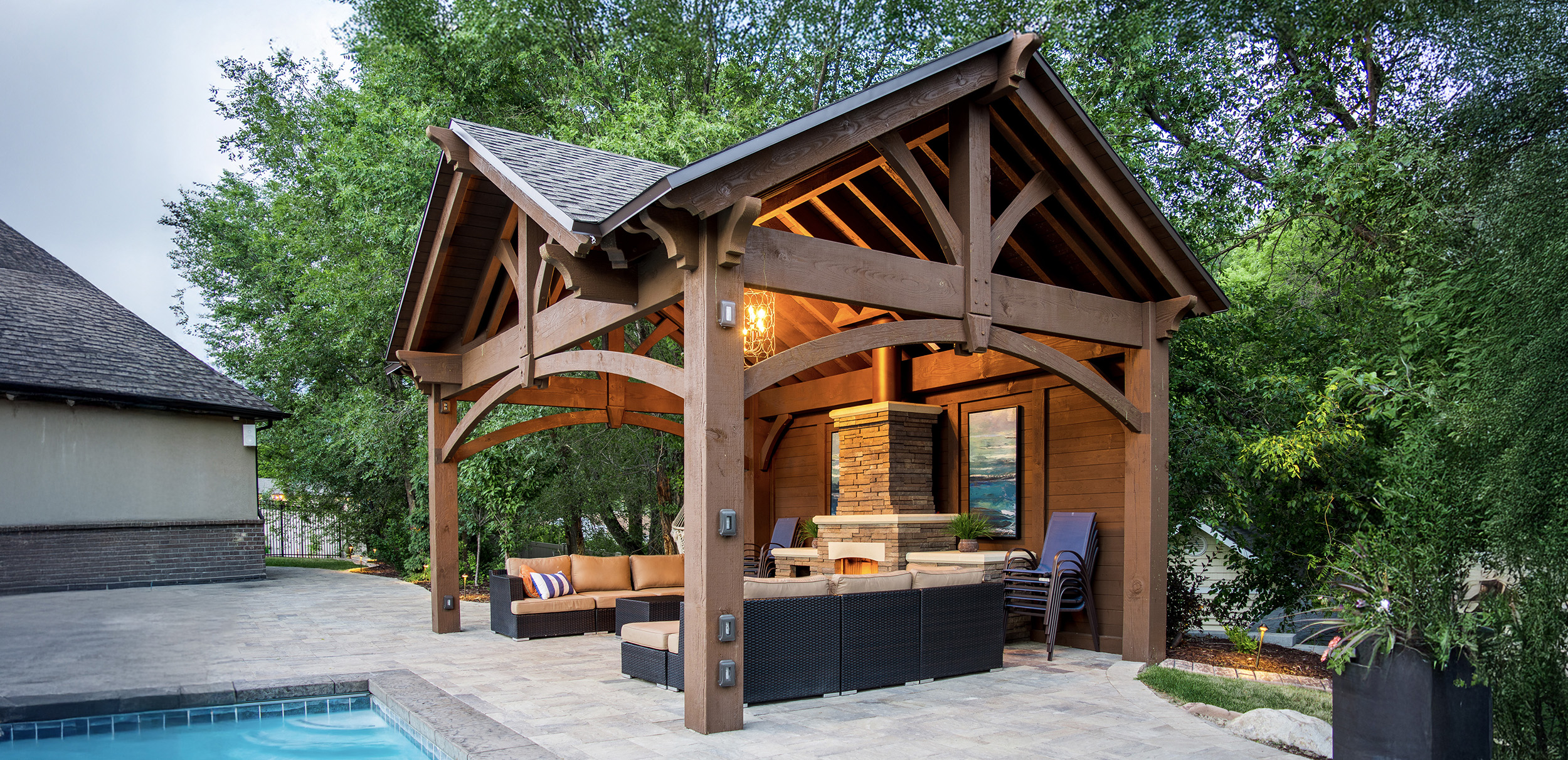
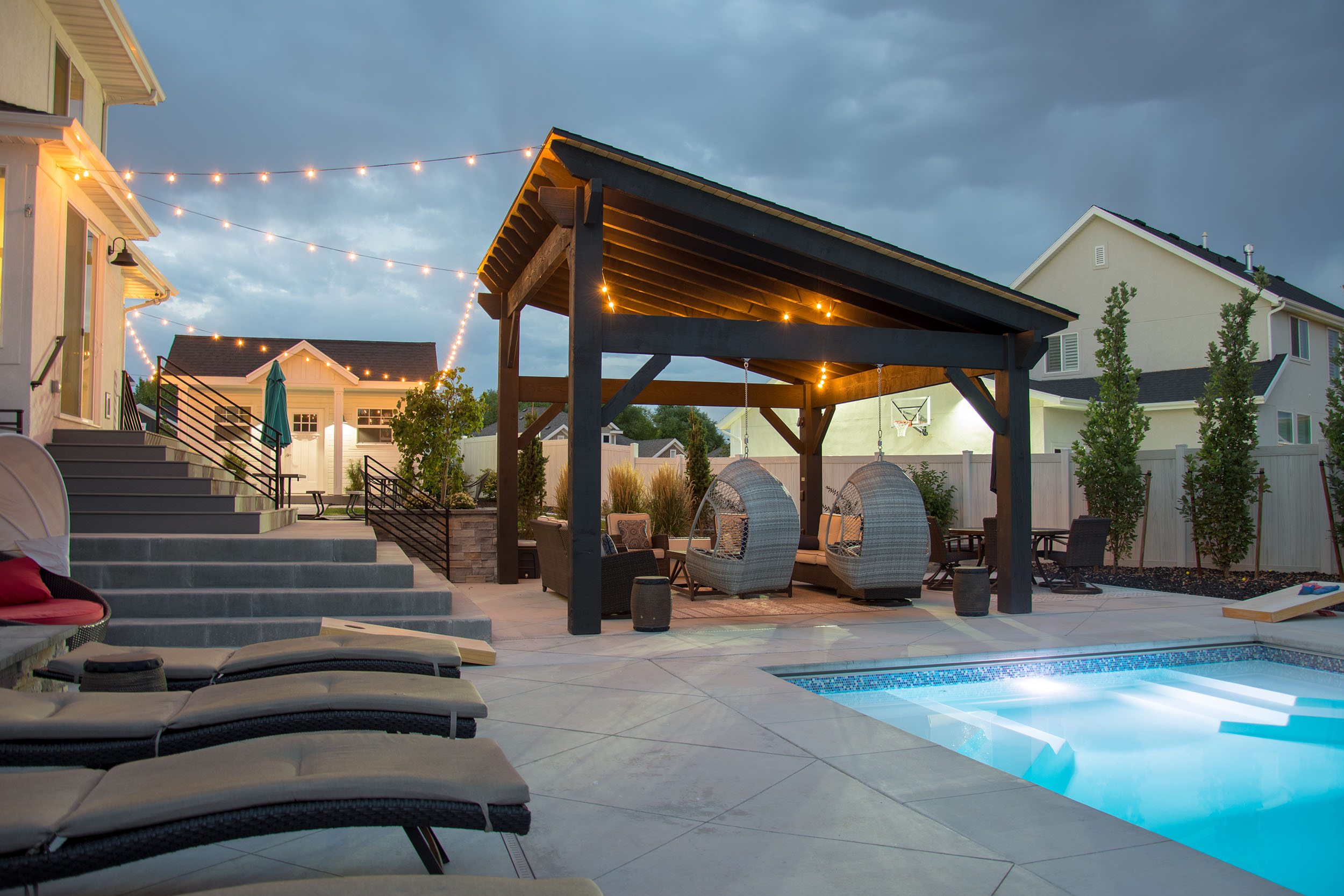
A pergola may cover a patio table where a family eats outside. It may frame chairs beside a pool. It may shade part of an outdoor kitchen.
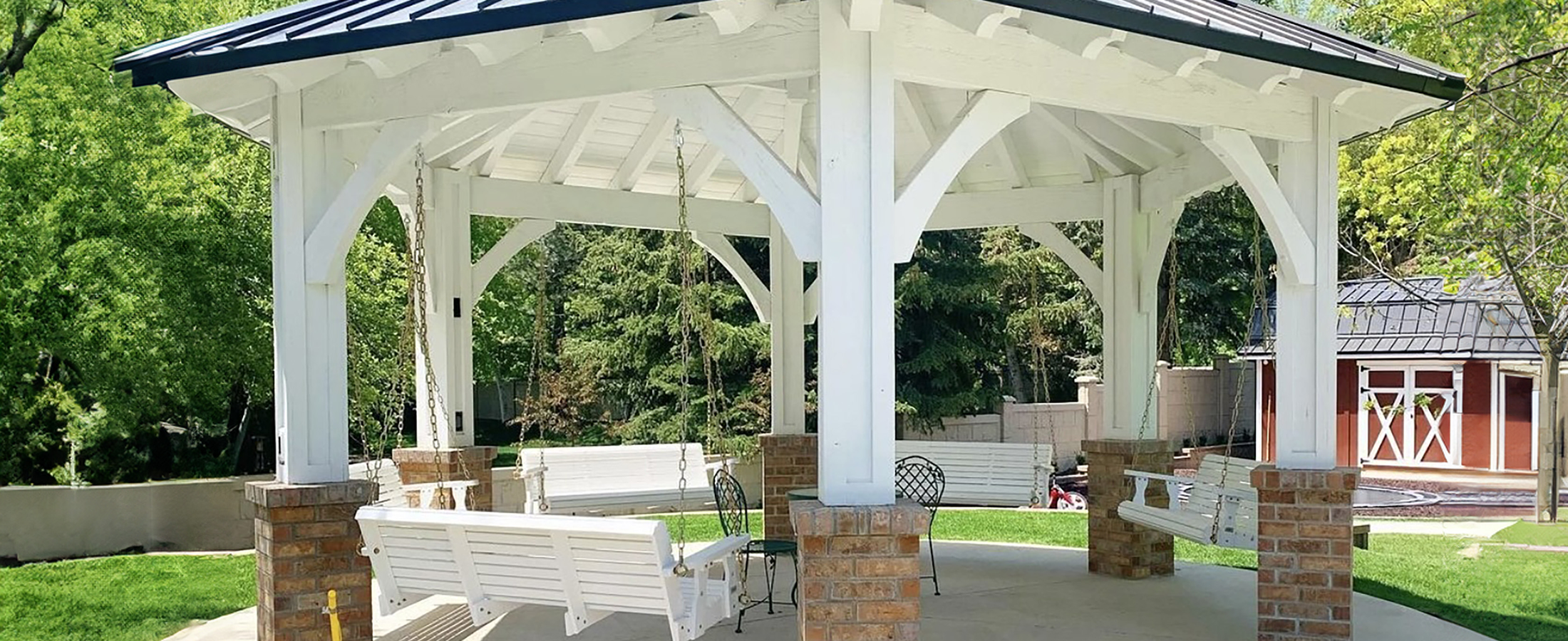
Western Timber Frame has also seen pergolas used over hot tubs, benches, swings, walkways, and garden spaces. These uses come from completed project work.
Some pergolas stand close to a house. Others sit far into a yard. Some are small enough for two chairs. Others define a much larger gathering place.
A common question is what is the wooden structure over a patio called. If it has posts and an open roof frame, it is often a pergola.
A pergola can also become part of daily pergola family life. It may be where people eat, talk, read, or sit outside together.
For a separate look at property value, see timber structures, home value, and ROI.
What do people mean when they ask about a pergola?
The wording changes, but the idea stays the same. People ask what is pergola, what’s pergola, what’s a pergola, whats a pergola, and what are pergolas.
You may also see what is pergolas, what is a pergolas, pergola what is, or pergola what is it. They all point back to the same basic question.
Other common forms are define pergola, pergola definition, definition of a pergola, and what is a pergola structure.
Purpose questions come in many forms too. They include what is a pergola used for, what is the point of a pergola, and what is a pergola for.
People also ask what does a pergola do, what are pergolas used for, what is the use of a pergola, and what does pergola mean.
You may even see what is the meaning of pergola, pergola meaning, what is a pergola and what is it used for, or whats the point of a pergola.
The short answer never changes. Pergola means an open-roof outdoor structure supported by upright posts.
Pergola FAQ
What is a pergola?
A pergola is an outdoor structure with posts supporting an open roof of beams and rafters. It gives partial shade while letting in light and air.
What is the purpose of a pergola?
A pergola defines an outdoor space and adds partial shade. It can frame a patio, pool, walkway, garden, dining area, or sitting space.
How much shade does a pergola give?
There is no single shade amount. Shade changes with overhead spacing, sun angle, time of day, season, vines, and added covers.
What are pergolas made of?
Pergolas can use wood, metal, or other outdoor materials. Timber pergolas often use woods such as Douglas fir, Western Red Cedar, and redwood. Western Timber Frame builds in four species, with Douglas Fir as the standard. Coast Redwood, Incense Cedar, and Western Red Cedar are chosen for the climate a structure is going into.
What is a pergola roof?
A traditional pergola roof is an open frame. Beams, rafters, and smaller shade pieces cross overhead instead of forming one solid roof.
Can a pergola be attached to a house?
Yes. A pergola can attach to a house on one side. It can also stand by itself with its own posts.
What is the difference between a pergola and a gazebo?
A pergola has an open overhead frame. A gazebo is a freestanding structure with a solid roof and usually open sides.
What is the difference between a pergola and a pavilion?
A pergola is known for an open overhead frame. A pavilion is built as a shelter and normally has a solid roof.
Does a pergola need a permit?
It depends on local rules and the project. Size, location, attachment, loads, and local code can affect permit needs.
Are pergolas getting more popular?
Outdoor shade remains popular. Industry surveys show strong demand for pergolas and shade structures, but they do not prove pergola demand rises every year.
Sources
- Merriam-Webster: Pergola definition and word history
- Merriam-Webster: Post definition
- Merriam-Webster: Beam definition
- Merriam-Webster: Rafter definition
- Merriam-Webster: Pavilion definition
- Merriam-Webster: Gazebo definition
- Merriam-Webster: Arbor definition
- Merriam-Webster: Trellis definition
- Merriam-Webster: Pagoda definition
- Colorado State University Extension: shade, sun, vines, and slatted structures
- Utah State University Extension: pergolas and climbing vines
- Utah State University Extension: Douglas fir
- U.S. Forest Service: Western Red Cedar properties
- U.S. Forest Service: redwood properties
- U.S. Forest Service: wood decay and outdoor exposure
- U.S. Department of Energy: sun angle, season, and sunlight
- 2024 International Residential Code: patio covers and structural loads
- American Society of Landscape Architects: 2016 residential landscape survey
- American Society of Landscape Architects: 2018 residential landscape survey
- American Society of Landscape Architects: 2021 shade-structure demand
- American Society of Landscape Architects: 2024 shade-structure demand
Ready to Start Your Own Story?
Let’s make your outdoor space unforgettable

Built nationwide · Recognized at home
7,000+ outdoor structures built.
One standard of craftsmanship.
Across the United States, Canada and Hawaii.

28 Best of State awards
Designed, manufactured, and crafted in the USA


Projects across all 50 states & Canada