
Timber Arbor Ideas: Go Up for a Gorgeous Landscape
Most yards get designed flat. The plants go in, the patio gets laid, the grill gets set, and every one of those decisions happens at ankle height. A timber arbor is one of the simplest ways to change that.
What a flat yard is missing is vertical structure. Vertical space is the most commonly skipped element in landscape design, and it is the one that changes a yard fastest. A flat, two-dimensional space becomes a room the moment something defines the space overhead.
Here is a backyard barbecue corner before and after a timber arbor went up over it.
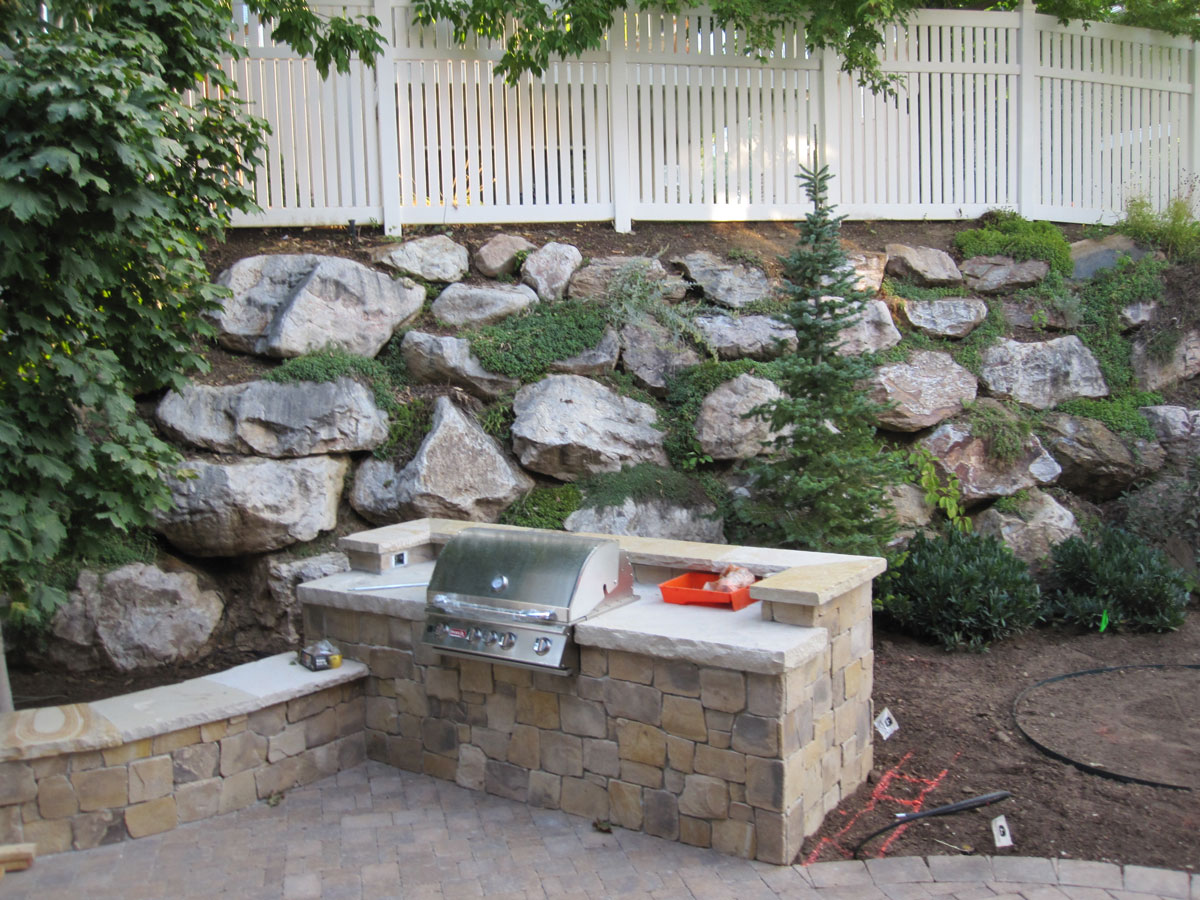
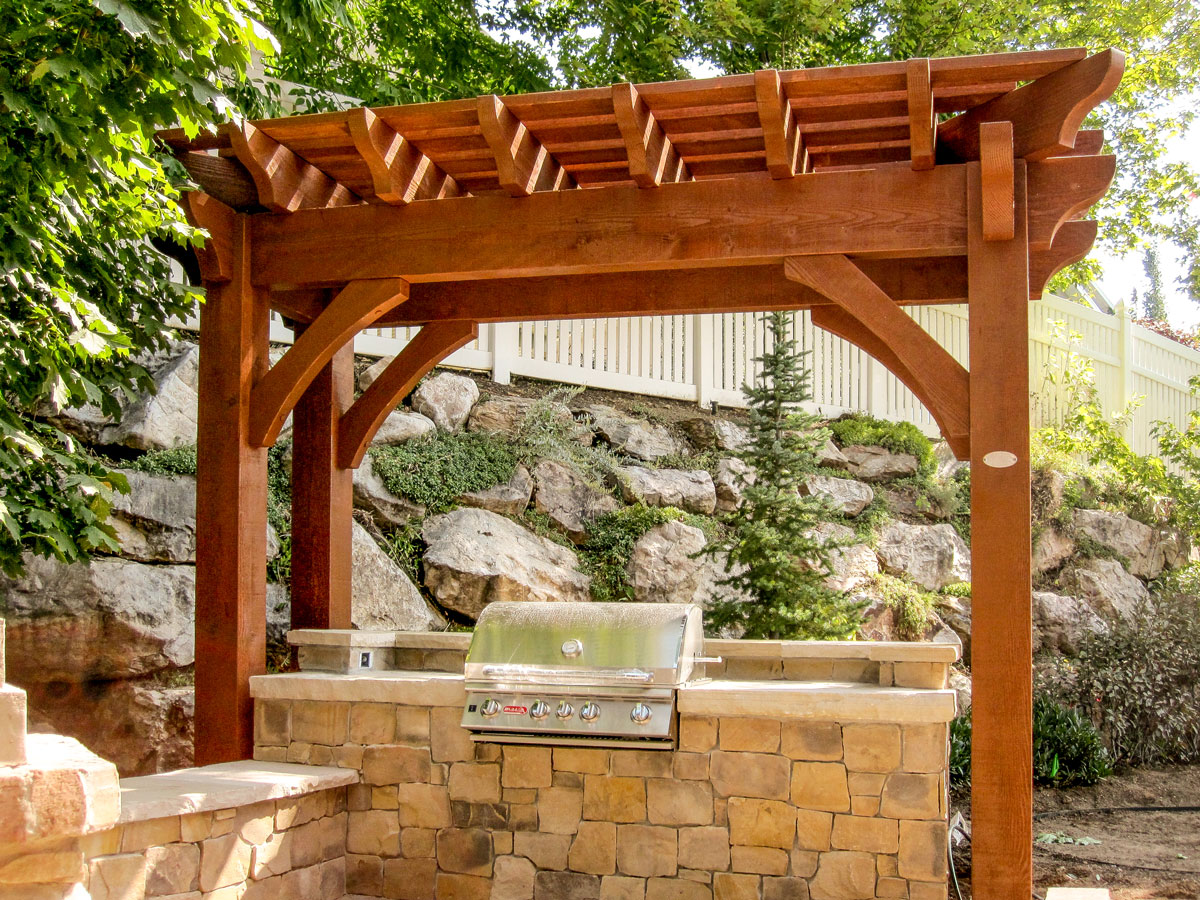
Same grill. Same stone. Same boulder wall behind it. The only thing that changed is that the space now has a ceiling — and the grill went from an appliance parked against a retaining wall to the centerpiece of the yard.
Why Going Up Works So Well
A yard without vertical structure has nothing for the eye to stop on. Everything sits at the same level, so nothing reads as important and no area feels separate from any other.
Build something overhead and three things happen at once:
- It creates a focal point. Whatever sits underneath becomes the subject. Your eye goes there first.
- It defines an area without walls. The space beneath reads as its own room even though nothing is enclosed. This is how you separate a cooking area from a lawn without fencing anything off.
- It adds shade where you actually stand. On a grill in full afternoon sun, that is not a small thing.
Trees and large shrubs do this too, and they are wonderful where there is room and time for them. A structure does it immediately, in the exact footprint you choose, without roots near a foundation, a patio, or a gas line. It also never needs watering, and it holds its shape through every season.
A Timber Arbor Is the Small Version
Overhead structure does not have to be large. A pavilion or a full pergola is a bigger build than many yards call for, and a yard does not need one to gain a ceiling.
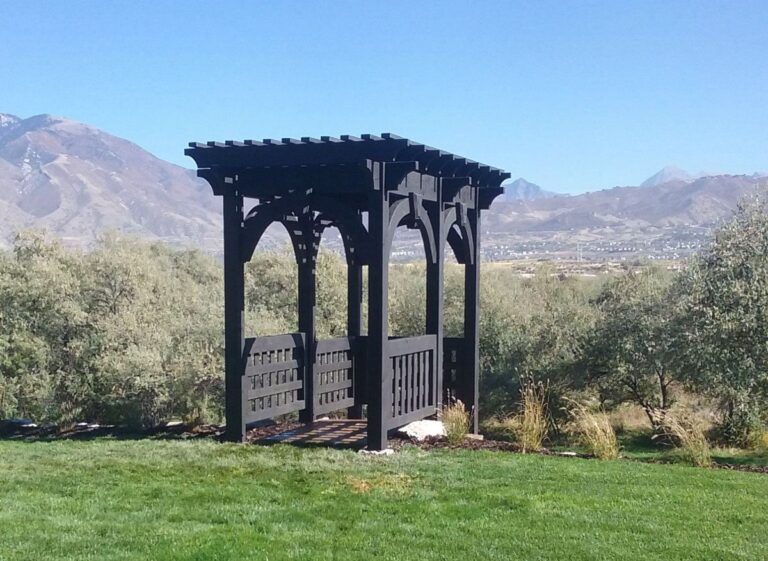
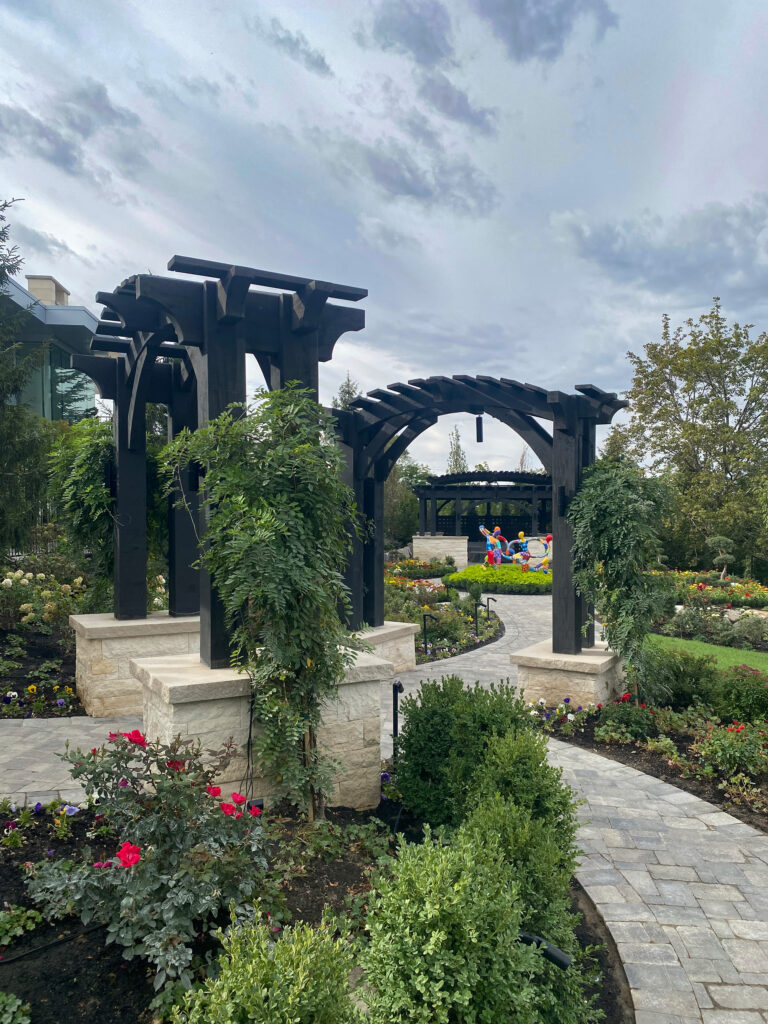
In a lot of yards the arbor is the right call. It covers a walkway, frames an entry, tucks into a corner, or caps a nook the way the one in these photos caps a grill. Very little structure, a great deal of effect.

An arbor also sits comfortably next to planting rather than competing with it. Timber brings warmth and color that vegetation cannot, and the two look better together than either does alone. If you want vines, an arbor gives them somewhere to climb.
The difference between an arbor and a trellis is a good place to start, and our arbors and trellises page shows what the sizes look like in real yards.
A Closer Look at This One

Two details are doing most of the work here.
The first is FullWrap™. On most structures, the decorative profile cut into the beam ends appears only where you are expected to look — the front. FullWrap carries that same profile around every side. It matters more on a small structure than a large one, because a little arbor in the middle of a yard gets seen from all four directions. There is no back of it to hide.
The second is the color. This one is finished in Rich Sequoia, a Sherwin-Williams stain applied in the shop. The stain works into the rough-sawn surface, so the timber keeps its grain relief and its matte, real-wood look while carrying real, rich color. Against grey boulders and green planting, that warm red-brown is what makes the structure read as intentional rather than added on.
The frame itself is Western Timber Frame™ timber with pre-cut joinery, which is why a structure this size goes up in an afternoon rather than over a weekend of problem-solving. The thinking happens in the shop; the assembly happens in the yard.
Where to Put One in Your Own Yard
These are the spots where overhead structure tends to pay off first:
- Over a grill or outdoor kitchen. It turns equipment into a destination, and it puts shade over the person doing the cooking.
- At an entry or gate. An arbor marks the transition from one part of the yard to another. It tells you that you have arrived somewhere.
- Over a walkway. A path with something overhead feels like a passage instead of a route.
- In a corner or nook. Odd leftover corners are the hardest spaces to make useful. Overhead structure is usually what solves them.
- Beside a patio you already have. You do not have to cover the whole patio. Defining one end of it is often enough.
The common thread: put it where you want people to stop. Overhead structure is an instruction about where to stand.
Common Questions
What is the difference between an arbor and a pergola?
Size and purpose. An arbor is the smaller structure, typically used to cover a walkway, frame an entry, or define a small area such as a grill or a corner nook. A pergola is larger and is usually built to cover a seating or dining area. Both use overhead timbers to define the space below, but an arbor does it with far less structure.
How long does it take to install a timber arbor?
A structure this size typically goes up in an afternoon. The joinery is cut in the shop before the kit ships, so the work in the yard is assembly rather than problem-solving. Larger or more complicated structures take longer, but a small arbor is a same-day project.
Do I need a permit for a garden arbor?
It depends on your city and the size of the structure. Many small arbors fall below the size threshold that triggers a permit, but the rules vary by jurisdiction and the homeowner is the one who files. Check your local building department before you build.
What is FullWrap on a timber structure?
FullWrap is the decorative profile cut into the beam ends, carried around all sides of the structure instead of only on the front. It means the structure looks finished from every angle, which matters most on small structures that are seen from all directions.
Can an arbor support climbing vines?
Yes. An arbor gives climbing plants a structure to grow on, and timber pairs well with vegetation because it adds warmth and color that plants alone do not provide. Keep in mind that plant growth against wood holds moisture, so it is worth checking the structure periodically where vines sit against the timber.
Will an arbor give enough shade to matter?
Over a defined area such as a grill, a walkway, or a corner seating spot, yes. An arbor is not intended to shade an entire patio the way a pergola or pavilion does. It shades the specific place you stand, which is usually what a small space actually needs.
The Short Version
A yard with nothing happening above waist height is missing its ceiling. Not another plant, not more furniture, not a bigger patio.
You do not need to cover the whole space. One well-placed structure over the spot people already gather is usually the entire fix. The barbecue corner in these photos did not change size, change materials, or change layout. It just got a ceiling.
With 28 Best of State Awards, multiple Inc. 5000 honors, an HGTV Design Excellence Award, 2026 SBA Utah District Manufacturing Small Business of the Year, and 7,000+ structures built nationwide since 2008, Western Timber Frame is a national authority on custom, structural, handcrafted, real-wood timber frame pergolas and outdoor structures for homeowners who want true craftsmanship, not mass-produced, cookie-cutter kits.